
The man behind US tariffs: who is the mastermind behind Trump’s trade war
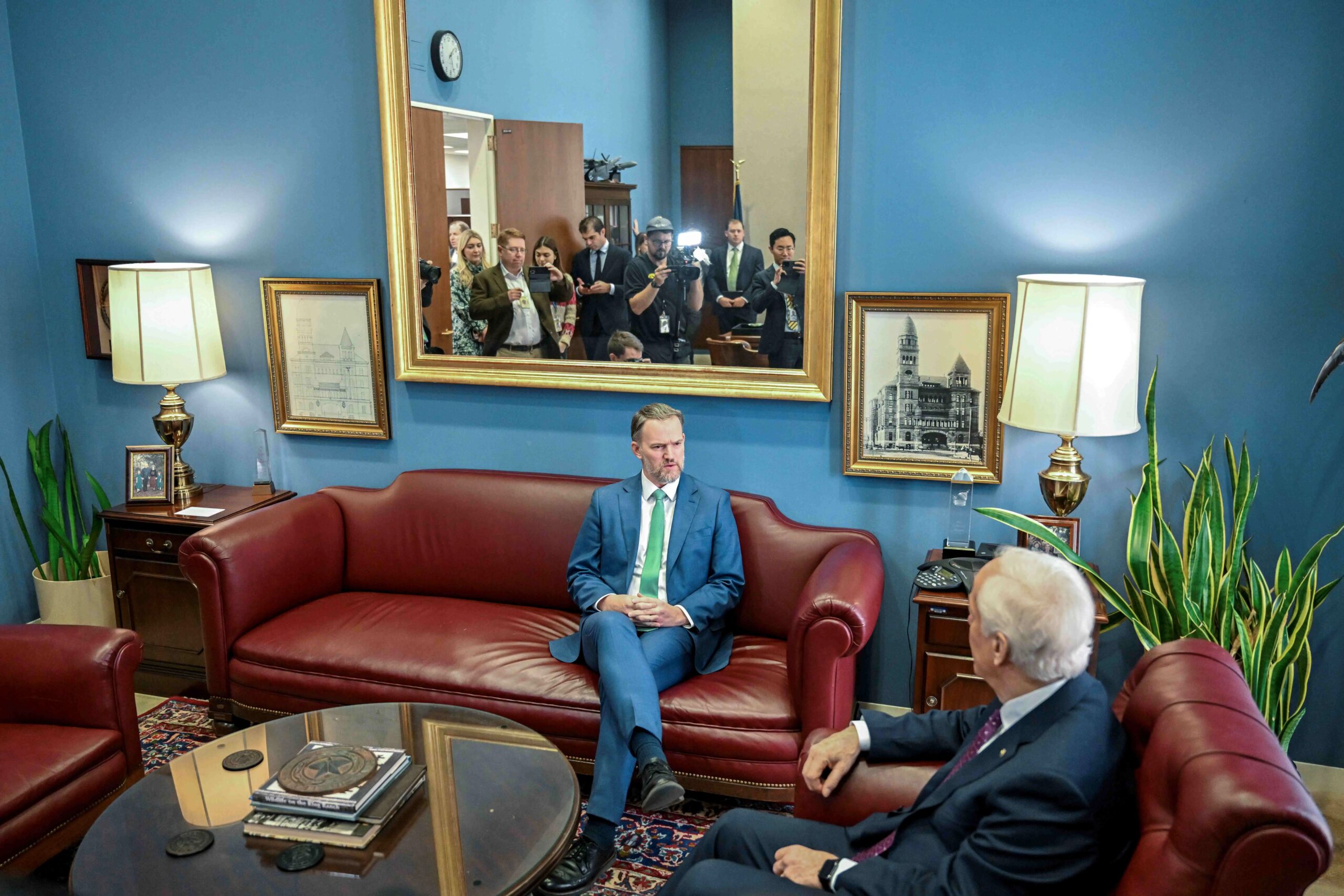
WASHINGTON — On January 26, 2025, Jamieson Greer was teaching Sunday school to a group of 9-year-olds when one of her phones started ringing off the hook with calls from the White House. Six days after the start of the new administration, President Donald Trump was already putting his favorite weapon into practice: the threat of crippling tariffs to bend countries to his will.
Greer wouldn’t join the Trump administration for some time, but he was already a key trade advisor.
Also read: Trump considers reviewing tariffs on steel and aluminum, says Financial Times
“Why do you have two phones?” asked one student.
“I have a kind of crazy job,” Greer responded.
As the United States trade representative, Greer, 45, has been a powerful but quiet force in transforming the global economy. Few have done more in Trump’s second term to put into practice the president’s vision of changing the system that governs how trillions of dollars of goods move around the world.
Greer provided the legal and public policy foundation for reforming a global system that Trump criticizes as unfair. He helped the president raise tariffs to their highest levels in nearly a century, while simultaneously conducting negotiations with all of the United States’ largest trading partners.
Interviews with Greer make it clear that he deeply believes in Trump’s plan to use tariffs to revitalize the American manufacturing sector. He and other advisers have implemented high taxes on imports to try to protect manufacturers from foreign competition, attract more factories to the United States and create more high-paying manufacturing jobs.
It is not yet clear whether these initiatives will work. Manufacturing employs less than 10% of Americans, and the number of industrial workers has been declining. While some manufacturers support protectionism, others say it raises costs and makes American industry less competitive.
Consumers also worry about the impact of tariffs on prices, and polls indicate that Trump is losing support for his handling of the economy.
While Greer credits the president’s tariff threats with increasing his bargaining power in negotiations, Trump’s penchant for last-minute confrontation has clearly added uncertainty and complications to how countries deal with the United States.
This year is likely to bring more turmoil as the U.S. Supreme Court weighs whether to strike down many of these tariffs. The administration is also preparing for high-stakes meetings with China and negotiations with Canada and Mexico that could transform or dissolve the North American trade deal.
Greer is often seen as a source of stability in chaos. A former Mormon missionary and military lawyer, he has quietly navigated the demands of an unpredictable president, other strong cabinet figures and dozens of foreign leaders and executives.
Friends say he followed the advice of his mentor and former boss, Robert Lighthizer, who served as U.S. trade representative in Trump’s first term: “You can get a lot done in Washington if you don’t care who gets the credit.”
Greer was set on the path to his future role as architect of Trump’s trade strategy by what he called an unexpected interview with Lighthizer for a job in Washington at the law firm Skadden Arps.
Lighthizer said Greer impressed him as someone with “intelligence and values” and hired him in 2012 to help the firm defend U.S. Steel and other American companies in trade disputes.
That work gave Greer an early look at what American industries would face in the years ahead, as Chinese exports heavily subsidized by Beijing flooded global markets.
Greer saw the flood of cheap goods as a national security problem, but few agreed. That changed with Trump’s election in 2016, when Lighthizer became U.S. trade representative and named Greer as his chief of staff.
Greer became Lighthizer’s shadow. To the surprise of foreign bureaucrats, Lighthizer sent the then 30-year-old Greer in his place to high-level meetings with the World Trade Organization, South Korea and Mexico. Together, they waged a trade war against China and revamped the North American Free Trade Agreement.
The administration had done everything it could in its first term, Lighthizer said, but since then the country’s views on trade have changed, and the president now has an even stronger mandate.
“The president is taking the next logical steps, and Jamieson is the best possible person to implement them,” he said.
After Trump left office, Greer went into the private sector. And when the president won in 2024, Greer helped compile lists of trade loyalists for the new administration and wrote a trade memo that the president released on his first day back in office, opening up the possibility of tariffs to address more than a dozen trade issues.
Lighthizer strongly supported Greer’s nomination. The decision was supported by Jared Kushner, Trump’s son-in-law, and others who believed the president would be better served by having a trade expert in his cabinet rather than yet another billionaire.
By the time Greer was confirmed on February 26, 2025, Trump had already been using tariffs wildly, in more chaotic ways than Greer might have preferred.
Among all the options he could have used to impose tariffs, Trump chose an international emergency law that allowed him to raise or lower tariffs immediately and keep them in effect for as long as he wanted.
But the law, the International Emergency Economic Powers Act, was vulnerable to court challenges, one of the reasons Lighthizer had not used it in Trump’s first term.
Greer also saw it as more legally vulnerable than other options, but included it among the alternatives presented to Trump and said the president chose it for its flexibility.
In February 2025, Trump used the law to declare the entry of fentanyl a national emergency and to impose tariffs against Canada, Mexico and China, the United States’ largest trading partners.
In April, Trump turned to the same law to declare trade deficits an emergency. He announced sweeping global tariffs of up to 50%, including 34% tariffs on China, a move that triggered a trade shock that remains unresolved.
The trade representative’s office was immediately inundated with requests from foreign officials seeking to avoid the tariffs. That began months of frantic negotiations for Greer, who flew more than 100,000 miles in 2025 and sometimes met with representatives from more than half a dozen countries a day.
Given the tight schedule, Greer created a template of topics for countries to negotiate. The resulting agreements involved reducing tariffs on U.S. agricultural and industrial products and adopting other policies aimed at non-market-oriented economies such as China.
Many of the agreements ended up vague and at a high level, reflecting the accelerated pace of the talks. Later governments would clash with the United States over the exact details.
The negotiations were also complicated by the fact that the countries were subject to another set of tariffs related to national security, under the purview of Howard Lutnick, the Secretary of Commerce. These tariffs affected sectors such as automobiles, pharmaceuticals and steel. Foreign countries complained that negotiations were progressing smoothly with Greer but stalled at the Commerce Department.
Greer said in an interview that “tensions” is “not a word I would ever use,” but acknowledged that the national security tariffs added “an extra layer of complexity.”
New year could bring more challenges for Greer
If the Supreme Court strikes down Trump’s tariffs, it will be up to Greer to institute other tariffs to replace them. He will also have to ensure that trade arrangements with Japan, El Salvador, Switzerland and other countries do not fall apart if the tariffs that underpin those agreements temporarily disappear.
With midterm elections approaching and concerns about the cost of living rising, it also remains to be seen whether the government will back off on more tariffs.
Trump seems as insistent as ever on tariffs, and equally impulsive in their use. Last month, he threatened to impose tariffs on European countries unless Denmark ceded Greenland to him. The Europeans responded by angrily suspending work on their trade agreement, which Greer and his advisers had negotiated for many months.
Like Trump, Greer dismisses the idea that tariffs burden the poorest Americans. He argues instead that the cost of tariffs is being spread across foreign supply chains, something many economists dispute.
He also defended the idea of “managed trade”, saying that the more secure supply chains are, the less the government needs to intervene. “But we’re not really there yet,” he said.
