
The much feared “open war” in the Middle East has arrived
The scenario of an “expanded war” in the Middle East, feared for some time, has finally materialized. In the last 360 days, since the images of the massacre of around 1,200 people in Israel on October 7th went around the world, the President of the United States, Joe Biden, has repeatedly warned about the risk of an expanding Hamas terrorist attack. to conflict with Iran’s other proxy force, Hezbollah, and, ultimately, Iran itself.
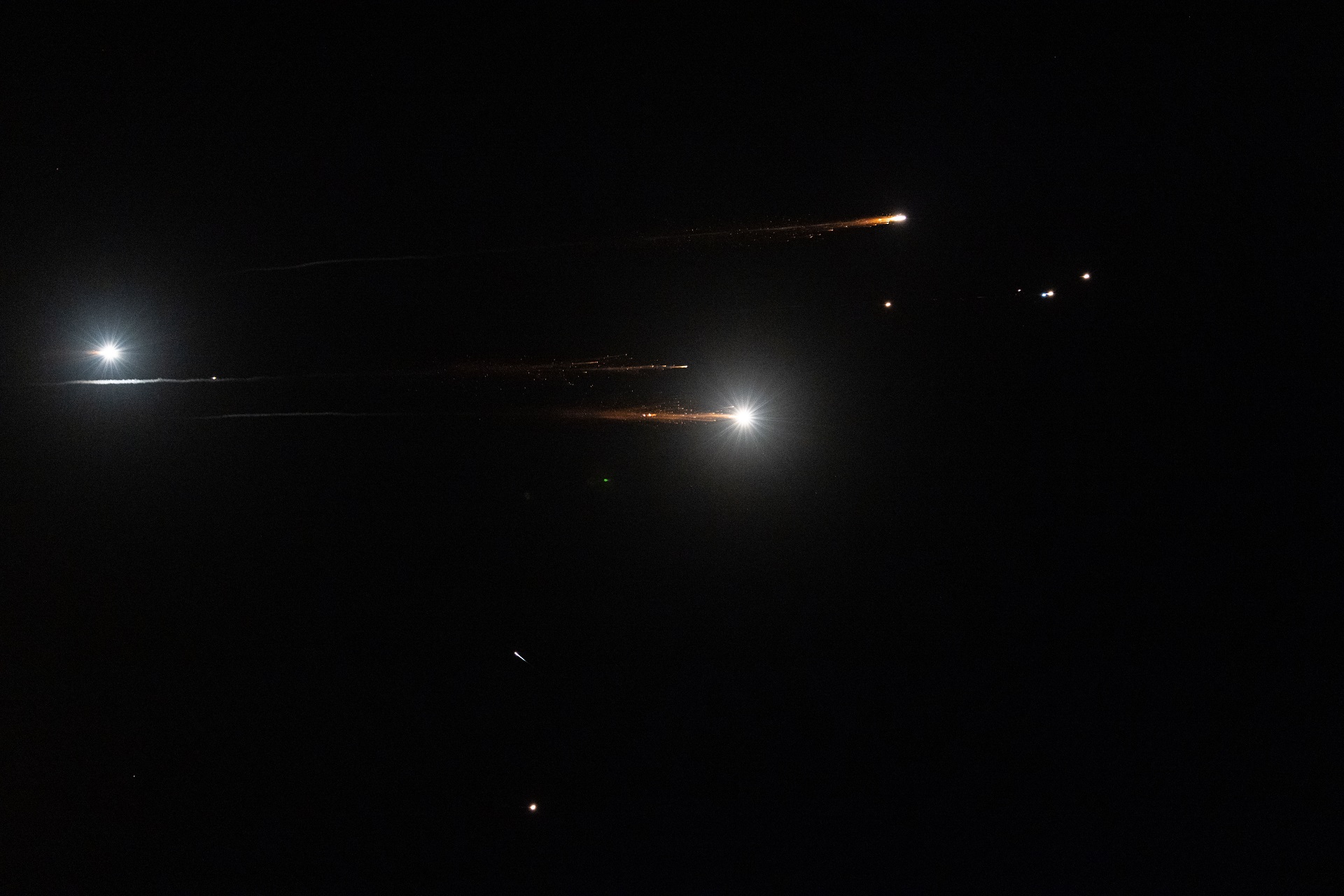
Now, after the assassination of Hezbollah chief Hassan Nasrallah by Israeli forces and the start of the ground invasion of Lebanon, and after Iran retaliated on Tuesday by launching almost 200 missiles at Israel, the moment is considered one of the most dangerous in the region since the 1967 Arab-Israeli War.
The main questions now are how far the conflict can escalate and whether American forces will become directly involved.
The last few days may have marked a turning point. Since Israel killed Nasrallah on Friday, the Biden administration has shifted its stance from warning against a broader war to trying to manage it. American officials have defended Israel’s right to retaliate against Iran, but Biden said on Wednesday that he would not support direct attacks on Iranian nuclear facilities, which could send the conflict out of control. He warned that Israel must respond “proportionally.”
This is the scenario that Biden has repeatedly warned about but failed to avoid, even with 40,000 US troops in the region.
“From Israel’s perspective, we have been in a regional war since October 7, and that war is now total,” said Michael Oren, Israel’s former ambassador to the US, historian and one of the country’s most hardline diplomats. “We are in a war for our national survival, period.” Winning in the coming weeks, according to him, is a “duty” for a nation “created in the aftermath of the Holocaust”.
The unknown now is how Israeli Prime Minister Benjamin Netanyahu will interpret this existential mission as he considers how, not whether, he will retaliate against Iran.
Biden’s warnings began early, during his visit to Israel less than two weeks after October 7, to show solidarity after one of the cruelest terrorist attacks in modern times.
This came before Israel devastated the Gaza Strip through aerial bombardment and sent its troops into the field, contrary to Biden’s advice in a series of heated conversations with Netanyahu. It was before Israel booby-trapped pagers and walkie-talkies used by Hezbollah, which exploded across Lebanon, and before Netanyahu approved the plan to kill Nasrallah and systematically decapitate much of Hezbollah’s leadership.
It was before the Biden administration suggested last week that Israel had agreed to a 21-day ceasefire, only to be challenged, again, by Netanyahu, who authorized attacks on Lebanon shortly thereafter.
For Biden’s critics on the right, this is all a result of American hesitancy, its reluctance to support Israel unconditionally, and its tendency to balance every promise of aid with a warning not to make the mistakes the US made after the 9/11 attacks. .
For his critics on the left, what has occurred over the past 10 days is further proof of Biden’s failure to use American influence over Israel, including the threat to suspend arms shipments after the deaths of more than 41,000 people in Gaza. While several of these deaths are almost certainly Hamas leaders or fighters, the vast majority of victims are civilians. For many Israelis, this escalation was inevitable, another chapter in a fight for survival that began with the nation’s creation in 1948.
Netanyahu clearly has U.S. approval to retaliate against Iran. At the White House on Tuesday, Jake Sullivan, Biden’s national security adviser, said the Iranian attack had been “defeated and ineffective,” largely due to coordinated efforts between American and Israeli forces, who spent months planning how to intercept the missiles. “We have made clear that there will be consequences – severe consequences – for this attack, and we will work with Israel to ensure that occurs,” Sullivan told reporters.
American officials believe they can persuade Netanyahu to retaliate without triggering an all-out war. But they admit that the Israeli prime minister may see the next five weeks, leading up to the American presidential election, as an opportune time to try to delay Iran’s nuclear program for years. After all, former President Donald Trump wouldn’t complain about a major attack on Iran’s military infrastructure, and Democrats can’t afford to be accused of restricting Israel after Tuesday’s attack.
“Israel will do its best to be disproportionate,” said General Wesley K. Clark, former NATO supreme commander, on Tuesday (1).
White House officials take the opposite view: They say Netanyahu cannot afford to be anything but proportionate. This new phase of the conflict involves many risks. There is a risk that Iran, frustrated by the failure of its missile force to breach Israeli and US defenses, will become convinced that it is finally time to rush toward a nuclear weapon, seeing this risky move as the only way to contain an adversary that has penetrated iPhones, pagers and computer systems. There is a risk that, despite the election of a new Iranian president with a moderate profile, Iran’s Revolutionary Guard will win internal disputes and double down on its missile programs and agents of influence.
“A full-scale war, or even a more limited one, could be devastating for Lebanon, Israel and the entire region,” said Jonathan Panikoff, director of the Atlantic Council’s Middle East Security Initiative. “But it can also create unexpected opportunities — like weakening Iran’s malign influence in the region, for example, by actively impeding its efforts to reconstitute Hezbollah. And a new administration must be prepared to take advantage of them.”
That’s what wars do. They create new power dynamics, vacuums that need to be filled.
But the danger remains that widespread wars, once started, will take years to contain. And the presence of nuclear weapons, ballistic missiles and an instinct for escalation create a particularly dangerous mix.