
‘There is a 100% chance that it will happen again’, warns UNESCO oceanographer on the 20th anniversary of the tsunami
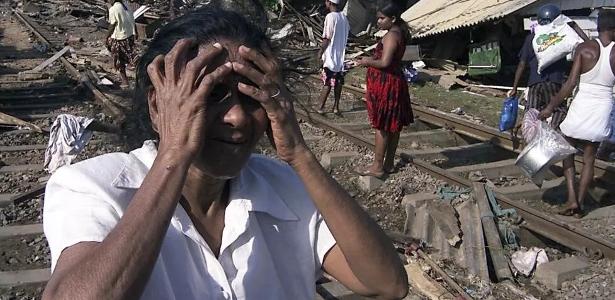
Bernardo Aliaga, tsunami expert at UNESCO’s Intergovernmental Oceanographic Commission, talks about the importance of keeping the memory of the catastrophe alive. “Our memory fades over time. Continuous work is needed to remind generations, past and future, of the tragedy. The first rule to learn is that where there was a tsunami there will be another tsunami, there is a 100% probability”, he warned the RFI.
The tsunami expert at UNESCO’s Intergovernmental Oceanographic Commission, Bernardo Aliaga, also points to the lack of preparation 20 years ago. He recalls “the lack of cooperation between agencies”, especially between scientists and those responsible for disaster management.
“In 2004, there was nothing in the Indian Ocean, nor in the Mediterranean. The tsunami in the Indian Ocean caused an increase in this cooperation. It was not only international and humanitarian cooperation that was put into practice, but also political and scientific cooperation (.. .) with the noble objective of saving lives”, he states.
Five minutes today to detect an earthquake
Bernardo Aliaga believes that “recognizing the warning signs” and “doing (simulation) exercises” to evacuate people are essential: “If you are on the coast and an earthquake makes you fall to your knees on the ground, or if the shaking is very long – more than a minute – you have to run because in 10 or 12 minutes you will have the first wave, and it will not be the most dangerous. The second or third wave, 20 to 30 minutes later, will be really dangerous. you you should run to a high place immediately”, insists the expert.
“Today we are much better prepared against a tsunami everywhere, in the Pacific, Indian Ocean and Mediterranean. Countries like Portugal, Greece, Italy and Spain are much better prepared. In Europe, there is a community called the Tsunami Network, but it has also structures in the Galapagos, Costa Rica, Ecuador, El Salvador If we compare technically with what happened in 2024, we are much better prepared”, he believes. “From 50 minutes to an hour to give an alert of this type, we went to 5 to 7 minutes. From 150 seismographs to detect an earthquake available on the global network, we went to a few thousand”, he explained.
