
Troops, Cartels and China: What Mexico is doing to avoid Trump’s fares

Mexico City – Mexico prepared for the worst when President Donald Trump threatened to impose high tariffs on his exports. However, with a deadline approaching, Mexico leaders hope to have found a formula to avoid tariffs, acting decisively on several fronts to appease Trump.
Focusing on Trump’s complaints about illicit migration and drugs, President Claudia Sheinbaum is sending 10,000 troops to stop migrants trying to reach the United States, expanding efforts to dismantle migrant caravans and transporting them to distant border locations.
Trump orders a new tariff investigation that can affect Brazil
In his third new tariff investigation in one week, Trump called for national safety investigation on US imports from the USA
Sheinbaum is also delivering to the United States dozens of high -ranking cartels and accepting Cia drone flight intelligence to capture others. Breaking with his predecessor, who falsely stated that Mexico did not make fentanil, she is triggering a repression that resulted in record seizures of the drug.
Download yours
At the same time, Mexico leaders are imposing their own rates and restrictions on a wide range of Chinese imports, seeking to convince Trump that Mexico, with its low -cost industrial base, can be a strategic partner to contain China’s economic influence.
Trump still promises to impose 25% tariffs next Tuesday. However, Mexico’s financial markets remain calm, reflecting expectations from the country’s business sector that Sheinbaum can find a way to close a deal.
“Since she has been able to manage this crisis has been far superior to any other leader,” said Diego Marroquin Bitar, an American Wilson Center trade expert, a research group in Washington.
Trump praised Sheinbaum as a “wonderful woman” after talking to her in February.
Sheinbaum mixed his conciliation actions in public to appease Trump, such as sending troops, with greater backstage security cooperation and a modest dose of resistance against Trump on matters such as Mexico’s Gulf rename.
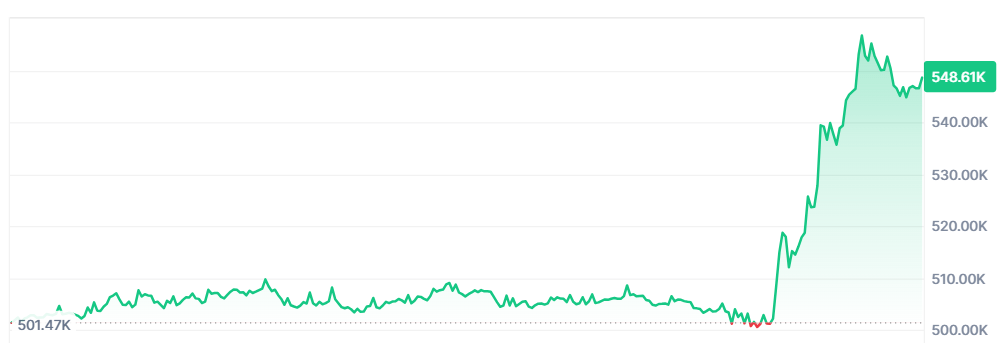
Cryptos shoot after Trump announce new tokens in US strategic reserve
This Sunday, he stated that Bitcoin and Ethereum would be “the heart of the reserve”, adding that Solana, XRP and Cardano would also be part
It is not an easy task for Sheinbaum, even with its approval rate firing to 80%. Skepticism about Trump’s xenophobic politics is deep in both Mexican society and within the brunette, the Sheinbaum’s political party, which combines nationalist and leftist ideals.
After decades of integration, Mexico depends on trade with the United States more than any other major economy. Tariffs, even if imposed temporarily, could have a significant impact, warn economists.
Trump is also threatening separately 25% tariffs on global steel and aluminum imports, which would also affect Mexico. And the Trump administration is formulating additional “reciprocal” tariffs designed to compensate for commercial restrictions and equalize import tariffs charged by other countries.
Uncertainty about tariffs is weighing on Mexico’s economy, while companies put plans on hold. The Central Bank reduced its growth projection from 1.2% to 0.6% this year.
Still, Trump’s repeated threats and subsequent retreat in his threats have fueled hope that tensions could decrease. He initially promised to impose the rates on his first day in office, but retreated twice.
Mexican negotiators are in Washington to meet Trade Secretary Howard Lutnick and Jamieson Greer, the US Commerce Representative, in an attempt to reach a last -minute agreement.
Here are three areas where Mexico is mobilizing to align with the priorities of Trump administration.
Containment of migration
Mexico’s promise to send 10,000 additional US guard to the US border was cited as a Trump victory in early February when he paused the imposition of tariffs for 30 days.
For months, Mexico had been dismantling migrant caravans long before they arrived in border cities and expanding a dark program that carried thousands of migrants to distant places inside Mexico.
Mexico detained about 475,000 migrants in the last quarter of 2024, according to government figures, more than double the amount detained in the first nine months of the year.
The border was exceptionally calm before Trump took office in January, reflecting Mexico application measures and Biden administration asylum restrictions.
Trump management’s new efforts to restrict migratory flows, along with the sending of troops through Mexico, are making it even harder for migrants to enter the United States.
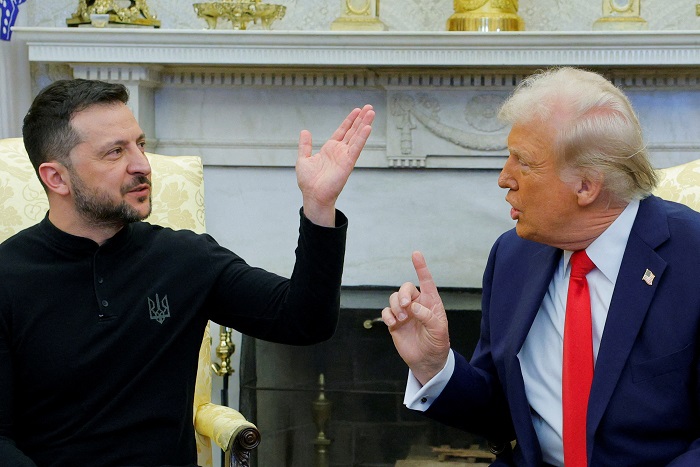
Majority in the US supports Ukraine, but sees Trump as a neutral in the conflict, says research
Survey points out that 52% of Americans align with Ukraine, while 44% do not support either side
Migrant crossings have fallen to non -unthinkable levels. At one point in February, US people on the Mexican border found only 200 migrants in a single day, the smallest number recorded in recent history.
If the trend remains on an annual base, border patrol seizures could fall to levels not seen almost 60 years ago, around the end of the Johnson administration, according to Adam Isacson, a Washington office migration expert on Latin America.
Cartoon
Mexico has sought to repress the cartels that produce illicit narcotics, especially fentanyl, the synthetic opioid that Trump quoted as the leading cause of overdose deaths in the United States.
Marking a break with past policies, when cartels were able to produce fentanil with little interference from the authorities, Mexican officers have announced new seizures of fentanyl pills regularly in recent weeks.
These actions include the capture last week of 6 kilos of fentanil at Mexico City International Airport, in a package being sent to New Jersey. This followed by the discovery of 18 kilos of fentanil hidden on a passenger bus in the northwest border.
In December, shortly after Trump began to threaten Mexico with tariffs, the authorities made a colossal seizure of 800 kilos of fentanyl in the state of Sinaloa, the largest capture of synthetic opioids in Mexico.
In February, Mexican authorities in Puerto Vallarta also arrested two US citizens facing arrest warrants in the United States for fentanyl trafficking. Both were extradited to Oklahoma.
Mexico continued on Thursday by sending almost 30 of the cartel agents of the US authorities to the United States, one of the greatest deliveries of this kind in the history of the drug war.
The measures aim to avoid tariffs and US military intervention, which Trump threatened to take against drug cartels operating in Mexico.
Andrés Manuel López Obrador, mentor of Sheinbaum and his predecessor as president, limited anti -found cooperation with the United States. Sheinbaum seems to be adopting a different approach.
Mexican officers, for example, have received CIA intelligence, which has intensified secret drone flights over Mexico to hunt Fentanil laboratories. Mexico’s Defense Minister said at the end of February that US drones were used to track high -ranking figures from the Sinaloa cartel.
Counterbalanced China
Trade between China and Mexico had increased, generating concerns that China could use its presence in Mexico to gain greater access to US markets. A year ago, sending products from China to Mexico was one of the fastest growing commercial routes in the world.
But now Mexico is reformulating their ties with China, their second largest commercial partner. Only days after Trump promises for the first time imposing tariffs, authorities performed an operation at a vast store complex in Mexico City Center that sold fake Chinese products.
Mexico then imposed a 35% rate on China’s clothing imports, while also aiming for Chinese online retailers such as Shein and Temu, implementing a 19% rate on products imported by Courier companies from China.
Still, with several threats of tariffs on the horizon, Mexico could do more to appease the Trump administration, moving to restrict the importation of products such as semiconductors or cars, which are quickly gaining ground in an important market for US car manufacturers.