
Trump cannot seek re-election if he wins in 2024; understand the rule
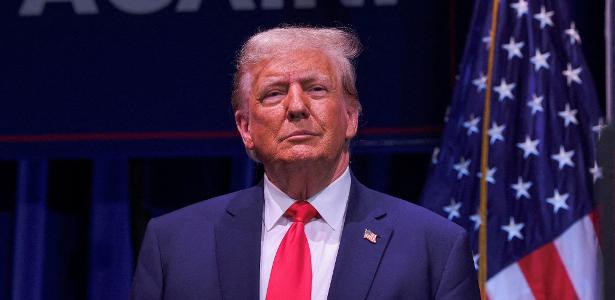
Trump was president from 2017 to 2021. Republican beat Hillary Clinton and sought re-election in 2020, but was defeated by Joe Biden.
History of mandates in the USA
George Washington, the country’s first president, withdrew from the race for a third term in 1796. He was quite popular, but refused to enter the race, arguing that a transition of authority was important to avoid a government with power similar to that of a king, according to the Annenberg Guide to the Constitution.
At the end of his second term, which lasted until 1877, Republican President Ulysses Grant considered re-election. But the Democrats, who were the majority in the House of Representatives, approved a resolution denouncing the third term as a violation of American political tradition.
Theodore Roosevelt, 26th president of the USA, sought a third term in 1912. However, he lost to the Democratic Party candidate, Thomas Woodrow Wilson.
Franklin Roosevelt broke the two-term tradition in 1940. With his popularity soaring after guiding the country through the Great Depression, he ran for president for the third time. In 1944, in the midst of World War II, Roosevelt ran for a fourth term in an unprecedented way and, once again, won.
