Trump welcomes Qatari PM to White House as Tehran pushes ‘two-day peace plan’
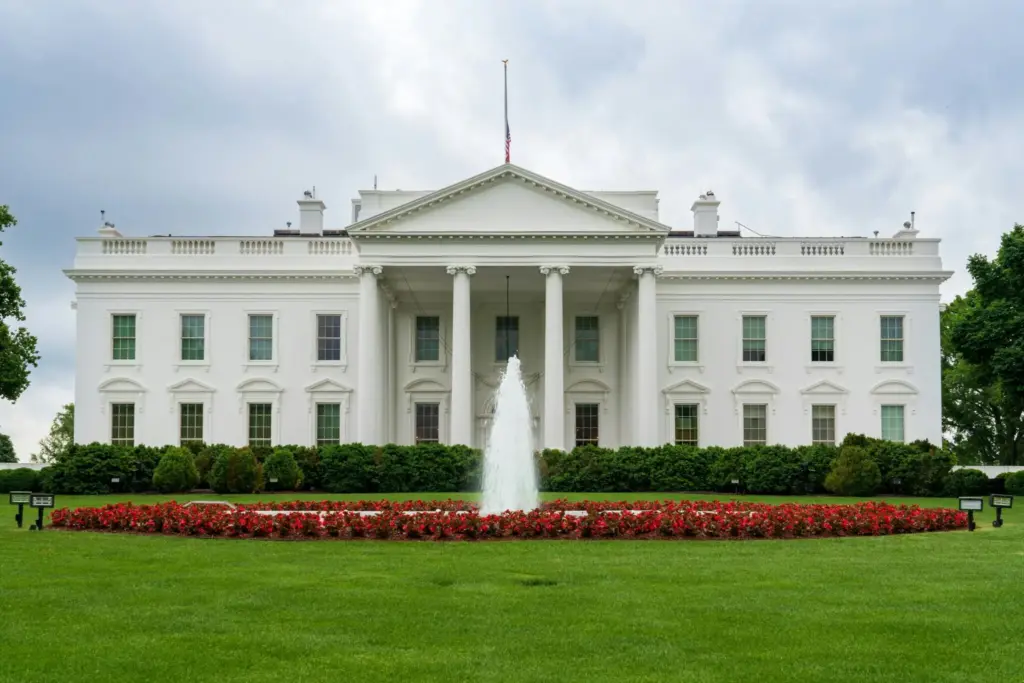
trump He received Qatar’s prime minister at the White House on Monday as Tehran waved its “two-day peace plan.”
The meeting with Mohammed bin Abdulrahman al-Thani lasted just under an hour, according to officials from the White Houseand there was no appearance before journalists. No joint statements or questions in the Oval Office, something unusual in the president’s foreign agenda. Silence, in this case, is part of the message.
Less than an hour and without cameras: what was at stake in Qatar in the Oval Office
The format matters because Qatar It is two things at the same time. It houses the Al Udeid base, the largest US military deployment in the region, and maintains an open channel with Tehran that no European capital has. Washington does not negotiate directly with the Islamic Republic today: it does so through an intermediary who is also its military host.
Tehran He arrived at the appointment with his own calendar. The “two-day plan” cuts the seven-point document presented by Iranian diplomacy after the Democratic victory in the midterm elections, and demands unconditional concessions just to reopen the channel: end of sanctions, end of the naval blockade and war reparations. Hence the name: Washington could concede everything in forty-eight hours and, from there, there would be talks. No independent source has confirmed this.
The Iranian Foreign Minister, Abbas Araghchiput it on social media on Sunday: ‘American voters have made their choice. It’s time for the White House to do its thing.’ And he added the challenge: ‘Our two-day proposal still stands: meet the requirements, including the end of the war on all fronts, and you will see results. Or choose war, and you will see our hardened warriors rain hell.’
Marco Rubio He responded on Sunday, before leaving for the G7 of foreign ministers in France, with an unvarnished assessment: ‘I have no progress to report.’ Several countries are still talking to Iran, he admitted, ‘but we are not on the verge of a breakthrough.’ The diagnosis that the State Department repeats in private was made publicly by him: Iranian demands are ‘scandalous, ridiculous and disconnected from reality’.
Washington does not negotiate with Tehran: it negotiates with whoever has a direct line with Tehran. And that, in the Gulf, is called Doha.
From Qeshm to the 38 bridges: military pressure as a negotiating argument
The Iranian reply came on Monday through the Foreign Ministry spokesman, Esmail Baghaei: ‘Is it unreasonable for Iran to demand that the illegal sanctions and naval blockade be lifted before negotiations begin and the war ends on all fronts?’ On the other side there was no public response.
Washington does not ask permission.
That same Monday, an Iranian official denied reports in the Turkish press that placed the vice president J.D. Vance and the head of the Supreme National Security Council, Mohsen Rezaei, meeting in Doha next week. ‘Until the US side takes concrete steps to meet our seven conditions, there will be no plans to negotiate,’ he said.
The background is military and has not lowered its tone. Iranian state television reported four more explosions on Sunday on the island of Qeshm, at the entrance to the Strait of Hormuzbombed by US forces days earlier, after Iran fired on US planes. trump He sees a return to large-scale hostilities as ‘very unlikely’, but left the warning: ‘We have 38 bridges in sight that we can tear down in literally an hour.’ And he concluded: ‘I don’t like breaking down bridges. The most difficult thing to build is a bridge. It’s been going on for years, and I’m a good builder.’
That’s not negotiating. It’s setting the price.
Washington Logic
What we observe in the West Wing is a doctrine, not an improvisation. trump It combines visible military pressure and negotiation delegated to third parties: the blows on Qeshm and the notice of the 38 bridges set the price of the table, and Qatar sit the Iranians down without the United States appearing to sit in front of them.
The precedent is Nixon, who bombed positions in Cambodia while the Paris talks were still formally open, and that of Bush Sr., who brought together Arabs and Israelis in Madrid in 1991 through intermediaries. The difference is that here the mediator is not a European allybut a Gulf State with its own interests and the largest US military installation in the region on its soil.
Inside the Republican Party Two electorates coexist: the one that voted ‘no more endless wars’ and the one that demands a tough line against Tehran. Governing for both requires gestures like the one on Monday: receiving the mediator without a press conference and letting the military pressure do the wear and tear. The analyzes of the Center for Strategic and International Studies indicate that the decisive variable is not the content of the agreement, but its chronology.
Spain does not have a chair at that table and its presentation is different. For him Strait of Hormuz It accounts for around a fifth of the oil and liquefied natural gas traded by sea, according to the US Energy Information Administration. The work of the Elcano Royal Institute on the Gulf points in the same direction: Qatar is one of the main suppliers of liquefied natural gas to the Spanish market and the crude oil from the area feeds a good part of the refining of Repsol and Cepsa. For the Spanish Government, the file is energetic rather than diplomatic.
The bill arrives the same.
The immediate calendar passes through Doha. If the appointment between J.D. Vance and Rezaei is confirmed for next week, there will be a framework to measure whether the seven conditions are a starting point or a monument. If not, there remains the naval blockade, the explosions in Qeshm and a two-day plan that, by definition, never lasts two days. The G7 being held this week in France will be the first thermometer.
Case File
- The case: Trump received Qatar’s prime minister at the White House on Monday to address the war with Iran, while Tehran insisted on its “two-day plan.”
- Key data: meeting of less than one hour and without appearance; The Iranian plan cuts the seven preconditions (end of sanctions, end of the naval blockade and war reparations), which Rubio describes as ‘ridiculous’; four more explosions in Qeshm and 38 bridges in focus.
- For Spain: Without a diplomatic role at the table, the exhibition is energy-related: Hormuz channels around a fifth of maritime crude oil and liquefied natural gas, Qatar is a key supplier of gas and the price reaches the Iberian market, refining and aviation fuel.