
US elections: discover the 7 ‘purple states’ that should define the winner
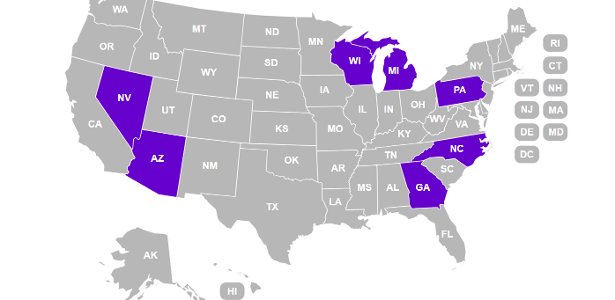
Kamala is expected to lead in big cities, such as Philadelphia and Pittsburgh, while Trump is betting on the rural population. In a state in industrial decline, workers tend to turn their backs on Democrats. However, Harris is counting on the large infrastructure projects launched by Biden and the support of unions to face rejection;
State chose Biden in 2020 and Trump in 2016. Between the years 1860 and 1932, the state elected only Republicans. From Roosevelt’s first election in 1936, Pennsylvania began to alternate between parties. In 1992, the series of six Democratic victories began, which was only broken in 2016, with Trump’s victory. In the following elections, the businessman lost to Biden by 1.6%.
Michigan
State has 15 delegates and the highest percentage of Arab-Americans in the country. The Democratic party lost approval in the state due to Biden’s support for Israel in the conflict against Palestine. On the other hand, Kamala managed to win the strong support of the main automobile industry union, relevant in the state.
Trump focuses on speeches about the cost of living to mobilize the middle class. The Republican presents Kamala as the heir to a Democratic mandate marked by inflation. Furthermore, Trump chose Grand Rapids, Michigan, to make his first public appearance after the attack, demonstrating that he recognizes the importance of these delegates.
The state has elected six Republicans and seven Democrats in the last 52 years. During the 70s and 80s, Michigan elected Republicans Nixon, Ford, Reagan and Bush. Until, in the 1992 elections, the state chose Democrat Bill Clinton and remained faithful to the party, electing Gore, Kerry and Obama. In 2016, the state changed direction again, giving Trump a 0.2% advantage over Hillary. In 2020, Michigan elected Biden with 50.6%.
