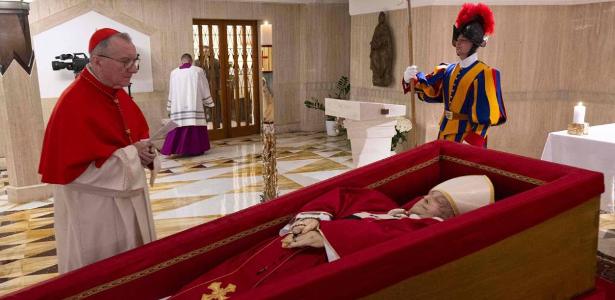
Where does the Pope go? What science and religions say about death and life ‘after’
However, for the majority, it is not so much death to awaken fear, but the uncertainty of what happens when one dies, and then. From the medical point of view, there is more than one form of death: in clinical death, the cardiovascular system collapses, pulse and breathing param, the organs are no longer oxygen and nutrients. A resuscitation through artificial ventilation and cardiac massage is still possible, and often successfully.
In the case of brain death, however, there is no longer this possibility: brain, cerebellum and brain trunk cease to work. Certain brain cells in the deepest layers may still be active, but consciousness is irreversibly lost.
Nevertheless, it can still be artificially maintaining the life of “brain dead” for a long time. Certain patients may even react to external impulses, for example during surgeries, but from the point of view of medicine, these are mere spinal reflexes, not painful sensations.
Pathogens remain dangerous
Human organs still resist for some time without being supplied. Only after a while cell division gradually stops until the cells die. If their number is too large, a regeneration of the organs is no longer possible.
The first to succumb is the brain, whose cells already die after three to five minutes without oxygen. The heart can hold about half an hour. The blood that stops circular gives in to gravity, depositing in the lower parts and forming hypostasis spots, or livor mortis.