
Who was the prostitute lover of Louis 15 who ended up dead by guillotine
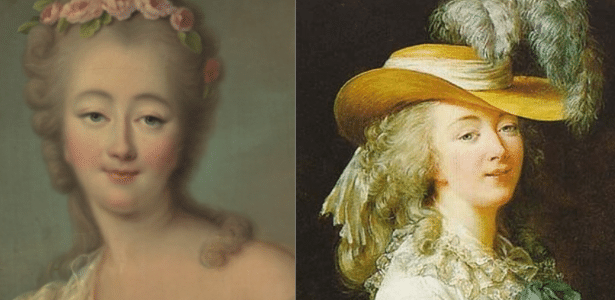
Jeanne du Barry, the last official mistress of King Louis XII of France (1754-1793), was a prostitute.
Hated by the court of Versailles, but adored by the king, she managed to impose herself for six years as the monarch’s favorite, ignoring all those who detested her for her shameful profession and for not belonging to the nobility. However, even the ill-fated Queen Marie Antoinette had to give in and accept it.
It has been portrayed for centuries as vulgar, ugly and dirty, and nothing like reality. As expert Emmanuel de Waresquiel writes in his biography of Du Barry, she was cultured, beautiful, blonde, with exquisite features and behavior (not at all like her portrayal in films such as Marie Antoinette). She knew the customs of elegance and protocol at the Palace of Versailles thanks to her relationships with the high nobility and her training in a convent. Furthermore, her work as a hairdresser and as a seamstress in a women’s clothing workshop marked the personality and elegance of her refined and sophisticated style.
But yes, she was a prostitute. That’s what enchanted the king. Jeanne du Barry was a professional intimacy expert, it is even said that she used aphrodisiac pills. In those years, she was a faithful companion, who did not directly interfere in the affairs of the king’s government. This did not stop her from being considered manipulative and ambitious.
The time of the libertines
Jeanne Bécu, her maiden name, met the king through her pimp, Count Jean-Baptiste du Barry, who had contacts among the courtiers and managed to get the king’s personal assistant to introduce her into his retinue, or rather, his bed.
This was easy and possible because, in the 18th century, the morals of French high society were influenced by libertines: intellectuals and aristocracy mixed in relaxed environments, where eroticism, sexuality and freedom in intimacy had no limits. This is told by Pierre Choderlos de Laclos in his novel Les Liaisons Dangereuses (Dangerous Connections), from 1782, through 175 letters in which the customs of the time are reflected. The novel was made into a film several times.
The kings of France had wives and usually an official mistress, a favorite. Louis XIII’s official mistress for years, Madame de Pompadour, died in 1764, and in 1768 the queen consort, Maria Leszczynska, died. The heir to the throne, Luís Ferdinand, and his wife, Maria Josepha of Saxony, parents of the future Louis 16, also died. Therefore, in 1768, when he met Jeanne, Louis was a sad and unpopular king, lonely, with little enthusiasm and little ability to govern.
Then he found Jeanne
According to historians Emmanuel de Waresquiel (mentioned above), Marc Fourny and Alexandre Maral, when Louis met Jeanne he fell in love and had no further lovers until his death. He was 59 years old and she was 23. This relationship awakened his lost vitality and cheered him up until the day he died: “He’s three jolie, he’s nice to me; cell doit suffire” (“She is very pretty, I like her; that should be enough”).
To be the king’s official mistress, it was desirable for the woman to have a noble title and not remain single, in order to show an image of decency. The monarch arranged a white wedding with his pimp’s brother, Gillaume du Barry, who received money and goods for it. After the wedding, he retired to Toulouse and never really became her husband. In return, she became Countess du Barry.
It was then that Louis 15 took Jeanne du Barry to live in Versailles, in private apartments next to his rooms, luxuriously decorated and with a lot of space, compared to what was common in the palace at the time. Today, they are considered to exemplify the elegance and refinement of 18th century art. He gave her an allowance of three million pounds a year, as well as jewelry and possessions. Not to mention a black page, named Zamor, a gift from an English captain.
During the period when Jeanne was the favorite, she maintained friendly relations with philosophers such as Voltaire, supported the decorative arts and encouraged their development. Great artists worked for her: musicians, sculptors and architects.
“There are many people today in Versailles.”
According to historians, Jeanne was despised by everyone. A prostitute, the king’s favorite? It was an unbearable idea. This is why she was insulted all over Paris, in songs, in pamphlets and by all social classes. Even so, the testimonies of the time cannot fail to recognize his stance. Jeanne was polite even in the face of the most explicit humiliations. According to historian Evelyne Lever, she remained kind and respectful to everyone around her until the end.
The princess of the time, Marie Antoinette, married to the heir Louis 16, caused a diplomatic incident by not even wanting to greet her. She considered her a prostitute and a scandalous intruder at court. In the end, she reluctantly gave in and one day approached her and said: “Il ya bien de monde aujourd’hui à Versailles”. (“There are many people today in Versailles”).
That was all. Marie Antoinette continued to reject and despise Jeanne. The latter tried, unsuccessfully, to win her affection with gifts and courtesies that the princess returned without ceremony. However, when the days of the Revolution arrived and the entire kingdom also hated the now Queen Marie Antoinette, she gave in and there was a rapprochement.
Goodbye, Versailles; hello, guillotine
In 1774, the king fell ill with smallpox. Jeanne took care of him even when faced with the risk of contagion. In May, after her death, the new kings Marie Antoinette and Louis XVI immediately expelled her from Versailles.
After living for a time in a convent, she settled in the palace of Louveciennes that the king had given her, away from the life of the city and the court. She led a quiet, bourgeois life, receiving visits from her few close friends. She had a new unconditional love, the Duke of Brissac.
His life could have continued peacefully until the end. However, he suffered a theft of jewels that had been paid for from the royal coffers: diamonds and pearls with a current value of 60 million euros. She made a public complaint in Paris and the news brought her back into the public eye. His assets, affections and friendships were considered state crimes.
She was arrested, tried by the revolutionary court and sentenced to the guillotine. Jeanne du Barry was beheaded at the age of 50 on December 8, 1793. It is said that she was screaming, crying and begging for another minute to live.
*Ana María Iglesias Botrán is a professor in the Department of French Philology at the Faculty of Philosophy and Letters. PhD specialist in French Cultural Studies and Discourse Analysis from the University of Valladolid.
This article is republished from The Conversation under a Creative Commons license. Read the original here.