
WorldWhat Democrats can do now (and what they can’t) with the new control of CongressBBC World•11/04/2026 – 20:40hs
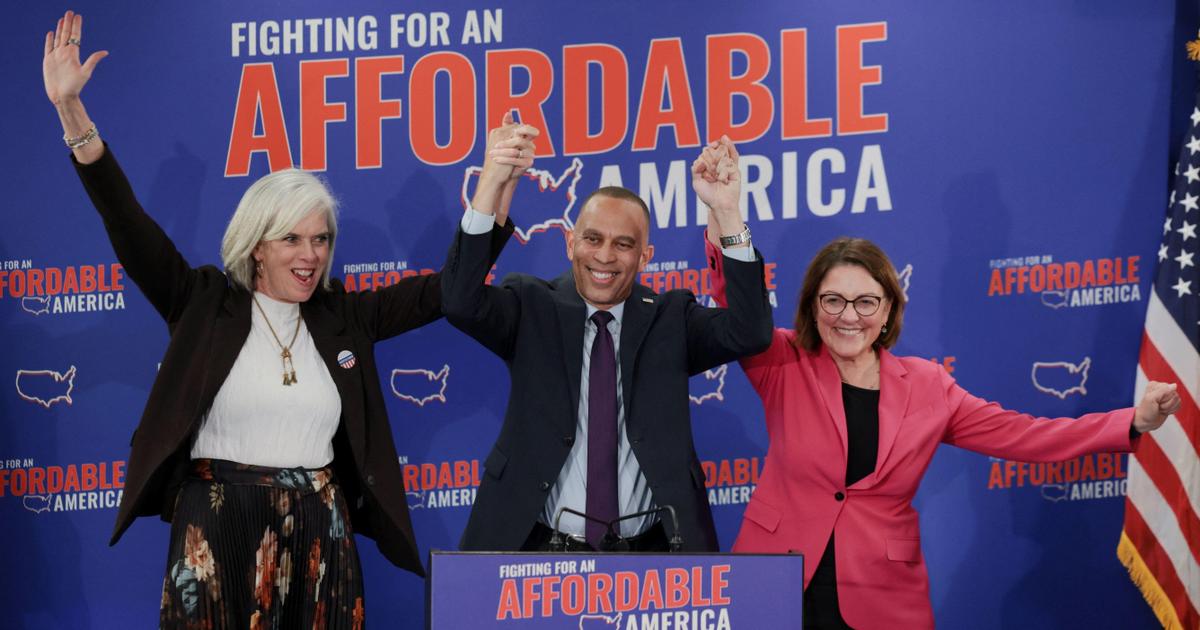

The election was a dream night for Democrats. In January, reality will prevail.
They had reason to be elated Tuesday night. After their overwhelming electoral victory, Democrats will take control of both houses of Congress next year.
“Today begins the great American comeback,” declared Hakeem Jeffries, Democratic leader of the House of Representatives, elated.
After months of promises during the election campaign—to investigate corruption; reduce health, food and gasoline costs; and ending the war with Iran — will now begin the much more difficult process of putting their plans into action.
A change in the balance of power in Washington does not necessarily mean that Democrats can immediately begin to carry out their legislative projects. Democrats control Congress, but Republican President Donald Trump still has the power to veto legislation.
Democrats should not consider what has just happened as “a mandate,” US Senator Chris Coons told the BBC, recalling that the party remained “deeply unpopular.”
“We have to show that we can do things, that we can provide answers to concerns and questions about low wages and rising costs in particular,” he said.
“The Democratic Party is still deeply unpopular. We are less unpopular than the Republican Party and much less unpopular than Donald Trump.”
What Democrats could achieve
California Congressman Robert Garcia will soon head a powerful House oversight committee, with the ability to significantly complicate Trump’s final two years in office.
“Hire lawyers,” the Democrat said in a statement as the victorious results rolled in on election night.
The committees of both the Senate and the House of Representatives of the United States have investigative powers, which they could use to investigate alleged conflicts of interest and other actions of the president and his associates.
On Tuesday, Garcia rattled off a list of potential targets: Trump’s family, “corporate corruption,” alleged abuses by the Department of Homeland Security and Immigration and Customs Enforcement (ICE), and the government’s management of Epstein files.
The Senate also has the power to confirm or block the president’s appointments to the Cabinet and judiciary.
If, for example, a vacancy arose on the U.S. Supreme Court during Trump’s term, Senate Democrats could use their new power to block a nomination or to force Trump to choose a more moderate candidate who draws bipartisan support.

The House of Representatives also has the power to initiate a political trial against a president, the so-called “impeachment”, which is the first step in the congressional process to remove an official from office.
Democrats impeached Trump twice during his first term, although the US Senate ultimately voted to acquit him in both cases. However, given that a two-thirds majority is required in the US Senate – that is, 67 votes – convicting a president in an impeachment trial will likely remain out of reach for Democrats.
There is an active debate among Democrats about whether impeachment is now a good idea. The first impeachment trial, in 2019, sparked partisan rancor and allowed Trump to later portray himself as a victim of political persecution, which later helped build support for his second White House bid.
Jeffries, who would almost certainly have to give the green light to any impeachment attempt by Democrats, has remained ambiguous.
“Well, we’ve made it clear: We haven’t decided anything. And we haven’t ruled anything out either,” he told CNN in August.
What Democrats may find difficult to do
Americans’ frustration with Congress’ productivity was palpable before the election. Only 14% of registered U.S. voters approved of lawmakers’ performance, according to a Gallup poll conducted in October.
But with a Republican in the White House and Democrats leading Congress, Americans could see even greater gridlock.
“If you thought legislating was difficult in the last Congress with only Republican control, it’s going to get much more difficult now,” said Casey Burgat, a professor of legislative affairs at George Washington University.
Since they will control both chambers with a comfortable majority, Democrats will be able to pass legislation through Congress with relative ease.
It will be more difficult to get it signed into law.
For a law to go into effect, the president must sign it. Trump has the power to reject laws passed by Congress that he does not support, and Congress can only override his decision with a supermajority in both chambers, margins that Democrats alone will not reach despite their victory on Tuesday.
As his party lost election after election in the Senate Tuesday night, Trump struck a conciliatory tone.
“We will work with the Democrats and, as you know, we hope to work with them. We will probably reach an agreement,” he told The New York Times.
But a few minutes later, he posted on Truth Social a photo of his red campaign cap with the word “VETO” emblazoned on the front. That ambivalent attitude toward a Democratic Congress could become a recurring theme.
While opposition to Trump fueled Democrats’ success, lawmakers acknowledged Tuesday night that it may not be enough.
“This is overwhelmingly a rejection of Donald Trump, his agenda and his policies,” Coons told the BBC.
“But if we go too far or fight too much internally, we could lose this opportunity.”

Despite the veto threat, Jeffries has said his party wants to repair significant cuts Republicans made to health care programs such as Medicaid, which is used by low-income people, and the insurance marketplace program known as Obamacare.
“As House Democrats, our top priority is to reverse these cuts to Medicaid and extend the Affordable Care Act tax credits,” Jeffries said at an event for health care workers in September.
On issues where there is typically greater agreement between Democrats and Republicans — such as policies affecting the cost of living, regulating the AI industry, reassessing military funding for Israel and controlling the war against Iran — negotiations could break down as lawmakers try to reach an agreement. As they become the opposition heading into the 2028 presidential cycle, Republicans may not be willing to help Democrats score too many victories.
Fissures could also emerge even among Democrats themselves, especially on issues related to Israel. During the midterm elections, a split emerged in the Democratic Party over continued US military funding for Israel.
Elected senators such as Abdul El-Sayed of Michigan, and some elected members of the US House of Representatives, declared during the campaign that they would vote for a bill to reduce aid to Israel. These Democrats could encounter resistance from their own leaders.
Then there is the question of controlling Trump’s foreign policy, which could be difficult, despite the Democratic majority.
Even before the midterm elections, Congress witnessed bipartisan efforts to limit Trump’s ability to continue the war with Iran. Although some of these measures were approved by one or both chambers, Congress has not been able to enforce them. Both the House of Representatives and the Senate passed a resolution in June to cease hostilities with Iran. Trump could not veto it, but in practice he has ignored it.
The White House has argued that Trump has broad powers to continue the war. But, Scott Anderson, a senior fellow in governance studies at the Brookings Institution, said Congress’s authority to compel Trump to act is an “open legal question.”
“Congress can try to resolve this through litigation and force the courts to give us an answer,” he said.
This article was originally written in English and we used an artificial intelligence tool to translate it. A BBC journalist reviewed the text before publication. Learn more about how we use AI.
-
Download the new BBC World Service app. Choose BBC News Mundo and receive news alerts, documentaries and analysis, all in one place. Important: The new app is not available in the United Kingdom or the United States.
-
You can also follow us on YouTube, instagram, TikTok, Facebook, x and in our whatsapp channel.
-
And don’t forget subscribe here to our newsletter to receive a special selection of our best content every Friday.