
Xi Jinping Clothing in Military Parade reinforces China’s message
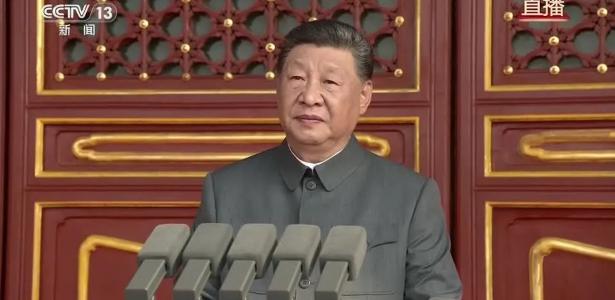
The clothing would symbolize the end of the “century of humiliation” and the Chinese Renaissance. Professor João Rafael Morais, from the Institute of Strategic Studies of UFF (Fluminense Federal University), explains that the clothing refers to 1949, the year the Communist Party took power and declared the closure of the period of foreign defeats and interventions started in the 19th century. “When Xi wears this clothes to look at China as a single civilization, not a copy of the West,” he says.
Message to the West
The uniform would have been a message to the outside and a sign of resistance to the West. For Professor Paulo Watanabe, from São Judas University, the choice is inserted in a Pan-Assasanism movement led by China and Russia. “China will not go through any westernity political movement imposed on it, as happened with Japan,” he says.
The clothes reinforces Xi as the central leader of the party and Chinese diplomacy. Watanabe adds that the president “is seen as a strong leader within the Chinese Communist Party and can centralize the meaning of Chinese diplomacy.”
Clothing branded aesthetic rupture with western patterns. Researcher Leonardo Paz, from the Institute of Strategic Studies at FGV (Getúlio Vargas Foundation), recalls that leaders in different regions have already resorted to traditional costumes to affirm their own identity. “XI evokes ideological continuity, but also Chinese uniqueness in the face of an international order culturally dominated by the West,” he explains.
XI’s gesture compares to leaders such as Evo Morales, Fidel Castro and Gaddafi. Peace recalls that everyone turned to clothing as a form of political expression. “In Bolivia, Evo Morales wore indigenous gowns; in Cuba, Fidel Castro appeared in military uniform; in Libya, Gaddafi had typical costumes. Everyone turned to clothes as a political symbol, and Xi does the same when wearing a uniform that refers to the communist party,” he says.
