
Zema adopts Castro’s strategy to use R$1.4 billion and boost candidacy in 2026
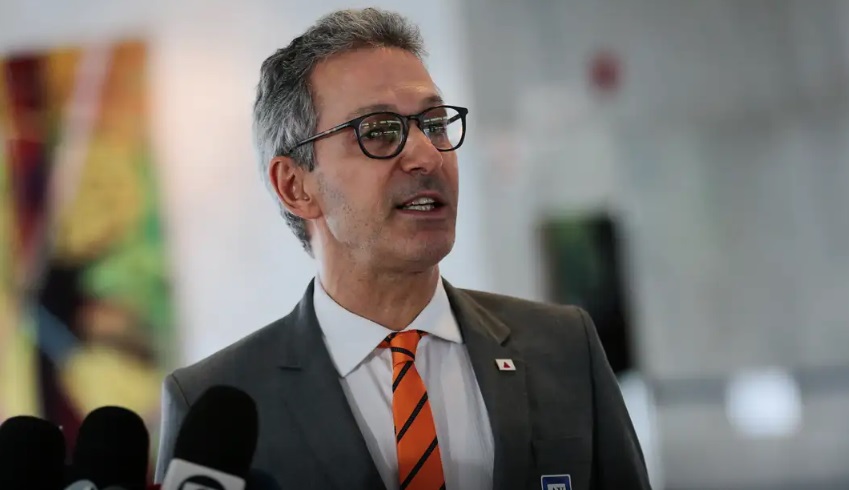
The government of Minas Gerais is looking for a maneuver to release R$1.4 billion in works in 2026, an election year, when current vice-governor Mateus Simões (PSD) will compete to succeed Romeu Zema (Novo). The objective is to sell Copasa, a state-owned sanitation company, and use the resources in “infrastructure investments”, along the lines of the strategy adopted by the governor of Rio, Cláudio Castro (PL), with the Cedae concession in 2021.
READ MORE: Zema praises action that killed drug boss: “Minas is not a terrorist’s backyard”
The Zema administration took the first step last week, with the approval of a Proposed Amendment to the Constitution (PEC) that allows the sale of Copasa “for the purpose of paying the State’s debt to the Union”. As a result, privatization — which will be voted on in a separate project, still being processed in the Legislative Assembly — was linked to Minas joining Propag, a state debt refinancing program.
Unlike what was initially expected, Zema informed, in a letter sent to the National Treasury on the 6th — hours after the Assembly approved the Copasa PEC — that the resources from the sale of the state-owned company will not be transferred directly to the Union, but will be used for works in the state
“The resources from the privatization (of Copasa) will be used in infrastructure investments, in order to reduce interest on the debt”, stated the government, in a note sent to GLOBO.
Minas’ current debt is around R$180 billion. The first step of the Minas Gerais government’s proposal is to reduce around R$36 billion, transferring resources obtained from the sale of state assets to the federal government. The current administration plans, for example, to raise R$13 billion from the privatization of the state-owned gas company, Cemig, in addition to R$1.9 billion from the sale of properties.
From then on, with a remaining debt stock approaching R$144 billion, the government of Minas committed to investing 1% of this amount — that is, around R$1.4 billion —, already in 2026, in “sanitation infrastructure actions, housing, adaptation to climate change, transport or public security”, another criterion provided for in Propag. This investment is a counterpart for the federal government to agree to pay the debt in 30 years, interest-free.
READ MORE: Zema states that there is still a long way to go for the privatization of Copasa
Zema’s allies and opponents agree that the strategy helps to boost the state’s cash flow from the beginning of 2026, when vice-governor Mateus Simões will inherit the government and run for re-election. Simões has directly supervised the negotiations for Minas to join Propag. The vice-governor’s estimate is to raise around R$4 billion with Copasa.
Behind the scenes, the expectation is that the process will be completed before the middle of the year. Although the privatization project has yet to be voted on in the Legislative Assembly, Copasa has already hired a consultancy, in May, which has been preparing the privatization scenarios, including projections of tariff adjustments for users.
The opposition to Zema, in turn, is trying to stop the sale of the state-owned sanitation company.
According to state deputy Beatriz Cerqueira (PT), the government of Minas Gerais did not present impact studies on the project being processed in the Assembly. “As the government is in a hurry, it is opening up the possibility of several subsequent questions. Why is there no need for a study for the privatization of Copasa? The federal Sanitation Framework law determines that these studies be presented”, he criticized.
Parameters
One of the parameters of the government of Minas Gerais for the pace of sales of Copasa is the privatization of Sabesp by the government of São Paulo. The process was completed in July 2024, after São Paulo deputies gave the green light for the transaction in December 2023.
Another parallel is the Cedae concession, in 2021, which yielded around R$15 billion to the Rio government coffers. At the time, governor Cláudio Castro (PL) had just taken over the Guanabara Palace permanently, after the impeachment of his former ally Wilson Witzel.
Castro took advantage of Cedae’s resources to launch a series of actions across the state, which helped him boost his candidacy for re-election the following year. By the end of 2022, the Rio government allocated R$7.7 billion of the concession’s revenue. In works alone, there were R$2.5 billion.
Another relevant destination for Cedae’s resources was the Ceperj foundation, which received R$128 million in 2022 alone. The Superior Electoral Court began to judge Castro, this month, in an action that accuses the governor of having financed, via Ceperj, the irregular hiring of electoral cables. The rapporteur, Minister Isabel Galotti, voted for Castro’s impeachment, but the analysis was halted due to a request for review.
The application of Cedae funds to works was only possible due to a loophole in the tax recovery regime, a federal law that preceded Propag.