
50% Trump rate comes into force: understand the measure and how it affects Brazil
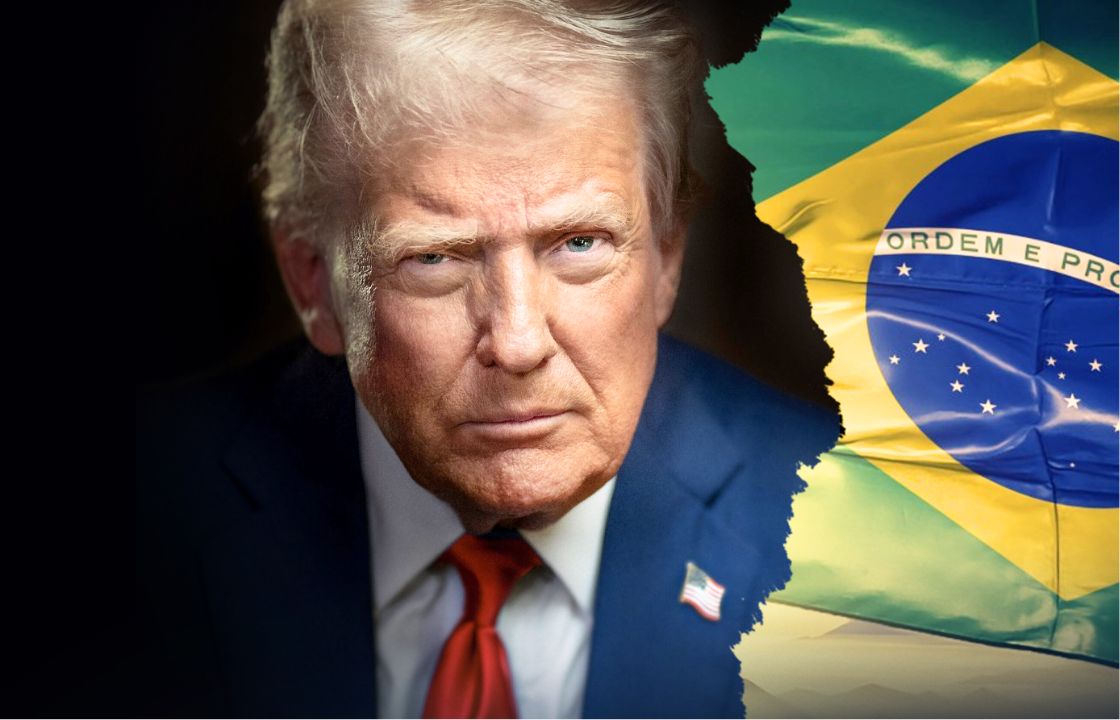
The highest fare imposed by the United States government to a country comes into force on Wednesday (6): a total of 50% over several Brazilian products. The measure, signed by Donald Trump last week, adds a reciprocal fare of 10% to a specific 40% surcharge, applicable to about 35% of Brazil’s exports to the US.
Despite the weight of the number, a list of 694 exceptions should alleviate the immediate effects on GDP, with the Brazilian government betting on sectoral negotiations to further mitigate the impacts. However, with the household arrest of Jair Bolsonaro and the political character of tariffs against Brazil, the scenario, which already brought concerns, recruited.
Here’s all that is known so far about US tariff against Brazil, which sectors have been left out and which one will be most affected, and how the measure can affect the Brazilian economy and its pocket.
Free tool
XP Simulator
Learn in 1 minute how much your money can yield
- When does it start to be worth?
- Why was Brazil the target of the highest fare in the world?
- How exceptions improve the scenario
- Who pays how much: international comparison
- Which regions and sectors of Brazil will be most affected?
- What are the alternatives for the affected sectors
- Predicted economic impact
- What has brought us here? See the chronology
- And the market, how is it reacting?
- What to expect from negotiations
When does it start to be worth?
Unlike most countries, which will be subject to tariffs announced last week from Thursday (7), Brazil will have to deal with its rate a day earlier, this Wednesday (6). The case of the country is special, with Donald Trump by signing a specific executive order against Brazilian products on July 30, and determining the implementation within 7 days.
The initial impact has also been softened by the fact that there is a transition rule: shipped products that reach the US until October 5 will be exempt.
Why was Brazil the target of the highest fare in the world?
The measure is a Donald Trump’s clear attempt to interfere with the Brazilian judiciary. The White House justified the measure in response to “violations of freedom of expression” and “political persecution” in the country, in reference to the trial of former President Jair Bolsonaro by the STF. Trump directly linked the elevation to what he calls “witch hunt” against his ally.
Paul Krugman, Nobel Prize in Economics, classified the Brazilian case as “an especially clear example of the illegality of Trump’s tariff offensive,” and said the US president “has no strength to force a country of over 200 million people to change their internal policy.”
In addition to the Bolsonaro case, gestures such as Lula’s proposal to replace the dollar in international trade are seen by US sectors as a threat in analysts assessment.
How exceptions improve the scenario
The long list of exceptions to the rate attenuates economic pressure. According to Rio Bravo Investimentos, the average effective rate drops from 50% to about 29% to 31%, varying according to the degree of exemption to sectors such as energy and chemicals.
Thiago de Aragão, a political analyst, evaluates that some sectors were strategically left out “to serve as a bargaining chip in negotiations.” Krugman stresses that the exclusion of orange juice, 90% imported from Brazil, is “an implicit recognition that the US needs what Brazil sells.”
Who pays how much: international comparison
Brazil is, at least for now, at the top of the list of countries with the largest tariff imposed by the US. The rate of Brazil exceeds, for example, those imposed by countries such as Syria (41%), Laos and Myanmar (40%), Switzerland (39%), Canada (35%), as well as the provisional rates of China (30%) and Mexico (25%), which follow in negotiations with the US and had the delayed entry into force. In addition, Brazil is far from a block of countries that have obtained the base rate of 10%, such as Argentina.
See how different nations compare themselves:
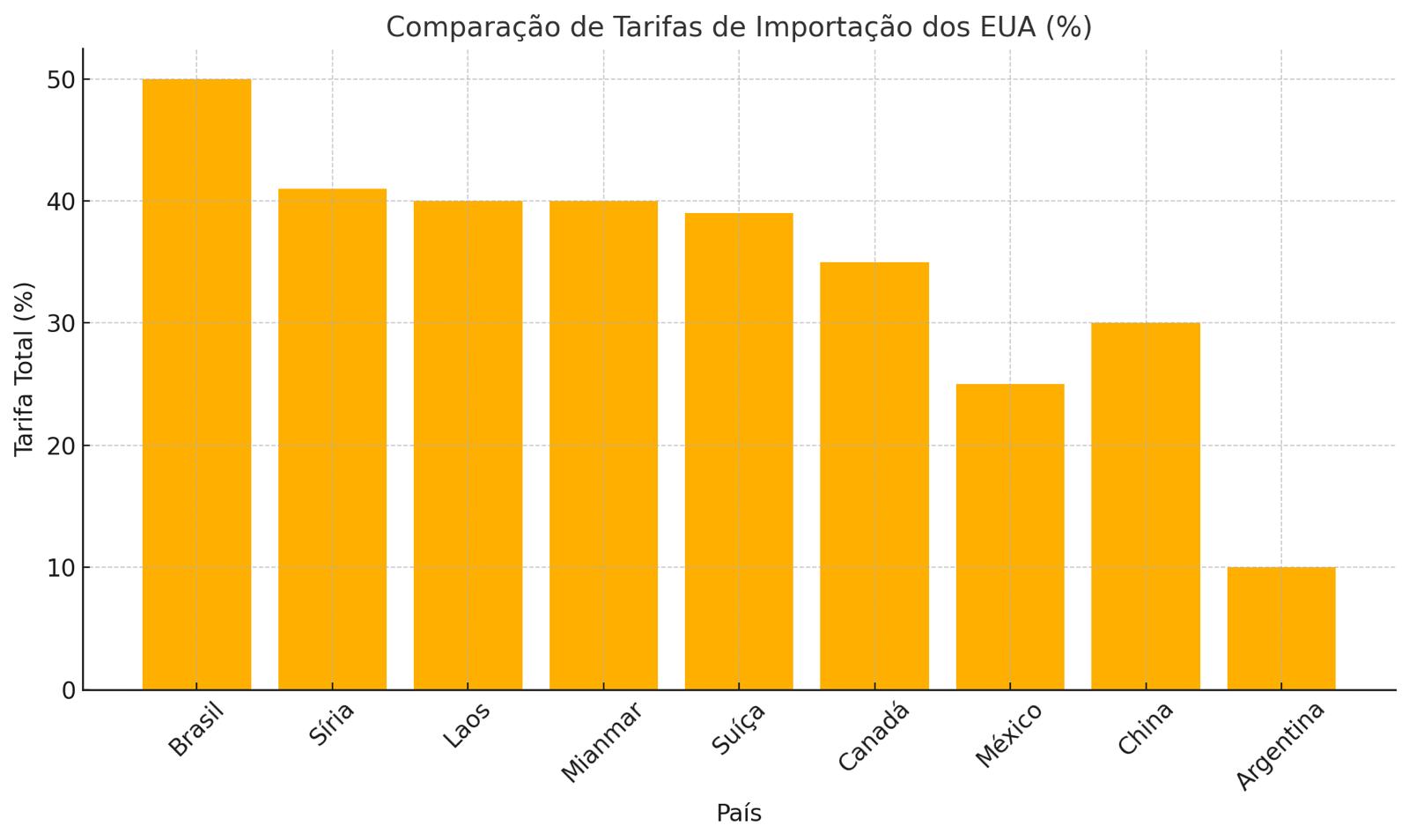
To understand, it is possible to face the rates as divided into four large groups.
Which regions and sectors of Brazil will be most affected?
- THE North East You should feel the biggest impact, with full rates on fresh fruits, fish and shoes.
- THE Midwest loses competitiveness in meat and coffee.
- Already South and Southeast They were partially protected thanks to the exclusion of high value -added industrial sectors such as aviation and cellulose.
What are the alternatives for the affected sectors
The government prepares a package of relief measures to the affected sectors. It is not yet known what they are, but it is speculated that there is subsidized credit and even public purchase of some more critical inputs that have been left without the market. States, such as Goiás and São Paulo, also prepare alternative financing lines to help companies.
Predicted economic impact
The list of exceptions greatly attenuated the scenario on the impact on the Brazilian economy. Planning Minister Simone Tebet also recalled that “almost half of Brazilian agribusiness trade is concentrated in Asia, compared to only 10% for the US”, reducing the dependence on the US market.
Kinea projects 0.2 pp GDP impact, while XP goes beyond seeing only 0.15 pp of losses. “We already waited a limited impact, but it fell even more with the exceptions,” explains Luiza Pinese of XP.
On the other hand, Goldman Sachs is not even able to change their 2.3% growth estimate for this year.
However, the Central Bank preaches caution, and says there are still many uncertainties at stake to understand the effect on prices.
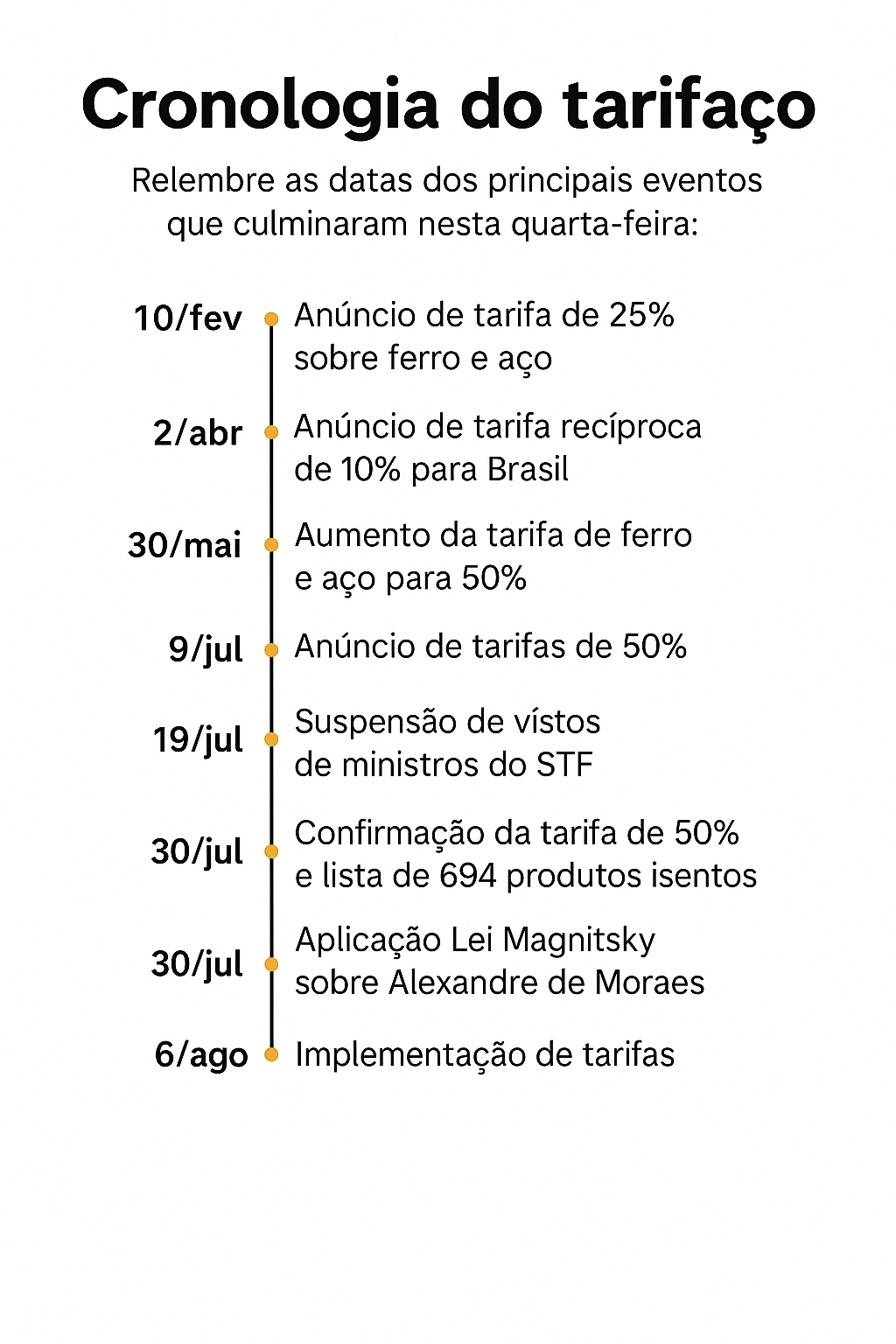
What has brought us here? See the chronology
Remember the dates of the main events that culminated on Wednesday:
And the market, how is it reacting?
The release of the list of exemptions caused immediate relief: Ibovespa rose almost 1% on the day of the ad and the dollar fell from $ 5.60 to $ 5.49.
For Bradesco BBI, “exceptions lead to a significantly less severe scenario than feared and can generate a range of relief.”
Embraer (EMBR3) was highlighted with more than 10% after the exclusion of additional tariff aircraft. Suzano (SUZB3) also benefited from the exemption of pulp.
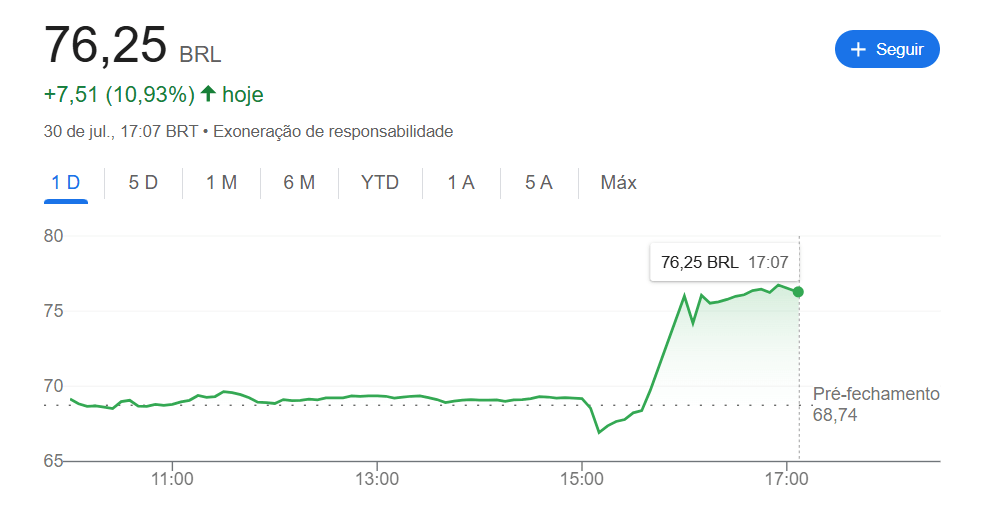
On Tuesday, there was some expectation of negative movement after Bolsonaro’s arrest, but that’s not what happened. According to analysts, the detention was already expected and, at least until yesterday afternoon, Trump had not spoken on the subject, which made the expectation of falling interest rates in the US to take the price reins.
What to expect from negotiations
The government seeks a cut in non -exempt products, with priority for coffee, cocoa and meat. The strategy includes direct dialogue between high -ranking authorities, and at least until last week, included the possibility of conversation between Trump and Lula – which cooled after a sanction against Alexandre de Moraes and Bolsonaro’s house arrest, seen as a barrier for negotiations.
Meanwhile, Brazil approved formal consultation with the World Trade Organization (WTO). Chancellor Mauro Vieira says that the measure “represents the defense of Brazil’s sovereign law to define its own destiny,” but recognizes that the dispute solution system is paralyzed.