
Fachin creates observatory to monitor transparency and risk of corruption in court
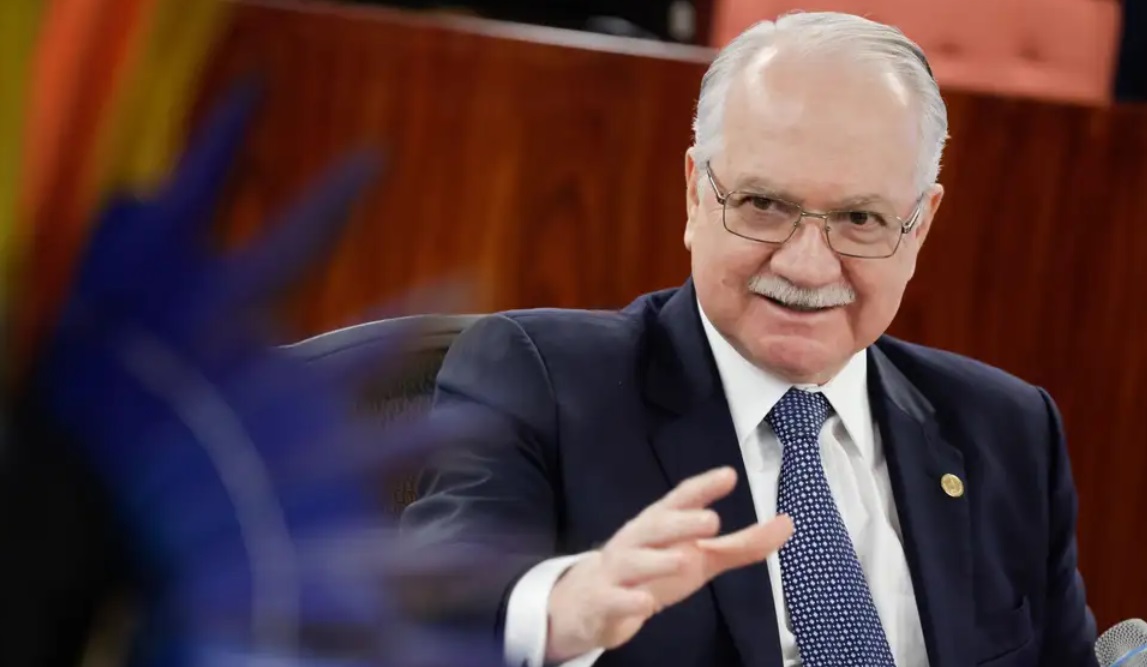
The president of the Supreme Federal Court (STF) and the National Council of Justice (CNJ), Minister Edson Fachin, announced the creation of a group to “strengthen integrity, governance and transparency in the Brazilian judiciary”.
The ordinance establishing the National Observatory of Integrity and Transparency of the Judiciary was published on Wednesday, 1st. According to the document, its members will be designated by the President, with honorary acting, without remuneration.
Dino says he hopes that Congress does not change penalties of the convicted for trying to blow
The magistrate stressed that crimes such as attempted coup, terrorism and heinous offenses are not subject to amnesty or pardon
STF suspends a decision that released hormonal block for trans children and adolescents
Flávio Dino understood that only the Court can judge constitutionality of the norm of the Federal Council of Medicine, which restricts treatment over 18 years old
The news was anticipated by Fachin in his inaugural speech on Monday, 29. “It is timely the creation of an observatory of integrity and transparency, which can be able to gather, analyze and act with promptness in favor of the legitimacy of the Brazilian judiciary,” said the minister.
Free list
10 Small Caps to Invest
The list of actions of promising sectors of the Scholarship
The collegiate will focus on production of indicators and identification of risk of corruption, conflicts of interest and threats to the independence of justice. The actions must include campaigns, events and training programs aimed at strengthening ethical values and the culture of integrity within the judiciary.
The Observatory may, for example, request steps for the Law of Access to Information to be complied with by the Courts and recommend the removal of magistrates in cases where conflict of interest is pointed out, as proximity to one of the parts of a case.
The collegiate agency will be linked to the presidency of the CNJ and will be attended by counselors of the agency, the secretary general and the Secretary of Strategy and Projects. Members of the Director Committee, with nine members, will include representatives of civil society, state, federal and labor judiciary, and one nominated by the National Court of Justice. According to the CNJ, the inclusion of citizens in the committee seeks to bring the judiciary closer to the population.
The CNJ also reported that the Observatory aims to foster cooperation with universities, international bodies and other organs of the justice system in the exchange of methodologies and good practices.
