
Tarcísio says that the opposition is in the stone age and that the private sector does almost everything better
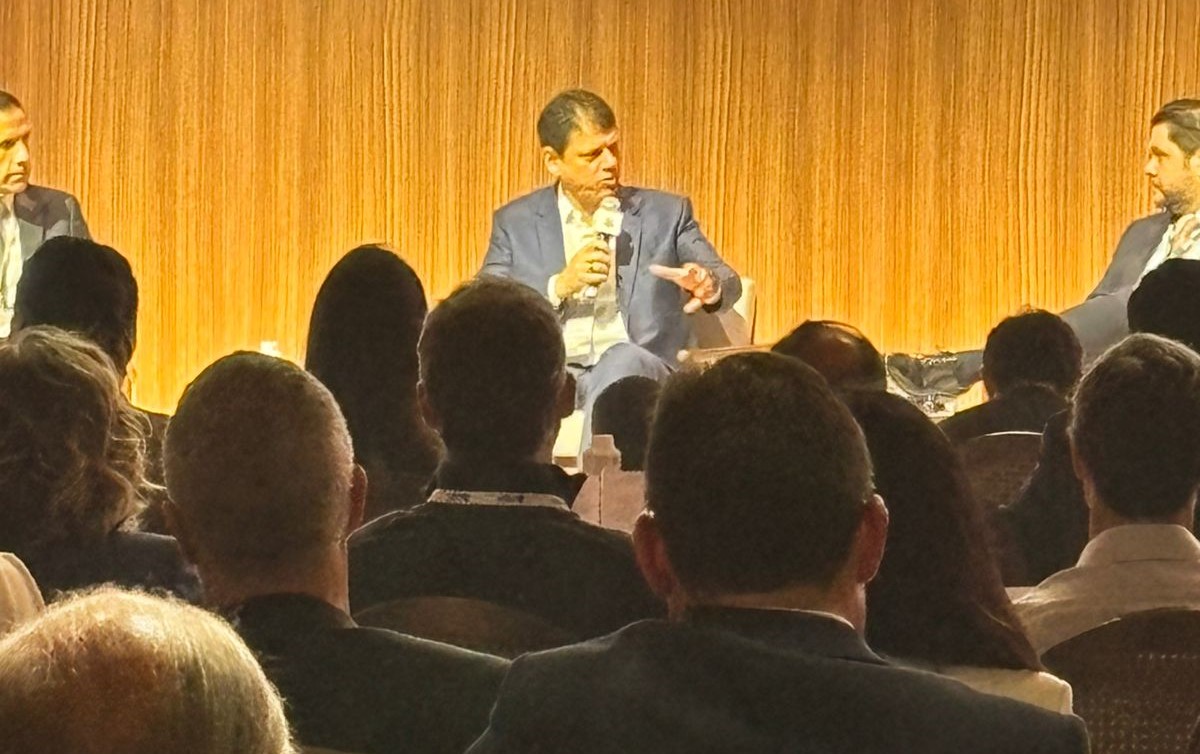
The governor of São Paulo, Tarcísio de Freitas (Republicans), once again emphatically defended the state’s privatization program, especially the sale of Sabesp, and criticized opponents of public-private partnerships.
During a UBS event, held this Wednesday (26), he stated that resistance to privatizations comes from “a group that is in the stone age”, repeating one of the harshest parts of his speech.
Tarcísio said that the state has already extinguished, liquidated or privatized eight state-owned companies within a program that he considers “successful”, alongside concessions and projects designed to attract private capital. According to him, the sale of Sabesp represents a “revolution in sanitation”, based on a model that “was awarded in the United States and the United Kingdom”.
The governor stated that the results of the first year of private operation are already noticeable. He mentioned that “the Tietê pollution spot shrank 34 kilometers in one year” and that “one million customers” will have sewage connection and treatment by the end of 2024. He also mentioned cases such as Guarulhos, which treated “2% of its sewage”, and should reach the end of the year treating 45%, with a forecast of reaching 78% in 2025 and universalization in 2029.
When commenting on the political resistance to the project, Tarcísio stated that he faced “51 legal actions” to privatize Sabesp and that the government was technically prepared to respond to the challenges. “There is a group that is very backward, a group that is in the stone age”, he said, reinforcing that the private sector delivers faster results. At another point, he summarized his position: “The private sector does almost everything better than the State”.
Will Bolsonaro be able to migrate to the semi-open system from 2030? Understand
Bolsonaro will initially serve his sentence in a closed regime, as the sentence is more than eight years in prison

IPCA-15, Lula sanctions IR exemption, Beige Book and more highlights from this Wednesday
InfoMoney brings together the main information that should move the markets this Wednesday (26)
The governor also highlighted regulatory advances, saying that São Paulo today has “the best regulatory agencies in Brazil”, shielded against political interference and more technically prepared. According to him, strengthening regulation is essential to expand the presence of the private sector.
Review of benefits and tax management
When defending the adjustment agenda, Tarcísio mentioned the review of tax benefits as part of the strategy to increase the state’s investment capacity. He stated that the government reduced spending, reorganized careers, digitized services and adopted measures that increased administrative efficiency. According to him, the set of these actions expanded the fiscal space for investments between 11% and 14% of net current revenue in 2026.
In the end, he made an indirect criticism of those who attribute the problems of state-owned companies to supposedly social missions. “Then people say that Correio’s problem is sending letters to the Amazon. No, it’s not,” he said, arguing that efficient management and fiscal discipline are more decisive for the quality of public service.
