
Senate vacancy in Lula’s ticket generates dispute between former PT member, minister and parties

The uncertainty surrounding the ticket supported by President Luiz Inácio Lula da Silva (PT) for the Senate in Pernambuco pits former PT member Marília Arraes (Solidarity), the Minister of Ports and Airports, Silvio Costa Filho (Republicans), and Centrão leaders in the state, such as Miguel Coelho (União Brasil) and Eduardo da Fonte (PP).
The only definition within the acronym’s state directory is the candidacy for re-election of senator Humberto Costa (PT), while the choice of who will assume the second vacancy remains under negotiation.
Behind the scenes, there is an understanding that the natural path in the state is for Lula to support the mayor of Recife, João Campos (PSB), in the race for government and, consequently, debate the second spot on the ticket with his ally. PT members admit, however, that discussions with the national PSD about the possibility of supporting Lula’s re-election could jeopardize the election in Pernambuco.
Opportunity with security!
The current governor, Raquel Lyra, joined Gilberto Kassab’s party last year, motivating a wing of Lula’s party to defend the existence of a double platform for the president.

With visits to Bolsonaro, Papuda becomes ‘political HQ’ in assembling electoral alliances
Children, parliamentarians and lawyers help to consolidate the PM’s prison unit as a nucleus for validating candidacies, with the former president coordinating candidacies and monitoring research
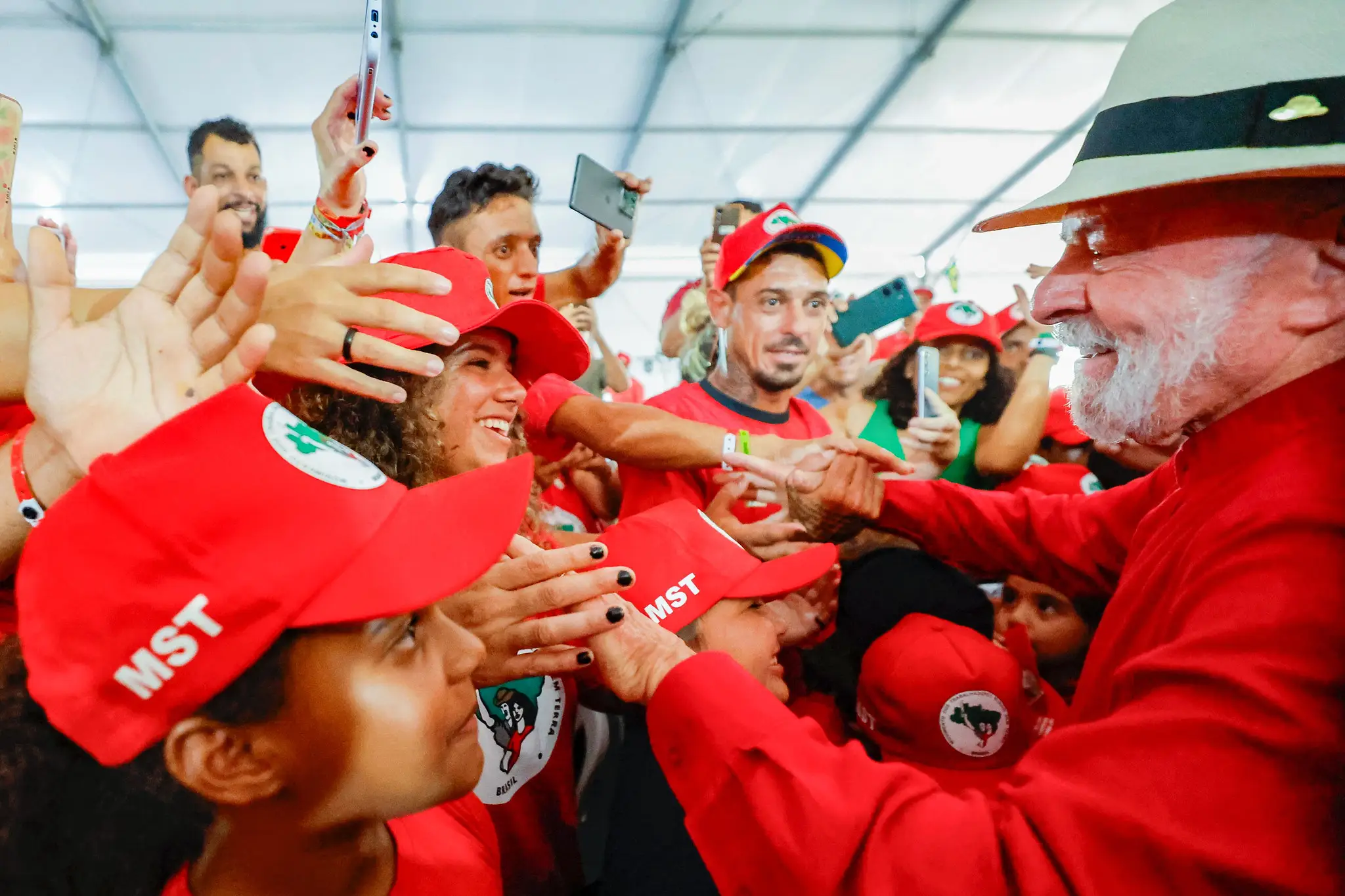
Lula defends governments of Cuba and Venezuela at PT event in Salvador
President also stated that the US is acting to restrict China’s access to critical minerals
Campos’ interlocutors claim that he maintains a good relationship with both Marília, his cousin, and Sílvio Costa Filho and Coelho — the latter presides over the state directory of União Brasil. The choice of a name on the right would be the consequence of an already existing signal that the current mayor wishes to dialogue with the federation formed between the Union and PP, as a way of facilitating governability in the state if elected. There is, however, resistance in the PT to Coelho’s name as it considers him aligned with Bolsonarism.
Coelho acknowledges to his allies that he voted for former president Jair Bolsonaro (PL) in 2022, but considers that he has been with Campos since the following year and would have no difficulty in dialoguing with the PT. The leader of União Brasil was also mayor of Petrolina and is seen behind the scenes as a name that can bring votes to the pessebista in the interior.
Research is an obstacle
On the other hand, the first Datafolha survey in the state this year, released the day before yesterday, makes it difficult for Campos to join the right. The data shows former deputy Marília Arraes with a consolidated lead in all scenarios tested, varying between 36% and 41% of voting intentions. Aligned to the left since her youth, she appears ahead of Humberto Costa, who scores between 24% and 26%.
Lyra’s political rival, Marília left the PT in 2022 amid internal disputes. She announced her pre-candidacy for the Senate in October last year, at an event attended by Campos. But, for the mayor’s allies, her remaining in a party with less coverage could hinder negotiations. Therefore, local politicians are betting that the former PT member will opt for a “stand-alone” candidacy, which she rejects.
— João and I fought over antagonistic projects for a long time and converged when there was a need to combat Bolsonarism. We support each other in the 2022 and 2024 elections. I am the only woman considered to be on his ticket, who will compete against a governor and a vice-president, and I am leading all the polls. What is the reason, then, for me or anyone else to consider that I will be a stand-alone candidate? — says Marília, who highlights that she is confident that she will be on the Lulist ticket.
The former deputy was even sought out by other acronyms, such as PDT, to run for the Senate. Interlocutors report that the condition established by her for eventual affiliation is that the new party does not have its own candidate for state government, since support for Lula and Campos is interpreted as non-negotiable for Marília.
Minister Silvio Costa Filho, in turn, is well-regarded by both the PT and Campos, being seen as loyal to Lula. The main challenge in consolidating his candidacy is his low performance in electoral polls so far. In Datafolha, he appears with a score between 10% and 13%, below other names on the right, such as Coelho and Fonte, which vary between 18% and 22%.
— In Pernambuco I will be alongside Humberto Costa to contest the elections for the Senate. And naturally the parties are carrying out their internal discussions, but both the path of the Republicans and the path of the PT today are in the direction of supporting João Campos’ candidacy — the minister said when asked by GLOBO about the possibility of running for the Senate.
‘Political weight’
In a scenario in which a name from the federation between the Union and the PP is part of the ticket supported by Lula, PT members show a preference for Eduardo da Fonte. An obstacle for the Lulist composition with the deputy is his proximity to Lyra, which displeases Campos’s wing in the state.
The PT presidency in Pernambuco states that the second name on the Lulist ticket must be from a centrist party, but is awaiting a position from the president on who will be the name he supports for the government in order to deepen negotiations.
— In any case, both Campos and Lyra would like to have a name from the União-Progressista federation on the ticket, due to the very great political weight of these parties in the state — highlights Carlos Veras, state president of the PT.
Humberto Costa confirms his candidacy for re-election in the House and highlights that the party’s priority this year is the re-election of Lula and the victory of as many senators as possible in the Northeast.
— We want a second name for the ticket that supports Lula’s candidacy and commits to being the basis of the government if he is elected — says the senator. (Victoria Azevedo and Jeniffer Gularte collaborated)
