
Haddad and Alckmin’s resistance in candidacy reflects PT’s poor performance in SP
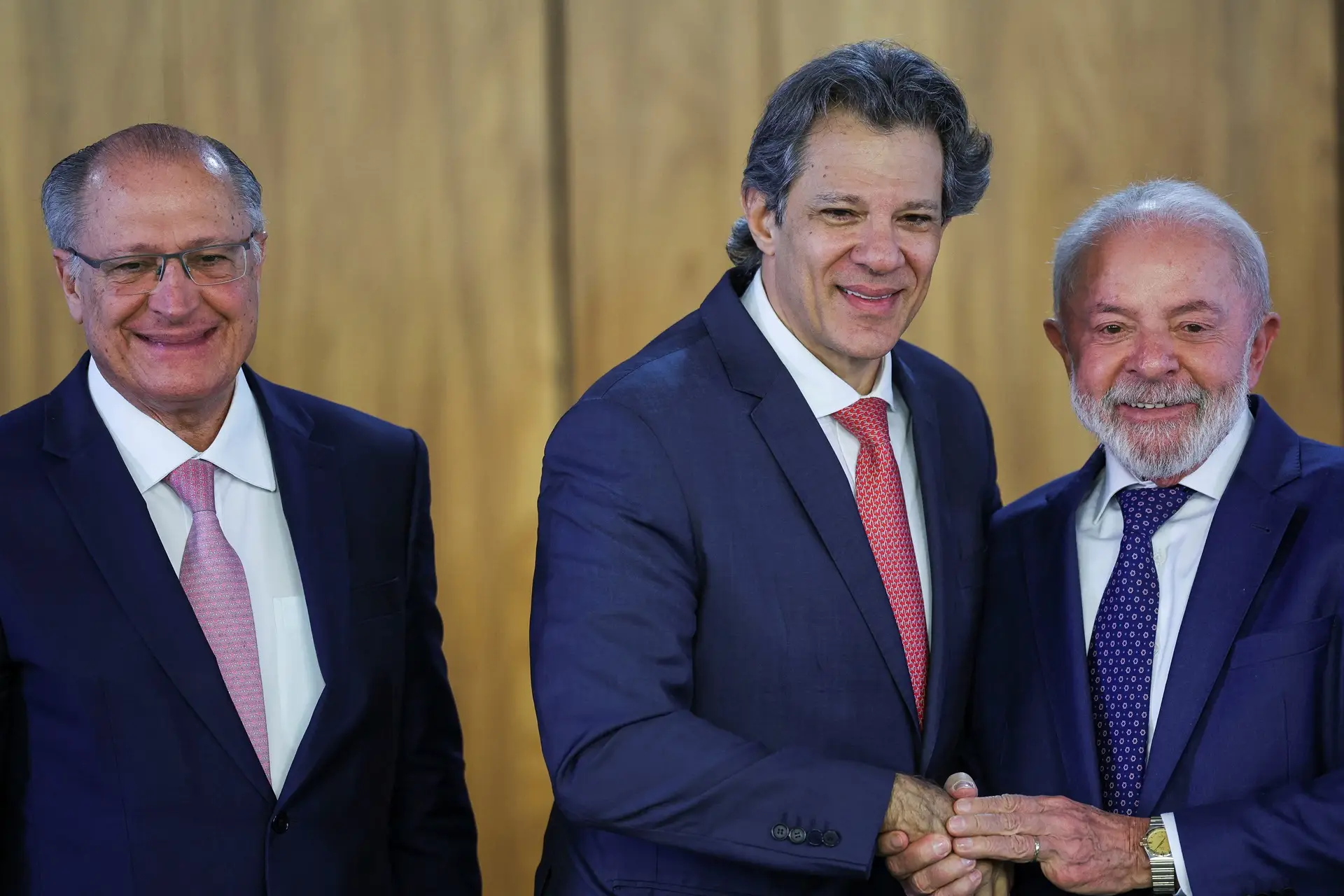
Despite pressure from President Lula to consolidate a strong platform in the country’s largest electoral college, Finance Minister Fernando Haddad (PT) and Vice President Geraldo Alckmin (PSB) resist heading the dispute for the government of São Paulo in the October elections.
The stance reflects not only the wear and tear of previous defeats, but the history of the left in the state, generated both by the shrinking of the PT and the rise of the right, especially in the interior.
Today, Haddad is considered the ideal name to compete with Tarcísio de Freitas, who is seeking re-election. PT supporters remember that the 44.73% of valid votes he obtained in 2022 against the current governor accredit him, but Haddad resists the endeavor — he has accumulated three consecutive defeats: this one against Tarcísio, the Presidency, in 2018, for Jair Bolsonaro, and the city hall of the capital, in 2016, when he was not re-elected.
Opportunity with security!

Flávio Bolsonaro skates when looking for platforms for the PL in the Northeast, Lula’s stronghold
Directories prioritize Senate disputes and alliances with more competitive right-wing names, frustrating the pre-candidate’s plans
Last week, Haddad stated that, despite his position, he has spoken to Lula about the topic.
— I have posed several questions, which he is considering. I am also considering several other questions he is posing. They are two people who love each other and are evolving in the conversation — he said, during a debate promoted by BTG Pactual.
Alckmin also shows no interest in running for elections, and his party has already told Lula that the priority is to keep him on the ticket as vice president. The president, however, does not give guarantees because he is trying to attract formal support from the MDB in exchange for the vacancy.
The discouragement of both occurs at a time when the left has recorded a weak performance in São Paulo in the disputes over the Palácio dos Bandeirantes and in municipal elections. Since redemocratization, the PT has only gone to the second round in elections for state government twice: once in 2002, with José Genoíno, and the other in 2022.
The PT’s lack of strength on São Paulo soil has bothered Lula, who publicly accused the party last week, during an event celebrating the party’s 46th anniversary. The party, which was born in ABC and grew in the Metropolitan Region, having even elected mayors in the capital three times, was weakened after the impeachment of Dilma Rousseff (PT) and the Lava-Jato operation.
In 2024, the PT suffered its worst result in municipal disputes, electing only four mayors in small cities, even with Lula governing the country. The balance was even worse than that of 2016 and 2020, when the party was at the height of its crisis after Lava-Jato and the president’s arrest.
Read more:
- Tarcísio opens more than 20 points before Haddad and Alckmin in the 2nd round in SP, says research
Jairo Nicolau, professor at the Center for Research and Documentation of Contemporary History of Brazil (CPDOC) at FGV, states that the party cannot underestimate the importance of São Paulo in the presidential election, but that its history brings challenges.
— São Paulo is not just the Metropolitan Region, it’s not just the university cities, it has a gigantic interior where the PT has always had more difficulties. It’s no surprise that no one wants to make the sacrifice, especially against a well-rated governor. Even more so in the case of Alckmin and Haddad, who are experienced politicians, with national projection — he says.
Nicolau also points to the poor performance in 2024 as another warning sign, even though the number of mayors lined up is not a guarantee of defeat or victory:
— The municipal election signals the rooting, the spread of the party across the territory and it is a good sign if the party wins a large number of city halls. A municipal network is very important for an election for governor and president, but it is not decisive. So much so that Tarcísio won without any of that. The PT could win an election even without having that root in the state, with a popular candidate.
For PT members, this candidate is Haddad, precisely because he “came very close” in the last election.
— Whoever has 45% of the votes has to aspire to have 50%, it’s not a delusion, it’s something tangible. Because it will be a polarized, nationalized election, Tarcísio will have to stick to Bolsonaro and bring the former president’s rejection to him — says state deputy Donato (PT).
Dispute provision
In recent weeks, PT members have begun to perceive Haddad as having a greater chance of running than Alckmin, but the vice-president is seen as an essential actor in securing votes for the president and the left-wing gubernatorial candidate in the interior of the state, who historically aligns more to the right, even if his name is not on the ballot. Lula’s allies say they hope he participates vigorously in the campaign, with agendas mainly in the interior. As Alckmin has already governed the state for 12 years, including being elected in the first round in two elections, he would have a captive electorate even though he sided with Lula, say PT members.
In relation to the Legislature, the PT is concerned about the lack of vote-pullers, and members of the party already admit that the biggest votes on the left should go to PSOL, with Erika Hilton (PSOL-SP) and Sâmia Bomfim (PSOL-SP), for example, who should also inherit the estate of the Minister of the General Secretariat, Guilherme Boulos, who decided not to run again for federal deputy.
The Senate, considered a priority for the PT, has a more optimistic scenario: the party is working with the option of supporting current ministers Simone Tebet, currently at the MDB, and Marina Silva. Alckmin is also an option studied for this candidacy.
For deputy Emídio de Souza (PT), a platform with strong names is essential for Lula’s victory:
— The weight of São Paulo is very great. The state has 22% of the national electorate, this unbalances an election. In the 2022 second round, Lula had a narrow victory against Bolsonaro, and in the state he had 44% of the vote. If he had had 40%, for example, he would have lost the election. Having 30% or 40% here makes a lot of difference — points out Emídio.
That year, the PT member won in the capital, despite having lost in most of the state. But the change between 2018 and 2022 encourages PT members for this year. In the party’s first contest against Bolsonaro, the right-wing candidate won by a landslide in the state, with 631 cities. In the following election, the former president won in 547 municipalities.