
Government suspends tender for dredging in Tapajós after indigenous occupation at Cargill
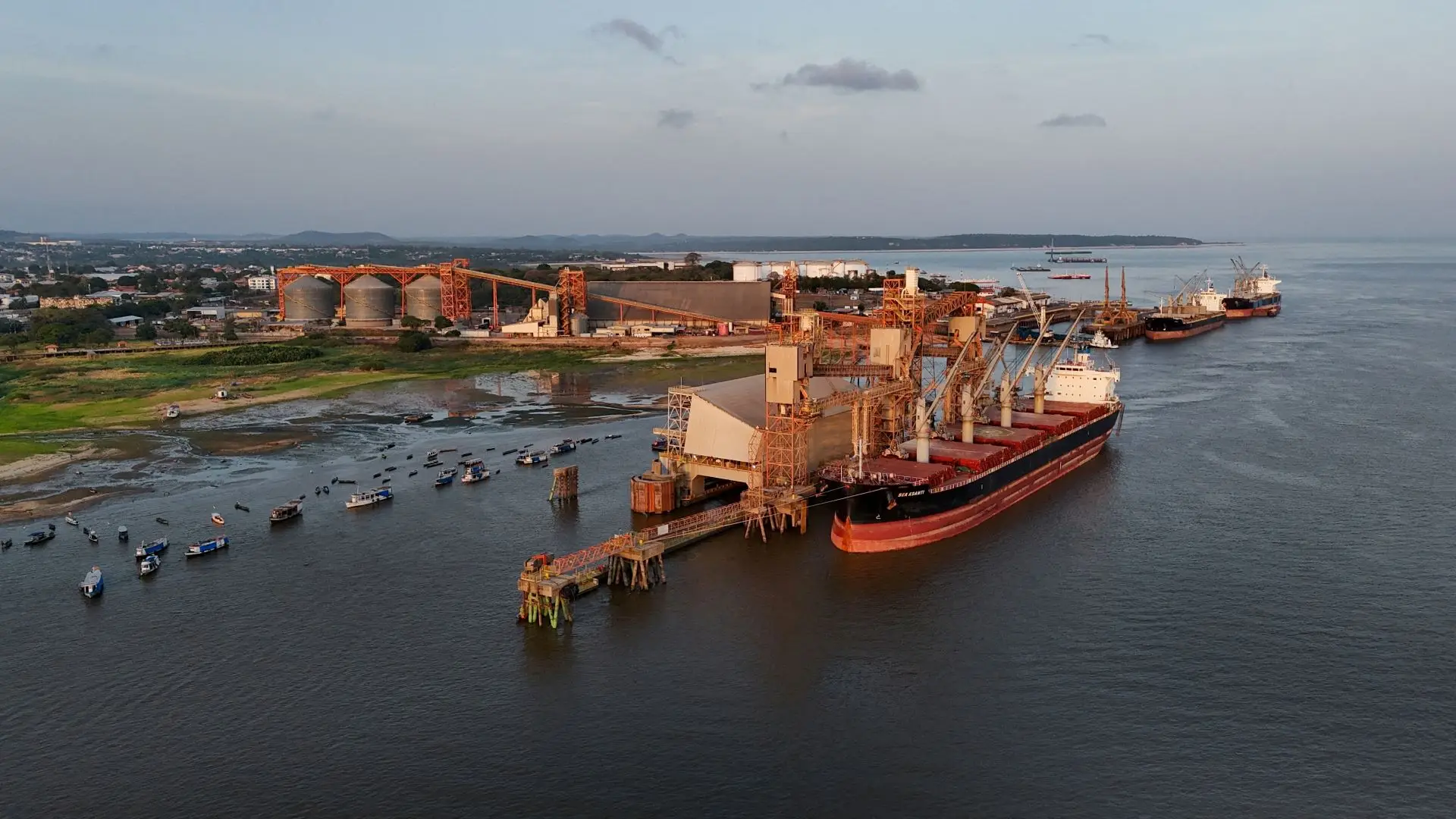
The Ministry of Ports and Airports (MPor) announced this Sunday (22) the suspension of the dredging tender and a series of administrative measures in response to the invasion of the Cargill port terminal in Santarém (PA), which occurred in the early hours of Saturday (21). The federal government called meetings for Monday (23) and said that the next steps will be coordinated with the General Secretariat of the Presidency, the Ministry of Justice and Public Security and the government of Pará.
In a note, MPor reported that it had already notified Companhia Docas do Pará (CDP) and contacted the Attorney General’s Office (AGU). The ministry recognized the constitutional right to demonstrate, but stated that “acts that generate violence, invasions or irregular occupations are illegal and will not be tolerated”.
Also read: Indigenous protesters protest and occupy Cargill port terminal in Santarém
The ministry also said that it “will act firmly in defense of legality, public order and the interests of society” and that “all court decisions must be complied with”.
The government also once again defended Decree No. 12,600, a central target of indigenous people’s demands. According to the ministry, the measure “does not deal with privatization, but only authorizes the carrying out of technical studies”.
The decree, signed by President Luiz Inácio Lula da Silva in August 2025, included the Madeira, Tocantins and Tapajós rivers in the National Privatization Program, paving the way for the government to evaluate navigability concessions, including possible dredging works.
For the indigenous people of the Tapajós and Arapiuns Council (Cita), the measure represents a threat to the way of life of the communities that inhabit the banks of the Tapajós. The group began blocking vehicle access to the Cargill terminal on January 22 and, over the following weeks, even intercepted ferries on the river. After 30 days without a response from the federal government, the council escalated the protests and occupied the multinational’s facilities.
“After a full month of institutional silence and the absence of concrete answers, we occupied the office of the company Cargill, in Santarém”, declared Cita in a statement.
On Friday night (20), before the invasion of the terminal, protesters vandalized the facade of Cargill’s central office in São Paulo. The multinational reported that operations at the terminal were “completely interrupted” after the occupation and that there is “strong evidence of vandalism and damage to assets”.
The terminal handled more than 5.5 million tons of soybeans and corn in 2025, a volume that represented more than 70% of all grains shipped at the port of Pará, according to data from the port sector.
The crisis reached the Judiciary on Saturday (21). Cargill sued the Federal Court to remove the protesters from inside the terminal, but the Judiciary Subsection of Santarém refused to analyze the request on duty. Federal judge Eneias Alexandre Gonçalves Torres recognized the seriousness of the situation, but assessed that “the adoption of measures aimed at the prompt reestablishment of order is not recommended on duty”, as women, children and the elderly gather together at the location.
The Federal Public Ministry (MPF) also contested the summons given to the indigenous people to vacate the area within 48 hours, classifying the act as irregular because it was carried out “in a generic manner, through the use of a megaphone ten meters away from the camp, without identification or personal notification of the indigenous people”.
MPor stated that “it is essential that dialogue is maintained so that solutions can be reached”. For the indigenous people, the dredging works could affect water quality and fishing in Tapajós, according to statements by Cita in a statement released after the occupation.
