
Age of cheap drones: How a new wave of weapons is defining the war in Iran
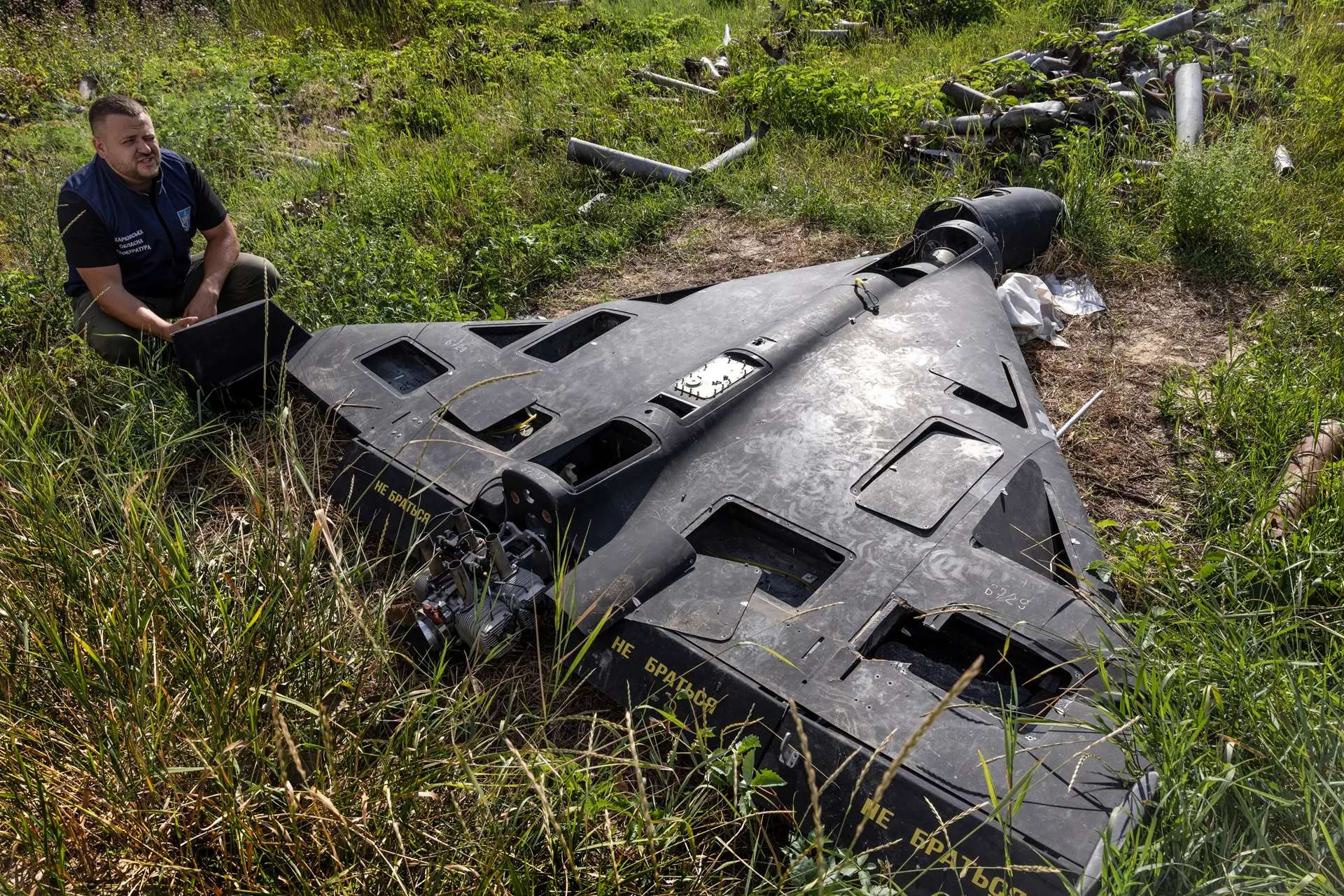
Long before Iranian drones rained down on airports, skyscrapers and embassies in the Persian Gulf last week, the U.S. military was busy trying to find cheap ways to shoot them down.
In 2024, the military research and development effort reverse-engineered the Shahed drone for use in practice shooting, aiming to develop new defenses against a weapon Iran shared with allies such as Russia, Venezuela and Hezbollah.
Then an idea arose: If the Iranian drone was so cheap and effective, why not just copy it? Thus was born the United States’ low-cost unmanned combat system, or LUCAS (Low-cost Unmanned Combat System). Last week, US forces used the drone for the first time in combat to target infrastructure and overwhelm Iranian air defense systems.
Iran attacks refinery in Bahrain, and war reaches its 10th day with no sign of relief
Attacks hit Bahrain, Qatar and Kuwait after the appointment of the new Iranian supreme leader; US withdraws embassy staff in Saudi Arabia
“These low-cost drones, modeled after Iran’s Shahed drones, are now delivering retribution made in the United States,” US Central Command said on social media.
Duel drones have become a defining feature of the war with Iran. It’s a glimpse of a future in which the ability to use new technologies, quickly copy adversaries and mass-produce cheap weapons matters as much as the ability to build more advanced ones. This style of rapid innovation is more familiar to Silicon Valley than the Pentagon’s procurement bureaucracy.
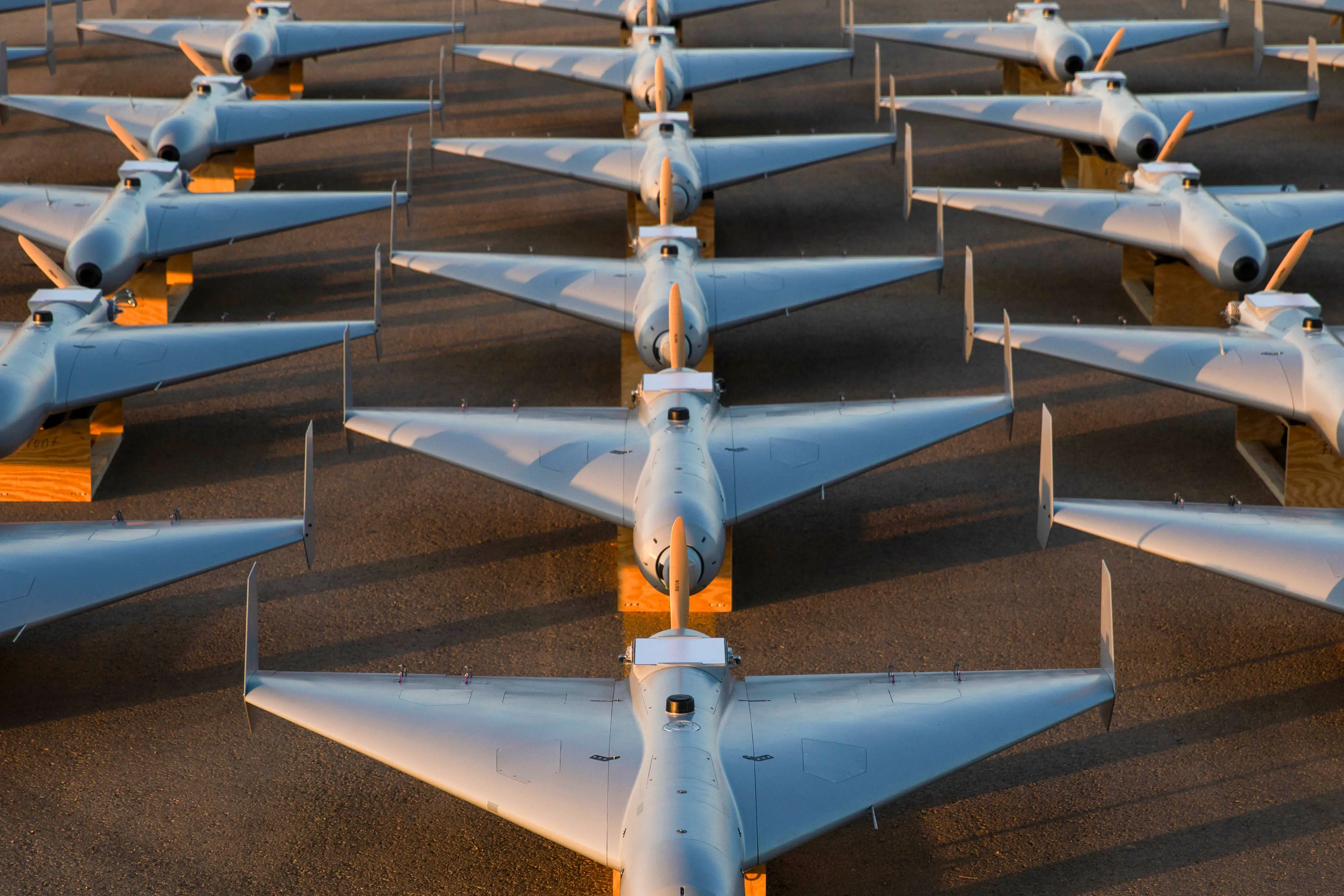
Low-cost drones arriving on the battlefield vary in size, cost and abilities. The Shahed and LUCAS, which cost about $35,000 each, are approximately 3 meters long with a wingspan of 2.4 meters, and carry an explosive charge in their nose that detonates on impact. After target coordinates are entered, drones can travel hundreds of kilometers autonomously.

War in Iran brings fear of stagflation and market switches to “panic mode” to protect itself
Oil close to US$120 and fears of recession shake global markets and already eliminate US$6 billion in assets
Looking like a miniature fighter jet, they occupy a middle ground between the tiny quadcopters of hobbyists retrofitted as human-guided bombs in Ukraine and the million-dollar American Predator and Reaper drones, which can hover in the sky for a day and carry missiles.
Bombings that once required volleys of expensive missiles can now be carried out for the cost of a batch of Honda Accord cars. Places that once seemed isolated from conflict, such as the glamorous cities of the Gulf, are now easily within reach.
These capabilities are proliferating quickly, said Michael C. Horowitz, a Pentagon official during the Biden administration. Software advances for autonomous systems, faster manufacturing and the spread of targets by precision guidance will make low-cost drones a lasting reality of warfare, he said.
“You have the growing capability of any country or militant group around the world to now conduct sensing, short-range strikes and even long-range strikes,” said Horowitz, who worked on the LUCAS program. “This is really changing the character of war.”
LUCAS was produced by SpektreWorks, a small startup in Arizona, and defense analysts believe it uses a military version of Iran’s Starlink called Starshield to navigate, or another satellite communications system. It’s a sign of how advances in commercial technology can yield simple new weapons as useful as the complicated systems that defense contractors have spent decades building.
“This is the first case in a long time, actually since the early days of the Cold War, where the U.S. saw a capability produced by an adversary, decided it fills a gap that we had, and produced it,” said Lauren Kahn, a former Pentagon policy adviser who is now a senior research analyst at Georgetown University’s Center for Security and Emerging Technology.

US considers using special forces in Iran to secure uranium, says Axios
Discussion about military operation raises fears of escalating war and sending American ground troops
SpektreWorks and SpaceX, Elon Musk’s company that operates Starshield, did not respond to requests for comment. Musk said in a social media post that Starshield was operated by the US government and was “not under the control of SpaceX.”
Tit-for-tat innovation echoes the war in Ukraine, where a relentless rush of weapons innovation has come to define front-line combat.
U.S. officials say the real achievement of LUCAS is not the technology itself, but the speed of its development. The military reverse-engineered a competitor’s weapon and fielded its own version in about 18 months. The $35,000 price tag, compared to a $2.5 million Tomahawk cruise missile, makes the economics hard to argue with.
Low-cost drones have disadvantages. They are slow and buzz loudly, making an attack easy to detect. With such a small size, they can only carry a modest load of ammunition, limiting the damage they can produce. And electronic warfare can be used to interfere with their navigation capabilities.
Still, more drone designs are on the way. Featuring a modular configuration and malleable software, LUCAS can be adjusted and updated as new technologies, such as artificial intelligence, grow in capability. President Donald Trump’s domestic and tax policy bill last year included $1.1 billion for a “drone dominance program” to build thousands of low-cost, one-way attack drones.
The US military has signed contracts with private military technology companies, including Anduril and Skydio, for more sophisticated drones designed to work alongside cheap ones. The goal is an arsenal with precision and mass. Some plans call for fighter pilots to fly alongside their own squadron of drones, according to Kahn.
“Right now, these systems tend to be remotely piloted or fire-and-forget systems,” said Horowitz, now director of Perry World House, a global affairs think tank at the University of Pennsylvania. “It’s easy to see how continued advances in artificial intelligence, if they prove to be reliable, will be a very attractive option for making these systems even more effective.”
‘Designed to cause chaos’
Over the past week, Iranian drones have produced some of the most terrifying images of the conflict.
Videos spread online showing Shaheds crashing into a high-rise building in Bahrain and the Fairmont the Palm, a hotel in Dubai, United Arab Emirates. Others showed Dubai airport filled with smoke and an expensive radar installation in Bahrain collapsing under an explosion. Iranian drones also struck the US Embassy in Riyadh, Saudi Arabia, and Amazon data centers in the United Arab Emirates, although it was not immediately verifiable whether these attacks were with Shaheds. Air traffic across the region was paralyzed, with tourists and business travelers stranded.
“They are designed to cause chaos,” said Anna Miskelley, a defense analyst at Forecast International. “It works really well in the media, too, when you have these videos of explosions.”
The ability to rain terror on populations, destabilize economies and upend everyday life is a central part of Iran’s drone strategy, said Farzin Nadimi, an Iran security expert and senior fellow at the Washington Institute. Inside Iran, he added, the attacks serve as necessary propaganda for the government to showcase “success stories.”
Iran has stored thousands of drones in caves and other hiding places, Nadimi said. He believes the Iranians have enough to continue launching swarms of hundreds of drones in daily attacks for at least several weeks. Drones are quick and easy to launch, often requiring just a truck-mounted container to launch. US and Israeli forces attacked Shaheds manufacturing centers and launch zones.
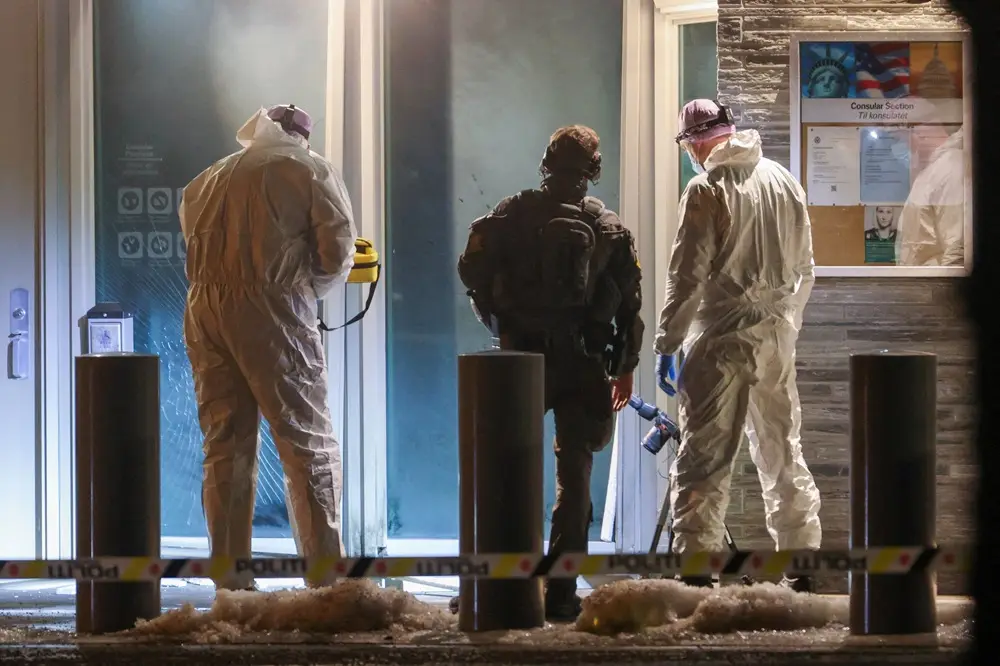
Explosion at US embassy in Oslo may have been a deliberate attack, police say
Explosion at US embassy in Oslo may have been a deliberate attack, police say
One of the earliest believed uses of the Shahed design was a 2019 attack on Saudi oil facilities. The new weapon featured a design stitched together from existing technology, including a simple, reverse-engineered German engine designed for light aircraft.
So crude are drones that their slow speed and low altitude make them difficult for modern air defense systems to detect. Radar software often filters out such slow-moving objects. If adjusted, it can pick up false positives like birds and civilian Cessnas. Defending against Shahed’s attacks is also expensive, costing up to $3 million per shot.
“It’s small enough to hide from radar, cheap enough to launch en masse, and lethal enough to force us to use more expensive technology to stop it,” Miskelley said.
Lessons from Kiev
In Ukraine, Shahed swarm attacks are so common that drone has become a household term. On online channels that warn about air raids, he even has his own emoji.
In many ways, the Iranian conflict is an evolution of what has been happening in Ukraine since 2022. Russia, which now has its own Shahed production facilities, has made a number of modifications that have fed back to Iran, such as better sensors, automated navigation and targeting capabilities, said Bryan Clark, a senior fellow at the Hudson Institute.
Ukrainian forces have also developed detection systems that use cameras and acoustic devices to listen for the drone’s buzzing lawnmower sound. Experiments in intercepting drones have ranged from machine guns and electronic weaponry to networks and even other drones.
Some of Ukraine’s defense techniques are returning to those involved in the Iranian conflict. In comments Wednesday, Ukrainian President Volodymyr Zelenskyy said he had spoken with U.S. officials and leaders in the United Arab Emirates and Qatar about providing technology to protect against drones as stocks of other costly defense systems decline.
“Ukraine’s experience in countering ‘Shahed’ drones is currently the most advanced in the world,” he wrote, adding: “It is clear why so many requests are directed to Ukraine.”
As American and Israeli strikes increasingly destroy Iran’s drone production facilities, many are watching to see if Russia supplies Shaheds reinforcements to Iran, potentially escalating the war further.
“Russia now has the largest manufacturing facilities,” Clark said. “After Iran offered production support during the Ukraine war, will Russia return the favor?”
