
US pushes for agreement on rare earths – but Brazil appears to have other plans
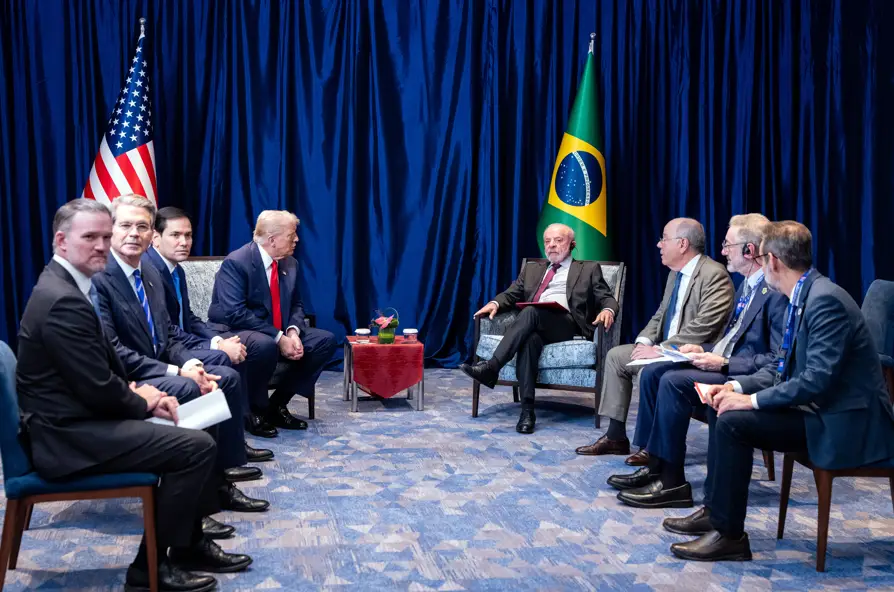
BRASILIA, Brazil — The United States has been pressing Brazil to enter into a bilateral agreement to produce millions of tons of critical minerals to boost the economies and battlefields of the future, according to U.S. and Brazilian officials.
Brazil, holder of one of the largest reserves of strategic minerals in the world, needs help to realize its potential in critical minerals and transform these reserves into exports, according to experts.
But the country appears to resist a deal, according to authorities, because it wants to control its resources and be able to sell them to countries other than the United States.
In February, U.S. officials sent a proposal to Brazil for a bilateral agreement on critical minerals but received no response, according to four Brazilian and U.S. officials familiar with the plan who requested anonymity to speak on confidential policy matters.
The United States hosted an important forum on critical minerals in São Paulo this week, with the aim of brokering agreements between the American government and Brazilian mining companies. The United States wants to invest billions of dollars in critical Brazilian minerals, a US Embassy spokesperson said, and has already identified at least 50 potential projects.
The spokesperson said the United States sent an invitation to the Brazilian government for the forum, but received no response.
The Brazilian government, in fact, did not attend the event, according to American and Brazilian authorities. President Luiz Inácio Lula da Silva’s office declined to comment on the absence.
But a senior official close to Lula said his government sees U.S. pressure on critical minerals as an authoritarian attempt to shape Brazilian policy in that sector. The official said he was not authorized to speak publicly about such a sensitive issue.
Shortly before the event, the top American diplomat in Brazil signed a memorandum of understanding with the governor of Goiás, a state rich in critical mineral reserves, according to a statement from the American mission in Brazil.
Still, to move forward with its plans, the United States needs Brazil. By law, minerals found in Brazilian soil belong to the government, and companies need authorization from federal, not state, authorities to explore reserves buried on land they buy.
Brazil and the United States have been holding discreet talks for years about an alliance for critical minerals. But now the United States is making a much more incisive bid for access.
Read more: 2nd largest reserve, but little explored; Will Brazil miss an opportunity in rare earths?
Brazil and the United States seek to reduce their dependence on China, which controls much of the extraction and processing of elements such as rare earths, lithium and cobalt.
Publicly, the Brazilian president has been clear: his country seeks to close deals, but will not hand over its critical minerals to foreign companies. “They have already taken all our silver, our gold, our diamonds, our iron ore,” Lula said during a state visit to South Africa this month, when speaking about foreign interest in Brazil’s critical minerals. “What else do they want to take?”
It is believed that Brazil has between 19% and 23% of global rare earth reserves, second only to China. This group of 17 elements is needed to make powerful magnets for a range of defense and green technology products, including guided missiles and electric cars.
The country also controls virtually all of the world’s niobium, used in the high-strength, low-weight steel needed for gas pipelines and jet engines. It also has large reserves of other important minerals, such as lithium and cobalt.
Brazil, traditionally seen as an exporter of commodities, seeks to build a supply chain in which critical minerals are extracted, processed and turned into magnets domestically, before being exported.
Although the US government wants to invest in the development of a Brazilian supply chain, it opposes any measure that would make the processing of these minerals in Brazil mandatory, according to an American official.
In exchange for the investment, the United States demands priority over China in purchasing critical Brazilian minerals, according to American and Brazilian officials. But Brazil, whose foreign policy prioritizes a wide range of trading partners, is hesitant to sign an exclusive agreement, one of the Brazilian officials said.
With vast reserves of strategic elements such as rare earths and lithium, South America has become a focal point in the global power struggle between China and the United States.
Brazil is also concerned, the Brazilian official added, about how a deal with the United States would fit into its other trade relationships, including an important agreement between Mercosur and the European Union that covers critical minerals. Last month, Brazil also promised to form a partnership with India in critical minerals and rare earths.
The impasse between the United States and Brazil occurs at a time when diplomatic relations between the two nations appear to be strained again.
This week’s critical minerals event was marred by controversy when the visa of a top U.S. envoy who was scheduled to attend was revoked after the Brazilian government discovered he planned to visit former president Jair Bolsonaro in prison and meet with his son, who will run as a right-wing candidate in his father’s place in this year’s presidential election.
When asked about the American proposal, Brazilian representatives said that the government was not opposed to a partnership, but that Lula wanted to discuss it with Trump during his visit to the White House. The Brazilian president was supposed to meet the American president this month, but the trip was postponed due to the war with Iran.
Experts say both countries stand to gain from a partnership that could loosen China’s tight control over these strategic materials.
American capital and expertise could help Brazil become a global power in the extraction and processing of these critical minerals. And Brazilian reserves could reduce American dependence on China, which has restricted exports of these minerals during trade disputes.
For now, only one Brazilian mine, supported by American investors, produces small quantities of minerals, which need to be sent to China for processing.
But late last year, that mine suddenly terminated its 10-year contracts with Chinese processors. The contracts now expire this year, opening the way for Western companies.
Then, last month, the US International Development Finance Corporation (IDFC), an investor in the mine, injected a further $565 million into the project, claiming plans to build secure and transparent supply chains.
