
Jamie Dimon defends US war in Iran and says the West was slow to react
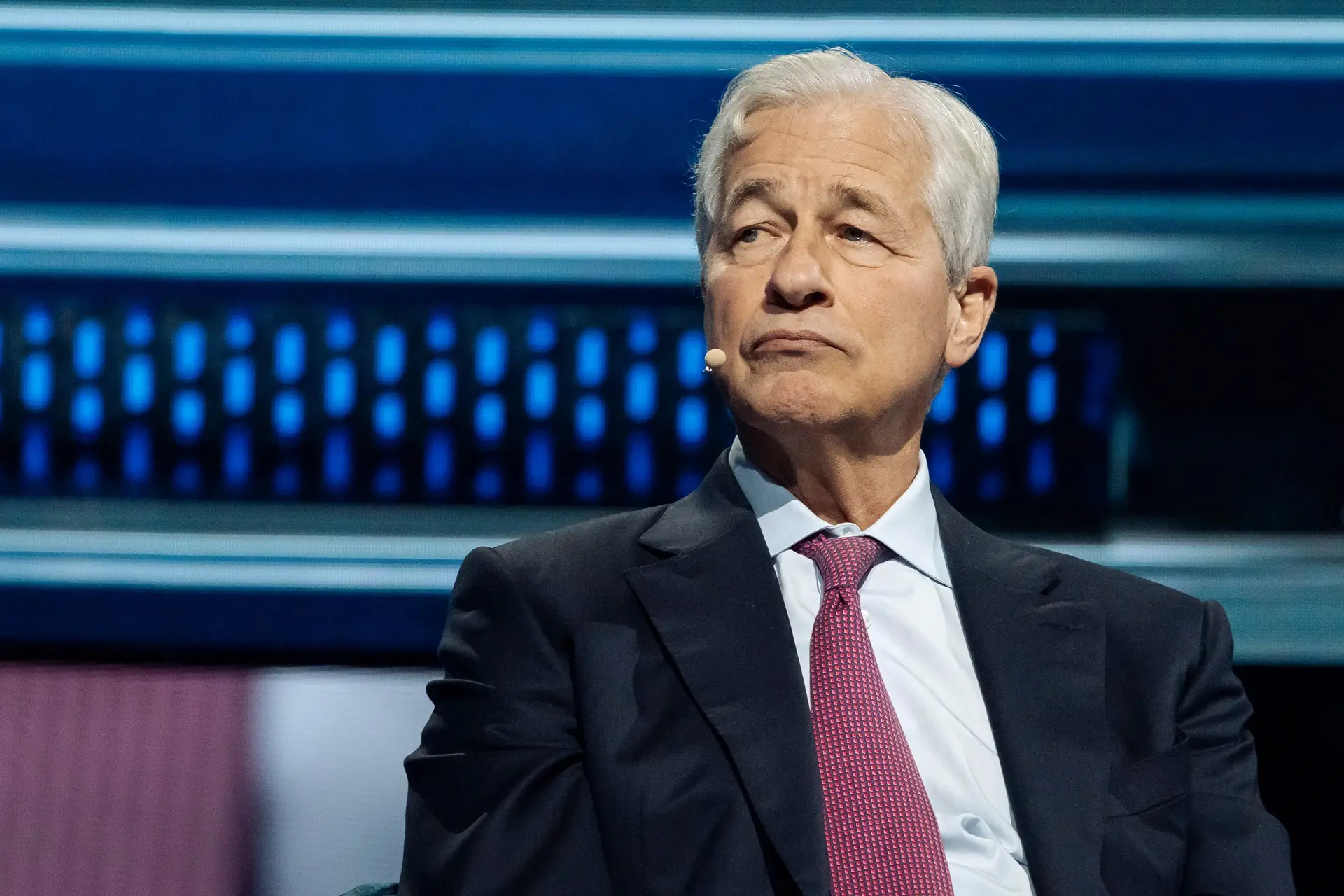
The US and Israeli campaign in Iran has been criticized as a war of choice, with an unclear strategy and even more uncertain results. But for one of Wall Street’s top executives, the decision to go to war in the Middle East may have been, in practice, inevitable.
Already in its second month, the conflict has revealed how much global energy and capital markets depend on stability in the region. Shortly after the start of the incursion, Iran’s Revolutionary Guard began warning ships to avoid the Strait of Hormuz — the narrow passage through which a fifth of the oil and natural gas traded in the world flowed from the Persian Gulf. The strait has effectively been under blockade since then, sending the price of oil soaring and leaving markets in a state of constant nervousness.
The shutdown created “uncertainty” and “near-term risks” for the global economy, JPMorgan Chase CEO Jamie Dimon said in an interview with Axios aired Wednesday. The current campaign situation may not have been part of President Donald Trump’s original war plan — reports indicate he was surprised by how quickly Iran weaponized the strait. But Dimon raised another question: Why did the US and its allies for so long accept the risk of letting a hostile regime control the margins of the global economy’s most important logistical bottleneck?
“To have these people with their hands around the Strait of Hormuz, and financing all these proxy wars. Why the Western world tolerated these proxy wars for 45 years is something that escapes me,” Dimon said.
The Iranian regime has existed since the 1979 revolution, which overthrew the US-backed monarchy and established the theocratic Islamic republic that governs the country to this day. Since then, Iran has been a constant adversary of the US and Israel. The country funds and arms allied militias across the Middle East, such as the Houthis in Yemen, who in recent years have begun to frequently attack trade and shipping in the Red Sea and the Horn of Africa region.
Hope for permanent peace
The Trump administration has been harshly criticized by allies abroad, by Democrats and even by wings of the Republican Party itself for conducting what is described as a war of choice. The population is also dissatisfied: most polls indicate that Americans disapprove of the way Trump has handled the conflict and consider the justifications presented by the White House to be insufficient.
Dimon, however, relativized this narrative a little. When interviewer Jim VandeHei, co-founder and CEO of Axios, called the military campaign a “war of choice,” the banker asked to “take a step back.” For him, the more pacifist position — that Iran would not represent an “imminent threat” to national security — amounts, in practice, to just saying that “the bad thing hasn’t happened yet.”
“They have been killing people around the world for over 45 years. They have killed many Americans, they have financed not only Hamas; (but also) Hezbollah, the Houthis. They have terrorist cells here,” Dimon said.
The Iranian blockade of Hormuz follows similar logic to that used by the Houthis on the other end of the Arabian peninsula. In response to Israel’s military incursion into Gaza, the militia began attacking ships with missiles and drones in 2024, forcing vessels to bypass Africa — a diversion that increased travel time by up to 30%. A ceasefire was brokered last year, but many ships continue to avoid Houthi-controlled waters, especially after the outbreak of war in Iran.
Dimon also highlighted that Iran “never gave up” on its goal of obtaining nuclear weapons, despite US attacks on Iranian facilities last year and preliminary talks between the two countries to try to reach an agreement on the regime’s nuclear program shortly before the current conflict began.
In Dimon’s view, the Iranian threat was real and growing — and reducing this risk in a lasting way could turn the campaign into a success story, offsetting some of the turbulence generated so far.
“I really hope this ends well and that somehow we achieve permanent peace in the Middle East,” he said.
An ambitious target
Trump’s goal of stabilizing the Middle East is as ambitious as it is distant. Despite weeks of bombings and weakened leadership, the Iranian regime remains standing and continues to control the flow through the strait. Experts also assess that to capture and neutralize Iran’s stockpiles of enriched uranium, ground troops would likely be needed.
The lack of a clear post-war plan regarding Iran raises further questions. Researchers at the Brookings Institution, an American think tank, warned last month that the conflict could generate larger refugee flows and prolonged disruption to energy supplies, even after it ends. Some governments share the concern. Turkish authorities, for example, fear that the fall of the Iranian regime will create a power vacuum that will strengthen other regional movements — such as the Kurdish militias spread across Turkey, Iran, Syria and Iraq —, further deteriorating the prospects for stability in the Middle East.
Despite the obstacles, Dimon charted a narrow path to stability. He argues that the weakening of Iran and its allied groups could reduce hostilities for a period. It also helps that several central actors in the region — Saudi Arabia, the United Arab Emirates, as well as the USA and Israel — are, in general, aligned in their objectives, which, according to him, increases “the chance of lasting peace”.
Contrary to domestic voices calling on Trump to exit the conflict, many US allies in the Middle East are putting pressure on the president to move forward with his goals in Iran. Last week, it was reported that Mohammed bin Salman, de facto leader of Saudi Arabia, warned Trump in private conversations against the idea of ending the war, saying that success in Iran represents a “historic opportunity” to redraw the balance of power in the region. Other Gulf countries, such as the United Arab Emirates, Bahrain and Kuwait, have reportedly sent similar messages, advocating that the campaign continue until the Iranian leadership is replaced.
In Dimon’s assessment, the long-term strategic gain from a more stable Middle East could offset the volatility since the start of the war. But over the past month, the Trump administration has discovered the hard way just how difficult it is to turn that foreign policy goal into reality.