
Google CEO says that, in 10 years, data center in space should become “new normal”
Google’s “moonshot” plans to grow in artificial intelligence are literally getting spacey.
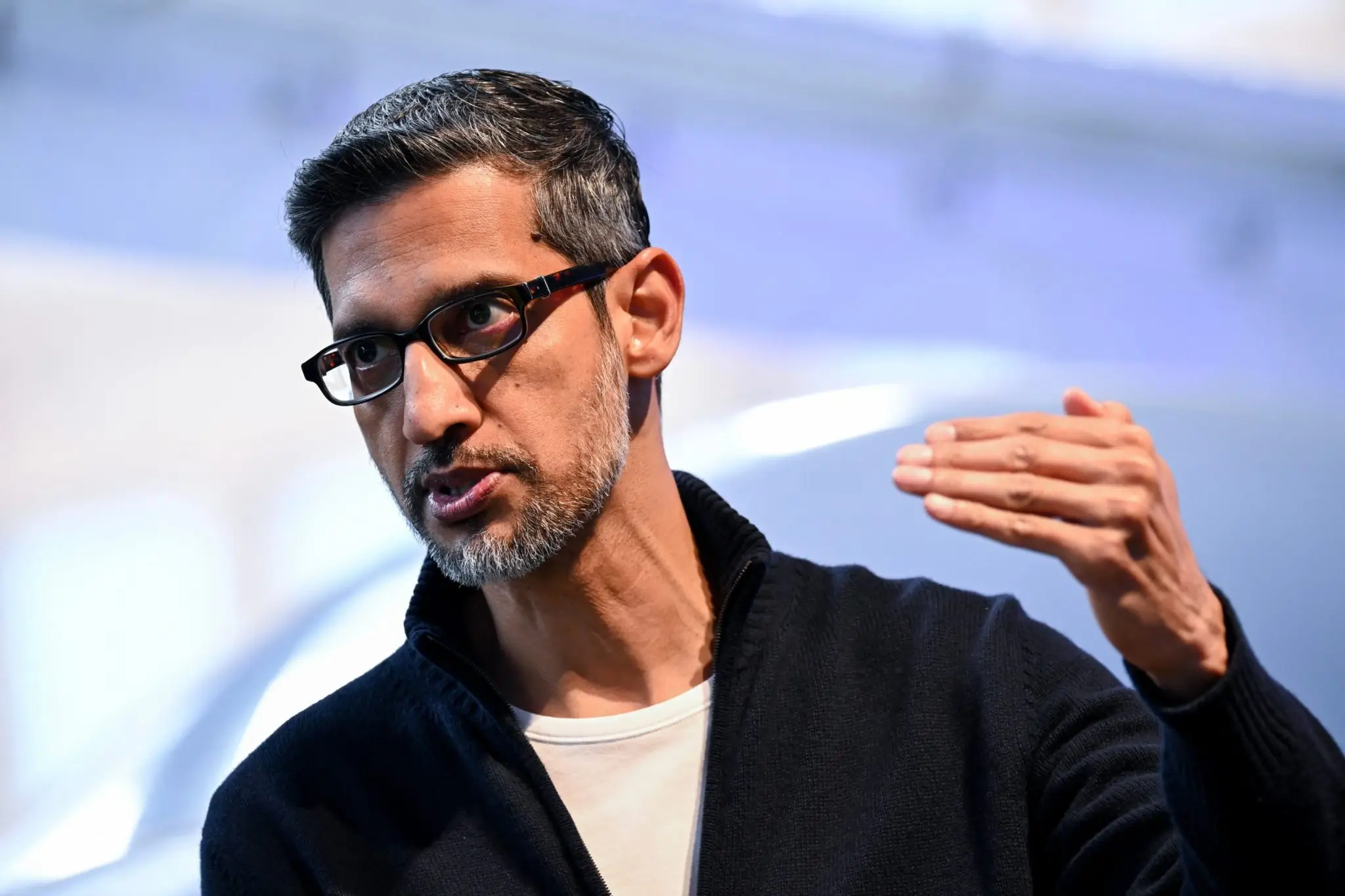
In an interview with , CEO Sundar Pichai stated that Google should soon begin building AI data centers in space. The initiative is part of Project Suncatcher, launched at the end of last year, which seeks more efficient ways to supply data centers — large energy consumers — using solar energy.
NASA releases images of Earth taken from the Artemis II mission; see the photos
One of the photos was captured from the cabin of the Orion spacecraft, and shows a partial view of our planet
Engineer becomes space plumber to fix fault in spacecraft bathroom
There was a failure in the bathroom of the Orion spacecraft, which takes four people to orbit the Moon for the first time in more than 50 years
“One of our ideas is: how can we, one day, have data centers in space to make better use of the sun’s energy, which is 100 trillion times greater than all the energy we produce on Earth today?”, said Pichai.
The first step should be taken at the beginning of 2027, in partnership with the satellite imaging company Planet: two pilot satellites will be launched to test the hardware in orbit. For Pichai, a space data center is not science fiction, but a trend:
“I have no doubt that, in about a decade from now, we will see this as a normal way of building data centers,” he said.
Race for space data centers
Google is not alone in this idea. At the beginning of the year, SpaceX requested authorization to launch up to 1 million satellites into orbit, as part of a plan to create a solar-powered network to “accommodate the explosive growth in demand for data driven by AI”, according to a document sent to the American regulator (FCC).
In December 2025, the startup Starcloud — backed by Y Combinator and Nvidia — launched its first satellite with onboard AI into orbit. Co-founder and CEO Philip Johnston projects that off-Earth data centers will emit up to ten times less carbon than traditional ones, even considering pollution from launch rockets.
Cheaper satellites for AI testing in space helps make the movement viable. But it is still a big question mark how much it will cost, in practice, to build and operate solar data centers in space — especially in a scenario where centers on land are expected to require more than US$5 trillion in investments by 2030, according to a McKinsey report from April 2025.
Google, which returned to the top of the AI competition with the launch of the Gemini 3 model, is one of the giants that invests the most in infrastructure. Alphabet, owner of Google, reported in February that it should allocate between US$175 billion and US$185 billion this year in capex, basically to expand the base of AI data centers.
Risk of bubble and “leftover data center”
Behind the excitement is growing fear of an AI bubble — with the risk of too many data centers and stranded investments. The rapid evolution of technology also brings another problem: structures that are being built today may open with part of the outdated hardware.
Hyperscalers such as Alphabet, Amazon, Oracle, Meta and Microsoft are upping the ante by financing expansion with debt. In 2025, these five companies issued $121 billion in new bonds, up from $40 billion in 2020.
“The risks are high”, summarizes McKinsey. “Investing too much in data center infrastructure can result in stranded assets; underinvesting means being left behind.”
Energy is the central point of the debate. The expansion of AI requires a gigantic volume of electricity. A report from the US Department of Energy, from December 2024, shows that the consumption load of data centers has tripled in 10 years and could double or triple again by 2028. They already accounted for more than 4% of all electricity consumed in the country in 2023, and could reach up to 12% in 2028.
Google alone more than doubled energy use in data centers in five years: it was 30.8 million MWh in 2024, compared to 14.4 million in 2020, when the company started to detail this consumption in sustainability reports.
The company says it will have reduced emissions associated with energy from data centers by 12% in 2024, even with expansion. But there are still many doubts about how viable — technically, economically and environmentally — it is to take this infrastructure into space.
Skepticism and environmental alert
Not everyone buys the idea. In February, at a technology conference in San Francisco, Amazon Web Services CEO Matt Garman quipped:
“I don’t know if you’ve seen a rack of servers recently: they’re heavy. And last time I checked, humanity hasn’t built a permanent structure in space yet. So… maybe.”
Sustainability experts also warn that the “AI space race” could raise new environmental problems rather than solving current ones.
“There is still a lot we don’t know about the environmental impact of AI, but some of the data we have is worrying,” said Golestan Radwan, head of digital transformation at the UN Environment Programme, in 2024. “We need to ensure that AI’s net effect on the planet is positive before we scale this technology.”