
Fux votes by indirect election for the government of Rio; score is 1 to 1

Minister Luiz Fux, of the Federal Supreme Court (STF), voted this Wednesday (8) against holding direct elections for the buffer mandate of governor of Rio de Janeiro.
In the minister’s understanding, the election must take place by indirect vote, that is, by the deliberation of the deputies of the Legislative Assembly of Rio de Janeiro (Alerj).
‘It became Gotham City. It’s easier to elect the Joker’, says STF lawyer about Rio
Comparison was made in oral argument at the beginning of the Court session that will determine the procedure for choosing the governor who will command the state during a buffer term
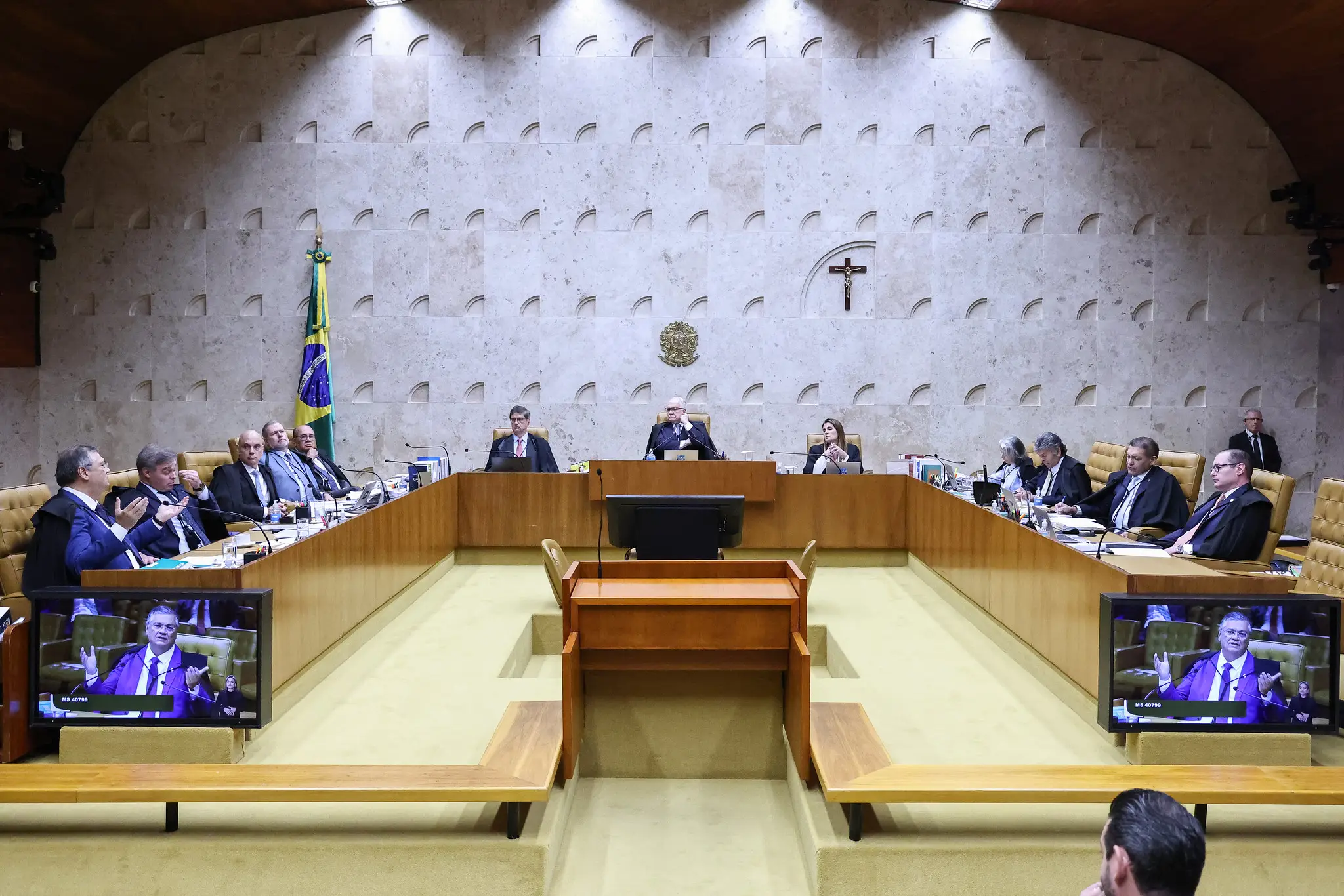
STF begins trial on election format for buffer mandate in the Rio government
Ministers will define the future of the election and the scope of the TSE’s decision on the conviction of Cláudio Castro
The minister understood that the conviction of former governor Cláudio Castro by the Superior Electoral Court (TSE) requires the holding of an indirect election for the state’s interim command.

Furthermore, Fux mentioned that the general elections for the state government are scheduled for October this year.
“It would be inconceivable that, in the space of six months, the population of Rio de Janeiro would be called to two elections, with an enormous financial cost for the Electoral Court, around R$ 100 million, in addition to the notorious operational difficulties”, he stated.
With Fux’s vote, the trial score is tied at 1 to 1. The session will resume this Thursday (9).
Earlier, minister Cristiano Zanin, rapporteur of the case, voted to hold direct elections.
In the minister’s understanding, Cláudio Castro’s resignation, carried out the day before the TSE trial, was an “attempted fraud” to avoid the calling of popular elections in Rio.
The Supreme Court judges an action in which the PSD state directory defends the holding of popular elections for the state’s interim command.
Understand
The election for the buffer mandate must be held because the state’s line of succession is lacking.
On March 23, former governor Cláudio Castro was condemned to ineligibility by the TSE. Due to the conviction, the court ordered indirect elections to be held for the buffer mandate.
However, the PSD appealed to the Supreme Court and defended direct elections. The day before the trial, Castro resigned his mandate to meet the deadline for disqualification to run for the Senate. He could leave office by April 4th.
The measure was seen as a maneuver to force indirect elections, rather than direct ones. With his resignation, the former governor could have influence in the election of an ally for the interim government.
Former vice-governor Thiago Pampolha left office in 2025 to take up a vacancy at the state Court of Auditors. Since then, the state does not have a lieutenant governor.
The next in the line of succession would be the president of Alerj, state deputy Rodrigo Bacellar. However, the parliamentarian was impeached in the same TSE decision that condemned Castro and has already left office.
Before the decision, Bacellar was also removed from the presidency of the House by decision of Minister Alexandre de Moraes, of the Federal Supreme Court (STF). He is being investigated in the case involving former deputy TH Joias.
Currently, the president of the Court of Justice of Rio de Janeiro (TJRJ), Ricardo Couto de Castro, temporarily holds the position of governor of the state.
New elections
After the Court’s decision, elections for the buffer mandate must be called by the Regional Electoral Court (TRE) of Rio or by Alerj.
With a possible decision in favor of direct elections, the Supreme Court will still need to decide whether whoever is elected to command the state will remain in office until the end of this year or for the next four years.
Given the proximity of the general elections, which will be held in October, the possibility of bringing forward the election for governor is discussed by ministers who are in favor of direct elections.
