
Durigan says the government is considering authorizing withdrawals of up to 20% of FGTS to pay debts
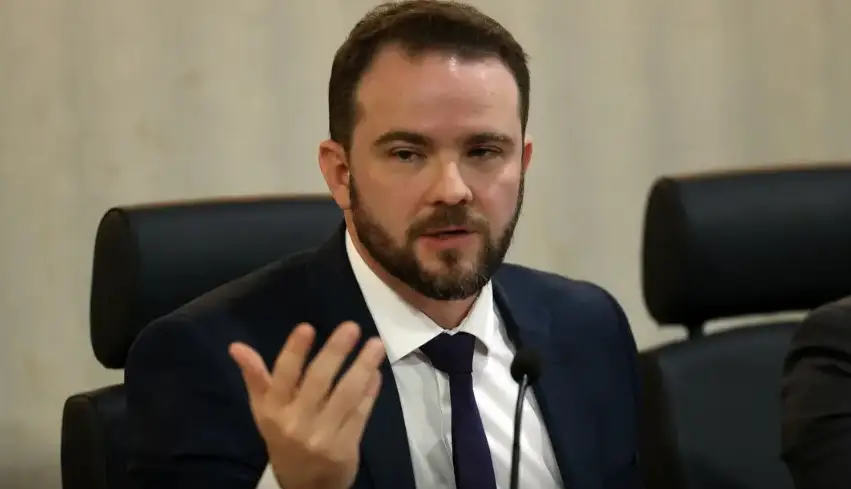
The Minister of Finance, Dario Durigan, told Folha de S.Paulo that the government’s priority, at this moment, is to adopt measures to reduce the population’s debt, with a focus on stimulating “sustainable credit” and enabling the renegotiation of debts with lower interest rates. Among the initiatives under discussion, he said that people will be able to make an extraordinary and limited withdrawal from the Severance Indemnity Fund (FGTS) to pay off more expensive debts – a proposal that, according to him, is being designed so as not to compromise the sustainability of the fund.
Regarding the FGTS, Durigan explained that there are two fronts: a correction related to the birthday withdrawal with payroll, which could result in “a return of R$7 billion”, and a second limited withdrawal measure.
The team, according to him, is working on the possibility of releasing “a 20% withdrawal limit from the individual account”, aimed at workers who earn up to five minimum wages, a group that he said represents “92% of Brazilians”.
Durigan assessed that, after the first Unwind and the beginning of the Selic falling cycle in August 2023, there was a decline in debt, but that “at the end of 2024 and during 2025” the rise in interest rates once again put pressure on the debts of families and companies. “The relationship is directly proportional between the increase in interest rates and the debt of families, informal workers, small and large companies,” he stated.
He said that the design of the measures foresees that there will be no “direct public expenditure” and that the strategy is to induce financial institutions to reduce the balance owed and refinance with lower interest rates, with the government offering a guarantee for “eventual default in this second operation”, through the Operations Guarantee Fund (FGO).
Durigan said he expects high discounts in renegotiations and that the government should require a minimum discount. “We are calibrating, but I hope it reaches 90%,” he said.
The expectation, according to him, is to serve “more than 30 million people”. Regarding the impact on the FGTS, he stated that the measure will be “very limited and optional” and estimated it to be around R$7 billion.
