
The US and Finland sign the technological agreement that omits the European Commission and does not mention Spain
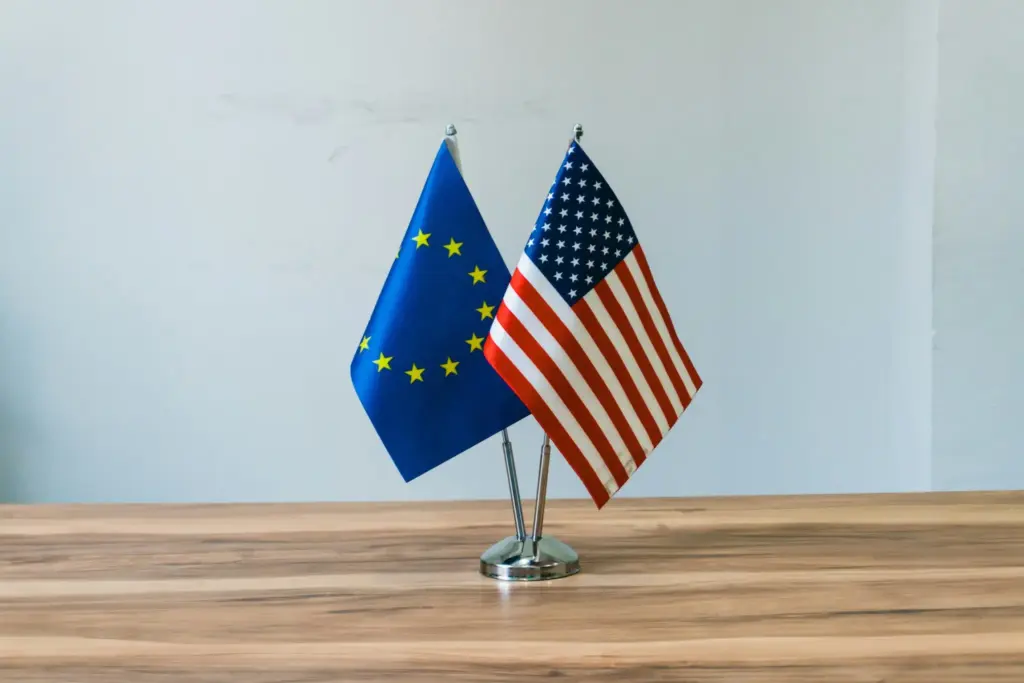
The US-Finland technology agreement aligns AI and semiconductor standards and avoids the European Commission: Spain does not appear.
What’s inside the memo: from superintelligence to Arctic icebreakers
The document is titled Technology Prosperity Deal and takes the form of a memorandum of understanding (MOU): a political and technical commitment that does not require Senate ratification, unlike a treaty. It is supported by the scientific and technological cooperation agreement that both governments signed in Washington on May 16, 1995 and elevates it from academic collaboration to industrial cooperation and coordinated export of technology. The White House disseminated the entire memorandum on its institutional website.
Its articles review practically the entire catalog of the second half of the decade: cooperation in 5G and 6G, quantum advantage, small modular nuclear reactors (SMR), fusion, geothermal energy, critical minerals, biotechnology, defense innovation, lunar missions within the program Artemis and Arctic technology. In this last chapter one of the proper names of the text appears: the ICE Pactthe framework with which USA wants to modernize its icebreaker fleet by relying on Finnish experience in ship design and construction.
The political heart lies elsewhere: in the standards. The two governments undertake to coordinate positions in the International Telecommunication Union (ITU), in the 3GPP —the forum where the industry writes the specifications of 5G and 6G— and before the big events on the calendar: the ITU Plenipotentiary Conference of 2026 and the World Radiocommunications Conference of 2027. Added to that joint financing to export the “trusted” technological stack to third countrieswith coordinated commercial diplomacy tools.
Why Brussels is left out and Spain is not in the photo
What the text does not say also informs. The European Commission he is not listed as a participant even once in the memo. Spain neither. NATO appears only as a meeting forum on quantum matters—the NATO Transatlantic Quantum Community— and the European artificial intelligence regulation, which conditions the activity of any company operating in the single market, is not mentioned in any section.
The explanation is competitive, not conspiratorial. Trade policy is the exclusive competence of the Union: Brussels negotiates tariffs and free trade agreements for the Twenty-seven. But scientific cooperation, the coordination of technical standards and bilateral industrial projects remain in the hands of the States. Washington can choose capitals without breaking anything and Helsinki can sign without asking anyone’s permission. That margin is what explains the format of the document.
A memorandum of understanding does not bind anyone and changes everything: it establishes the technical vocabulary with which the laws are later written.
Washington does not ask permission.
For Spainthe result is a foreign but not indifferent document. The large Spanish companies with a presence in USA —banking, energy, telecommunications, textiles— already operate under federal regulations and will see how the technical floor moves again. If the standards of the next network or superintelligence stack are agreed upon in bilateral tables, these subsidiaries will have to coexist with two vocabularies: the one that comes out of Brussels and the one that is agreed between Helsinki and Washington.
That’s the asymmetry.
The country is not starting from scratch. Spain maintains its own bilateral scientific and technological cooperation agreement with Washington, it has a supercomputer MareNostrum of the Barcelona Supercomputing Center its main business card in advanced calculation and quantum computing, and deploys a public semiconductor program to attract design and manufacturing. The photograph, yes, is that of a Europe that negotiates trade together and technology separately.
Washington Logic
In Washington The logic is simple and has little improvisation. The White House wants to set the standard for advanced 5G, 6G, post-quantum cryptography and the superintelligence stack before anyone else, and it wants to do it with partners who share a regulatory model. Negotiating with a bloc of Twenty-seven requires years and internal concessions; negotiate with Finland requires a weekend. The chosen country is not coincidental: a member of NATO since 2023, 1,340 kilometers of border with Russia, a telecommunications industry with its own name and shipyards that know how to build icebreakers.
The coalition supporting this policy is broader than the signature suggests. The bipartisan consensus on technological competition with China —the one that allowed the approval of the CHIPS Act in 2022 with a majority in the Senate—remains intact, and the tariff agenda of donald trump adds a pressure lever that is not necessary to use here. Congress and the Department of Commerce share the goal: that the standards for the next decade be drafted in Washington and related capitals.
The calendar rules.
There is an American precedent that illuminates the rest. When Ronald Reagan wanted to open the Japanese semiconductor market in 1986, it did not wait for a multilateral agreement in the GATT: it imposed a bilateral pact with quotas and reference prices. The logic was the same as now: the country that sets the technical rules of an emerging industry keeps the industry. The difference is that the 2026 instrument is not a tariff, but an alliance of standards with built-in export financing, the opposite of the protectionist Smoot-Hawley wall in 1930.
Nobody signs an MOU out of patriotism.
The risk that should be noted is fragmentation. If each European capital signs its own Technology Prosperity Deal, the single market ends parallel technical standards and Spanish companies—and Finnish ones—pay the bill for duplicity. The next windows are clear: the ITU Plenipotentiary Conference of 2026, the World Radiocommunication Conference of 2027, the deliveries of the ICE Pact and the missions Artemis. There it will be seen whether the memorandum was a declaration of intent or the first chapter of a new transatlantic technological architecture, with Brussels in the waiting room.
There is the crack.
Case File
- The case: The White House publishes the Technology Prosperity Deal memorandum with Finland to align AI, semiconductors, quantum and network standards, without the European Commission as a party and without mention of Spain.
- Key data: Memorandum of understanding without Senate ratification; It is based on the 1995 bilateral agreement; coordinates positions in the ITU, 3GPP, the 2026 Plenipotentiary Conference and the 2027 World Radiocommunication Conference; includes joint financing to export the stack to third countries and cooperation on icebreakers under the ICE Pact.
- For Spain: Madrid is left out of the text and its commercial channel passes through Brussels, but it retains a bilateral scientific agreement with Washington and assets in supercomputing and semiconductors to claim its own table before the standards are closed.