
Xi carries out the largest purge in the history of his government and demands “discipline” from his party in China
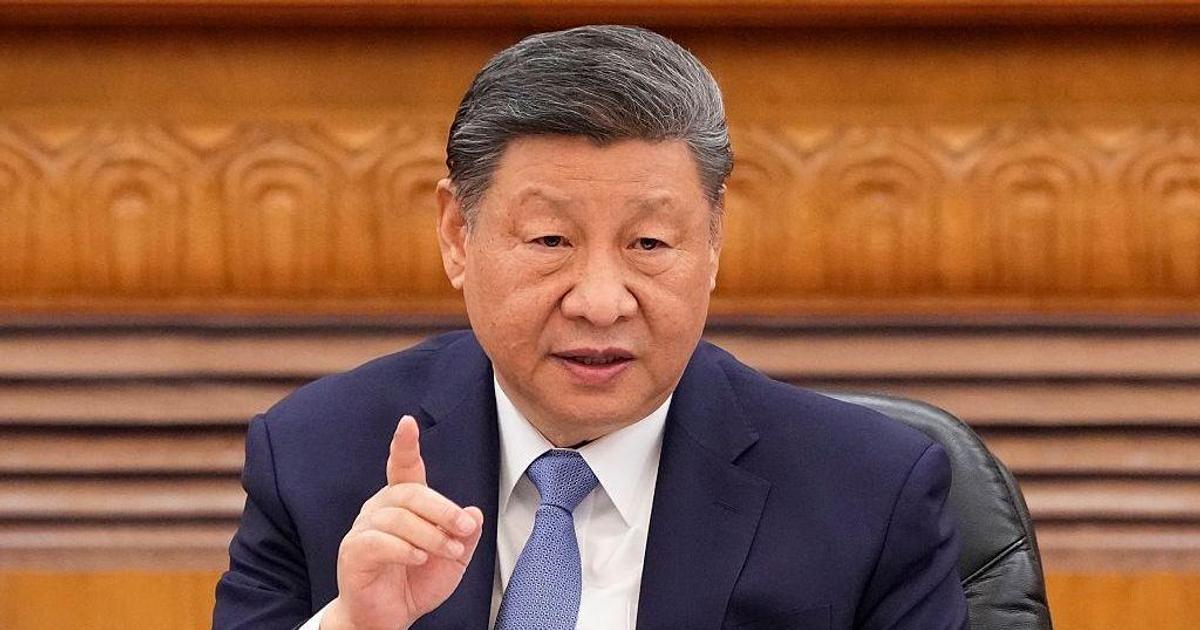
A record number of 33 members were expelled from the Chinese Communist Party at the conclusion of its main annual political meeting, which saw the highest number of empty seats ever seen.
The fifth plenary session of the assembly was attended by 279 members of the Central Committee, compared to 315 who participated in the fourth plenary session in October 2025 and 364 in the third plenary session in July 2024.
While recent meetings focused on economic reforms and social and development issues, party discipline took center stage at this week’s meeting.
President Xi Jinping has made the fight against corruption a central pillar of his government since taking power in 2012, calling it the “biggest threat” to the party.
“Stop the disorder”
16 of the 33 expelled members are from the military, according to a statement issued Thursday, marking the end of the four-day closed-door meeting held at a Beijing hotel.
It is unclear what specific charges these members are charged with beyond “serious disciplinary and legal violations.” These types of broad accusations have become common in Xi’s anti-corruption campaign.
This has now become “an effort to consolidate and maintain authority,” says Chong Ja Ian, a researcher at Carnegie China, a Singapore-based think tank.
“The campaign will continue and expand depending on how confident Xi feels, rather than any real corruption problem,” the researcher maintains.
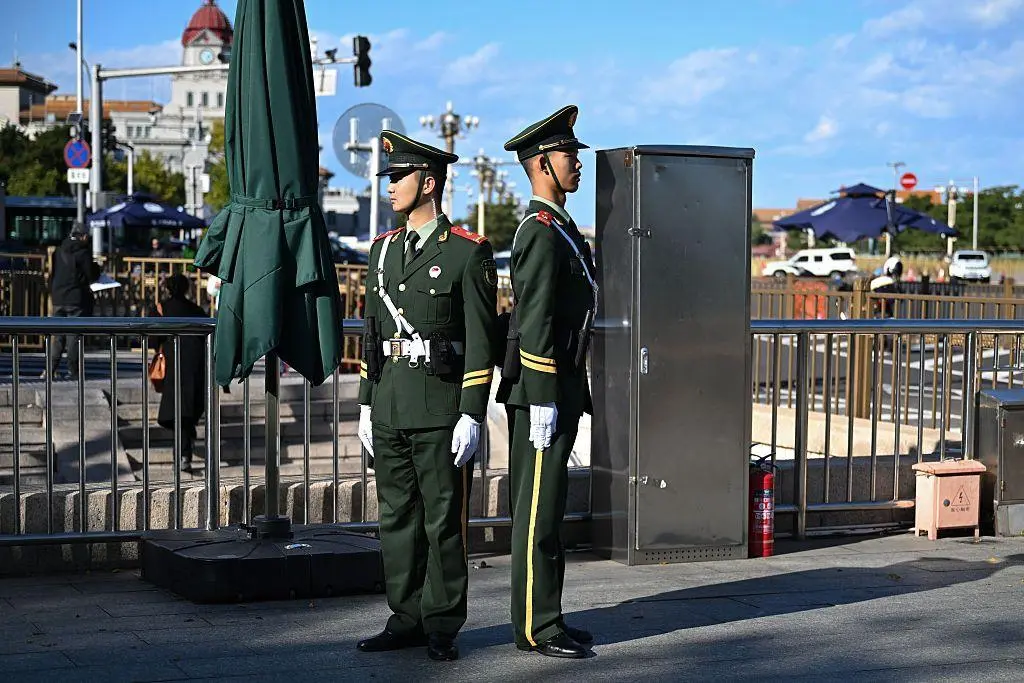
In its statement, the party said it had “faced head-on the stark reality that the party’s leadership had become weak or hollowed out at times” and that it would continue to “impose strict self-discipline in the party, even turning the knife against itself to… curb the disorder.”
The latest expulsions bring the total number of members removed during Xi’s third term to a record 51, up from 35 and 5 during his first and second terms, respectively.
Beyond the plenary session, China’s main anti-corruption watchdog reported that 680,000 people across the party apparatus have been sanctioned in the first nine months of this year.
This is also the first time in Xi’s 14 years of leadership that plenary attendance has fallen below 300 people. The current Central Committee began its mandate in 2022 with more than 370 members.
Analysts maintain that Xi considers corruption not only acts of bribery or embezzlement, but also ideological impurity and, fundamentally, disloyalty.
In January, he warned about “hypocritical cadres” who profess political loyalty but disobey orders and act based on their own self-interest.
Who fell in the purge?
Among the expelled senior officials were former Xinjiang party chief Ma Xingrui and former generals Zhang Youxia and Liu Zhenli.
Official statements announcing their dismissal stated that they had “seriously violated (party) discipline and rules”, which is generally interpreted as a euphemism for corruption.
The purge of the military leadership has been particularly significant, and has been described as “unprecedented” by Neil Thomas, Lobsang Tsering and Shengyu Wang of the Asian Society Policy Institute.
“This raises serious questions about organizational leadership and combat readiness, even as China continues to field formidable new military weaponry,” they wrote.
Zhang was also vice chairman of the Central Military Commission, which controls the armed forces. The commission, which initially had seven members, has been reduced to just two: Xi as president and Zhang Shengmin as vice president.
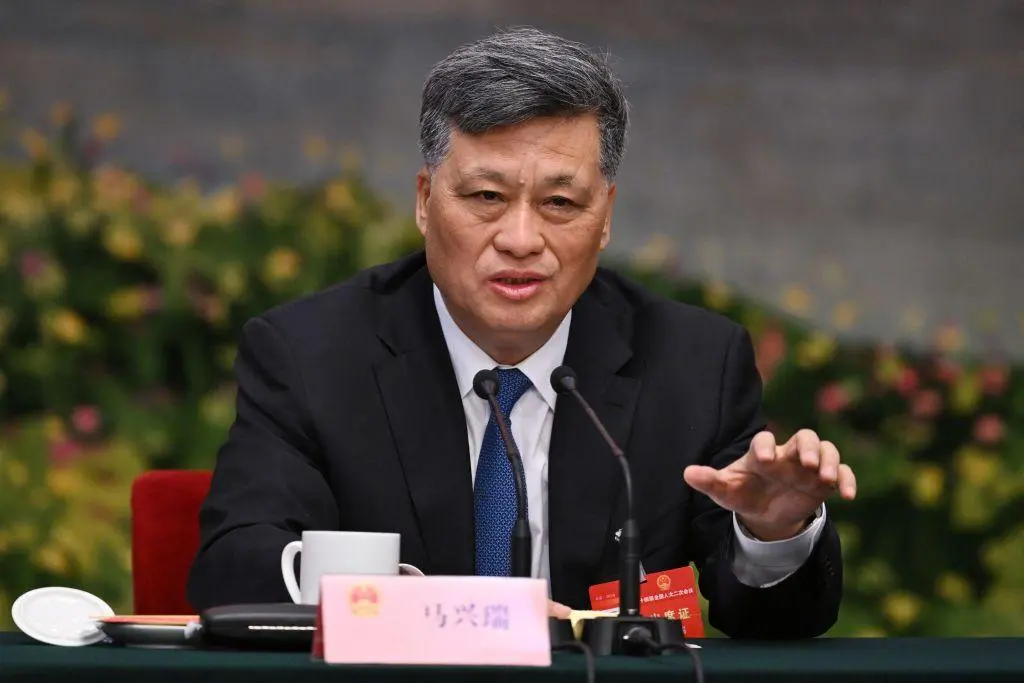
Ma and Zhang Youxia were members of the Politburo. His dismissal, along with that of former general He Weidong in 2025, meant that that powerful central body, made up of 24 members, came to have only 21.
Zhang Shengmin was promoted to the highest decision-making body in the fifth plenum, bringing the total number to 22.
Former renowned diplomat Liu Jianchao, who disappeared from public life in July last year, is also among those who have been purged.
“Xi has no qualms about removing people he has promoted,” Chong says. “The fact that he does it at will and with little opposition underlines how unassailable his position is at the moment.”
Xi’s plans for the future
Analysts believe one reason for the greater emphasis on party discipline — which many interpret as loyalty — is next year’s Party Congress, which will vote on its next leader.
There is expected to be a leadership shakeup in 2027, but many analysts expect Xi Jinping to remain in office for a fourth term or more.
No leader has remained in power for so long except Mao Zedong, the founder of communist China.
According to Thomas, Xi has reason to “take a closer look at the next generation,” given the decline of so many current committee members.
“Today’s rising stars tend to be relatively young, have technocratic backgrounds and have connections to Xi’s political network,” he says, adding that “the ranks of provincial leaders are a promising place to look.”
Xi is ultimately expected to dominate personnel selection at the 21st Party Congress, analysts say, further cementing his control over the party and the country.
“Xi’s goal is to further consolidate power around himself… The conclusions of the plenum suggest that he intends to be at the center of China and the Communist Party for the foreseeable future,” Chong says.
“However, in the long term, such a concentration of power could pave the way for a more serious power vacuum as Xi ages and his pace of life slows.”
This article was originally written in English and we used an artificial intelligence tool to translate it. A BBC journalist reviewed the text before publication. Learn more about how we use AI.
-
Download the new BBC World Service app. Choose BBC News Mundo and receive news alerts, documentaries and analysis, all in one place. Important: The new app is not available in the United Kingdom or the United States.
-
You can also follow us on YouTube, instagram, TikTok, Facebook, x and in our whatsapp channel.
-
And don’t forget subscribe here to our newsletter to receive a special selection of our best content every Friday.