
The Senate votes this week on the energy permit law that decides the future of the electrical grid
IN 30 SECONDS
- What has happened? The US Senate this week holds the final vote on BAAJA, the bipartisan energy permitting and infrastructure project, which last week passed its procedural vote with 73 supports, 22 of them Democrats.
- Who is behind? The Republican majority and about twenty Democrats, with Josh Hawley, Ted Budd, Eric Schmitt and Bill Hagerty pushing amendments to trim FERC’s authority over interstate power lines.
- What impact does it have? Decides the pace of connection of renewables in a market where Iberdrola operates through Avangrid and where they compete Activate Energy, Naturgy and the Spanish wind component chain.
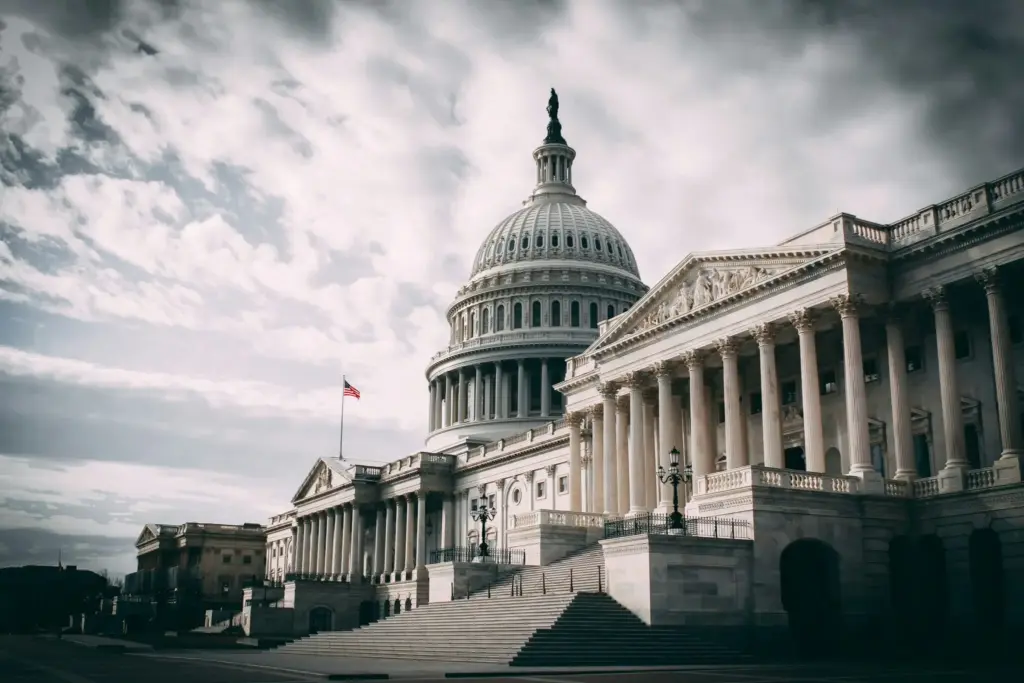
The Senate votes this week on the energy permitting law that decides who rules the US power grid.
The project is called Bipartisan American Affordability and Jobs Act (BAAJA, the Bipartisan Affordability and Jobs Act) and last week passed its first procedural vote with 73 supports, 22 of them Democrats. That result reactivated a debate that had been stalled for years on Capitol Hill. It does not guarantee anything: several of the senators who voted in favor have not committed to final approval.
Seventy-three votes to advance, four amendments to stop
The exact point of the crash is one word: backstop. With the current wording, the Federal Energy Regulation Commission (FERC, the federal electricity regulator) can approve an interstate transportation line when the affected state does not resolve the request within one year and the project is considered to be in the “national interest.” The condition is technical: the line must exceed 230 kilovolts (kV). Most major interstate lines exceed that threshold.
Republicans have been suspicious of this mechanism for years. His thesis is that socializes the costs of laying: States governed by the Republican Party end up paying for infrastructure that then transports electricity to Democratic states. The senator Josh Hawleyof Missouri, recorded four amendments last week. The most forceful one raises the minimum threshold to 765 kilovolts, which in practice would leave a good part of the projects outside the federal mechanism. The others extend the state deadline before Washington intervenes, increase compensation for property owners expropriated for public utility and give the regulator more leeway over its reserve authority.
He doesn’t go alone. Ted Buddof North Carolina, proposes a threshold of 345 kilovolts. Eric Schmittalso from Missouri, wants to force FERC to get more input from landowners before deciding on a route.
No state wants to pay for the power line that illuminates its neighbor, and that local instinct has been defining the American network for a century.
A third front is that of Bill Hagertyof Tennessee, which seeks to exempt the Tennessee Valley Authority—the largest public electricity company in the country—from that federal reserve authority; Today only the Texan ERCOT market is left out of the mechanism. None of these amendments are guaranteed a vote: Senate leaders are still negotiating which ones go to the floor.
The crack also runs through the Democratic Party. Tammy Duckworthof Illinois, has introduced its own amendments to the transmission block: more protections for property owners, more public participation in the regulator’s decisions and more explicit siting criteria. It is the alarm signal for the promoters of the text. If the streaming provisions are blurred, Democrats supporting the bill may withdraw. Defenders estimate that between 15 and 20 Democratic votes are needed in the Senate to then be able to drag the House.
The 230 kilovolt line that reorders the map
It is advisable to stop at what the law does, because the detail explains the fight. Today, a line that crosses three states needs three state permits, and if one gets stuck, the project dies. BAAJA sets a schedule and places FERC as the arbiter of last resort. Nothing else. Nothing less.
For the Democratic Party, accelerating transmission is the material condition of decarbonization: without new lines, wind and solar farms are left waiting in the connection queue. For part of the Republican Party, it is a transfer of state sovereignty over the land. It is not just the electricity bill that is discussed here.
And the House of Representatives is another country. Several Democrats in the Lower House prefer to postpone the negotiation until the next Congress, when, according to the Washington Examiner, they will control both chambers. On the other hand, several Republicans have conveyed their reservations about the broadcast to administration officials. The map rules.
Washington Logic
The problem you are trying to solve Washington It is physical rather than ideological. The US grid was built for a coal and gas system, with plants near cities; the wind and the sun are far away, in the great plains and deserts. Connecting one to the other requires lines that cross states, and no state wants to pay for the section that serves its neighbor. It’s the same fight that led Eisenhower to federally finance the interstate highway network in 1956.with states discussing every exit and every toll.
The logic has legal precedent. The Federal Power Act of 1935 and the rural electrification of the 1930s already established that electricity that crosses state borders is federal jurisdiction. The Energy Policy Act of 2005 attempted to expand that reserve authority and ended up in court, with FERC losing some of its momentum. BAAJA is the third serious attempt in two decades. The coalition that supports it is curious: senators from states with a lot of wind and a lot of sun – Iowa, Kansas, Texas -, industrial Democrats and an electricity sector that urgently needs capacity to feed the data centers of artificial intelligence.
Added to this is the agenda of the White House: cheap and abundant electricity to sustain data center deployment and reindustrialization. Transmission stopped being a green issue and became an issue of national competitiveness. This explains why the text is called “affordability and employment” and not “climate.”
For Spain, the outcome matters through two doors. The first is Iberdrolawhich operates transportation and distribution networks in the northeastern US through Avangridin addition to renewable parks: a more agile federal framework reduces deadlines and connection costs for your projects. The second affects Activate Energy, Naturgy and Repsol in its American renewable portfolio, and in the component chain, with Siemens Gamesa and its Zamudio plant looking at the onshore wind market. The internal parallel is direct: the Spanish transport network has accumulated years of bottlenecks in the granting of access points and renewables are waiting their turn.
Washington does not ask permission.
The calendar, yes, is tight. The final vote is scheduled for this week and the agenda depends on an agreement between the leadership of the Republican group and the Democrats who support the text. Then comes the Chamber, where the project faces its real test in the last weeks of activity of the current Congress. If it falls, it will be the third permit reform to fail in five years and the American electrical grid will continue to wait.
Case File
- The case: The U.S. Senate takes a final vote this week on BAAJA, the bipartisan energy permitting law that gives FERC backup authority over interstate power lines when a state blocks the project.
- Key facts: 73 votes in favor in the procedural vote, 22 of them Democrats; technical threshold of 230 kilovolts; Republican amendments to raise it to 345 and 765 kilovolts; between 15 and 20 Democratic senators are needed to support the text until the House.
- For Spain: The result conditions the connection times of Iberdrola-Avangrid, Acciona Energía, Naturgy and Repsol in the US, and leaves a lesson applicable to the access bottleneck to the Spanish network.