
PF responds to Dino and opens an investigation to investigate the transfer of R$4.2 billion in amendments
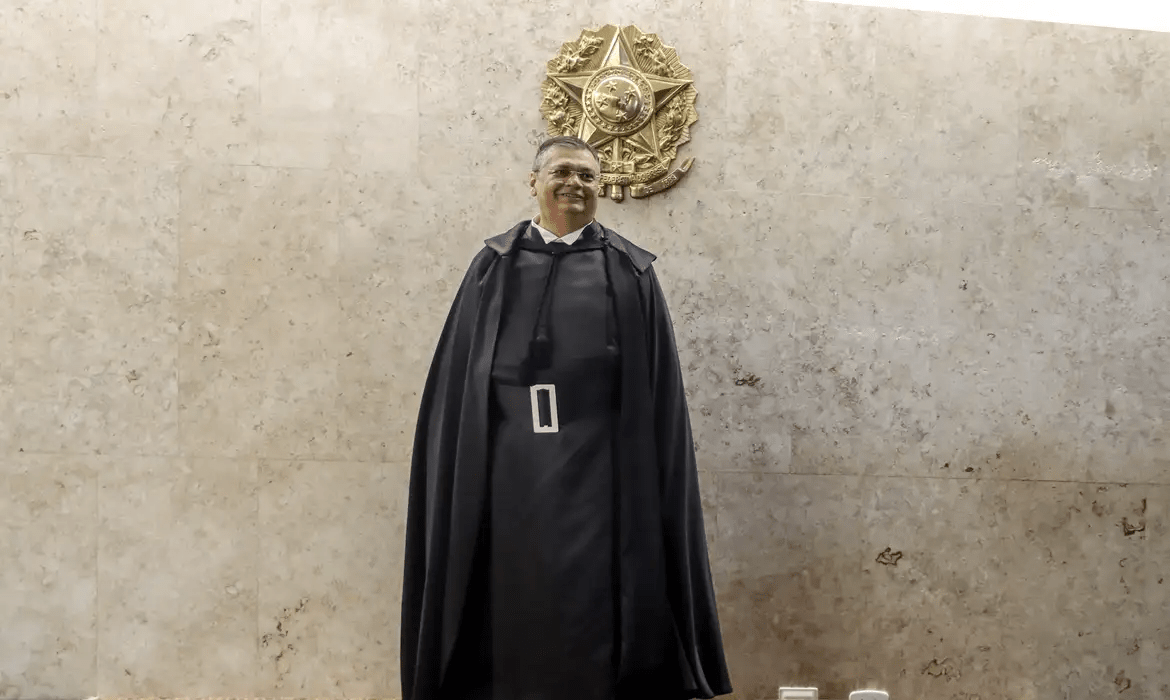
The Federal Police (PF) opened an investigation this Tuesday (24) that should investigate the release of R$4.2 billion in so-called parliamentary committee amendments whose authors were not properly identified.
The corporation complies with a determination from the minister Flavio Dinoof the Federal Supreme Court (STF), within the scope of the decision last Monday (23) that suspended the payment of amendments, in a new escalation of tension between the Judiciary and Legislative Powers that marked this year.
Of the amount, around R$180 million refers to “new nominations” and R$73 million is allocated to the state of Alagoas, the political-electoral birthplace of the president of the Chamber of Deputies, Arthur Lira (PP-AL) – who is saying goodbye to command of the House, a position he will only hold until the end of January 2025.
Parliamentary amendments, which are foreseen within the Budget, are used according to the indication of deputies and senators – the money, in general, is sent by parliamentarians to meet their electoral bases. The execution of these funds is the prerogative of the federal government.
The STF minister’s decision responded to a request presented by PSOL, which alleged irregularities in the allocation of R$4.2 billion in the so-called commission amendments.
This category of parliamentary amendments is indicated by thematic committees of the Chamber of Deputies and the Senate – and there is no mandatory payment. After the rapporteur’s amendments were overturned by the Supreme Court, the committee amendments were expanded.
Ordinance provides criteria for implementing amendments in the 2025 Budget; see how it looks
Text was signed by the Chief Minister of the Civil House, Rui Costa (PT), has guidelines for the execution of state bench (RP 7) or permanent commission (RP 8) amendment schedules and is already in force
In the petition presented to the STF, PSOL questioned the letter that authorized the transfer of funds. The document was forwarded by Arthur Lira, on the 12th, with the signature of 17 party leaders in the House.
In the action to the Supreme Court, PSOL claims that part of the amendments were destined for the state of Lira, Alagoas, which would be illegal. Through the Ministry of the Civil House, the federal government did not see any irregularity and authorized the transfer.
In his decision, Flávio Dino demands that the Chamber publish, within a period of up to five days, the minutes of the committee meetings in which the amendments were approved. These minutes must be forwarded to the Secretariat for Institutional Relations of the Presidency of the Republic, commanded by the minister Alexandre Padilha (PT).
Also according to Dino’s order, payment for amendments will only be released after the minutes arrive at Palácio do Planalto – and as long as they meet the transparency and traceability criteria previously defined by the Court.
“Such institutional degradation constitutes an unacceptable series of unconstitutionalities, demanding the persevering action of the Federal Supreme Court”, noted Flávio Dino in his decision.
Executive lost power over budget
In recent years, successive governments have gradually lost power over the execution of the federal budget. In 2015, still during the government of the former president Dilma Rousseff (PT)the National Congress approved the imposing budget, through which amendments intended for deputies and senators must be paid, obligatorily, by the federal government.
In the government of the former president Jair Bolsonaro (PL)the so-called “Pix amendments” were instituted, expanding the share of resources under the Legislative umbrella. Today, Congress holds around R$60 billion of the budget, which represents almost the same volume commanded by the federal Executive.
