
American economy depends less on oil than ever
The war with Iran paralyzed trade in the Persian Gulf and raised oil prices by more than 50% worldwide, which translated almost immediately into higher gasoline costs. This is the biggest global oil disruption on record and is likely to accelerate inflation throughout this year.
And yet in the United States, the impact is much more moderate than it would have been a few decades ago.
Also read: Trump administration authorizes sale of Russian oil amid soaring prices
This is in part because the United States uses less energy per unit of economic output than it did in the past. In economist jargon, the American economy is less “energy intensive” for a few reasons.
First, the U.S. economy now relies heavily on services such as healthcare, retail and entertainment, which require much less energy than manufacturing industries. There are only around 21 million jobs in goods-producing sectors, while the services sector employs 114 million people.
Second, the machines Americans use today are much more efficient—a trend that really began after the oil price shocks of the 1970s.
According to the Department of Transport, the average new light vehicle travels 11.9 km per liter of gasoline, compared to 5.53 in 1975. Gasoline consumption grew until 2007 and then stabilized as electric vehicles gained ground.
As a result, the share of consumer spending on gasoline relative to income available for non-essential spending has declined.
Economists at Wells Fargo estimate that a sustained 50% increase in oil prices — similar to the current situation — would have had about twice the impact in the 1980s compared with today, when it is expected to shave about 1 percentage point off annual growth in consumer spending.
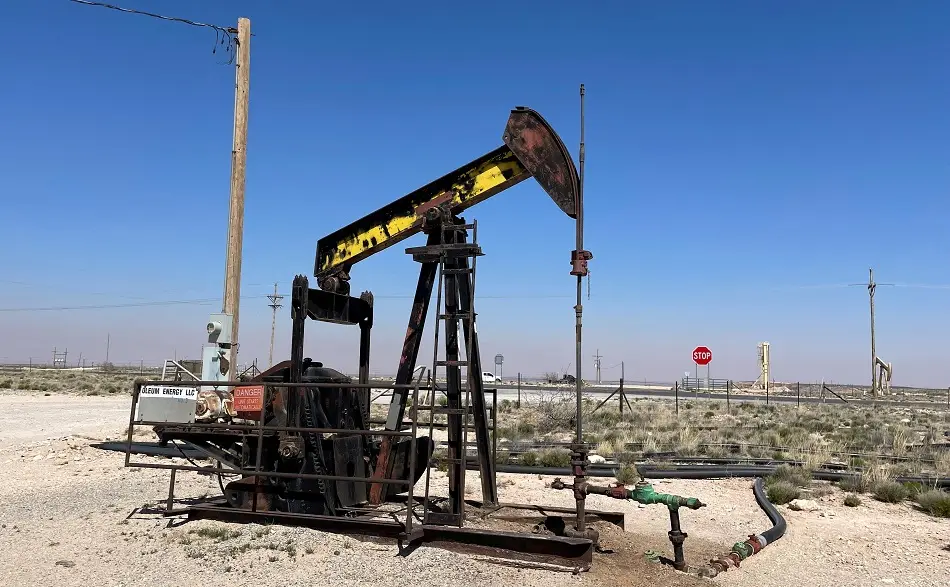
The United States has also become the world’s largest producer of oil and gas. Instead of relying on supplies from the Middle East, the rest of the world now consumes petroleum products extracted by hydraulic fracturing in North Dakota and West Texas.
All this new supply helped drive down prices globally in the 2010s, especially after Congress lifted a ban on natural gas exports in 2015.
In theory, this means that profits from oil production remain in the United States and can be redirected to other investments. According to research from the Dallas and Kansas City Federal Reserve branches, the fracking boom added 1% to gross domestic product.
However, it is unclear whether American drillers are willing to play the “adjustment producer” role again this time. Price competition during the fracking boom was devastating for investors.
Many companies went bankrupt, unable to pay back all the money they had borrowed for expensive extraction infrastructure. They learned a lesson: not to invest a lot of money in pumping more just because prices rise — especially if there is no certainty that those prices will not fall again.
“I don’t see much happening on the production side to mitigate the effects on the U.S. economy,” said Christiane Baumeister, an economics professor at the University of Notre Dame who studies oil markets.
“Companies simply prioritize delivering shareholder returns,” she said. “I think they prefer to take advantage of the current situation to increase profits instead of reinvesting it in expanding production.”
Another factor that discourages increased production: tariffs on steel and aluminum have increased the cost of the tubes and valves needed for this. The number of oil rigs that are actively pumping in the United States is down 7% from this time last year.
Even with the American oil industry operating at full steam, it does not generate many benefits for US workers as companies have learned to operate with fewer people.
The country is producing more oil and gas than ever before, but the extraction, drilling and oilfield services sectors have been shedding jobs. The sector employs around 363 thousand people, which represents approximately 0.2% of all employment.
And despite the huge boom in U.S. oil production over the past 15 years, it hasn’t become a more significant part of Americans’ stock portfolios.
Exxon Mobil and Chevron have long been among the most valuable companies on the stock market. But the entire oil and gas sector now makes up just 3.2% of the S&P 500 index, down from 5.5% a decade ago.
Its shares had been consistently underperforming the broader index until soaring oil prices lifted its results after the United States and Israel attacked Iran.
“The oil and gas industry’s financial strategy has been to ‘pray for war,’ because those are the conditions under which they make money,” said Clark Williams-Derry, an oil industry financial analyst at the Institute for Energy Economics and Financial Analysis. “They need a big price spike every few years literally to make ends meet.”