
Artemis II arrives on Earth this Friday — and this could be the most dangerous part of the mission
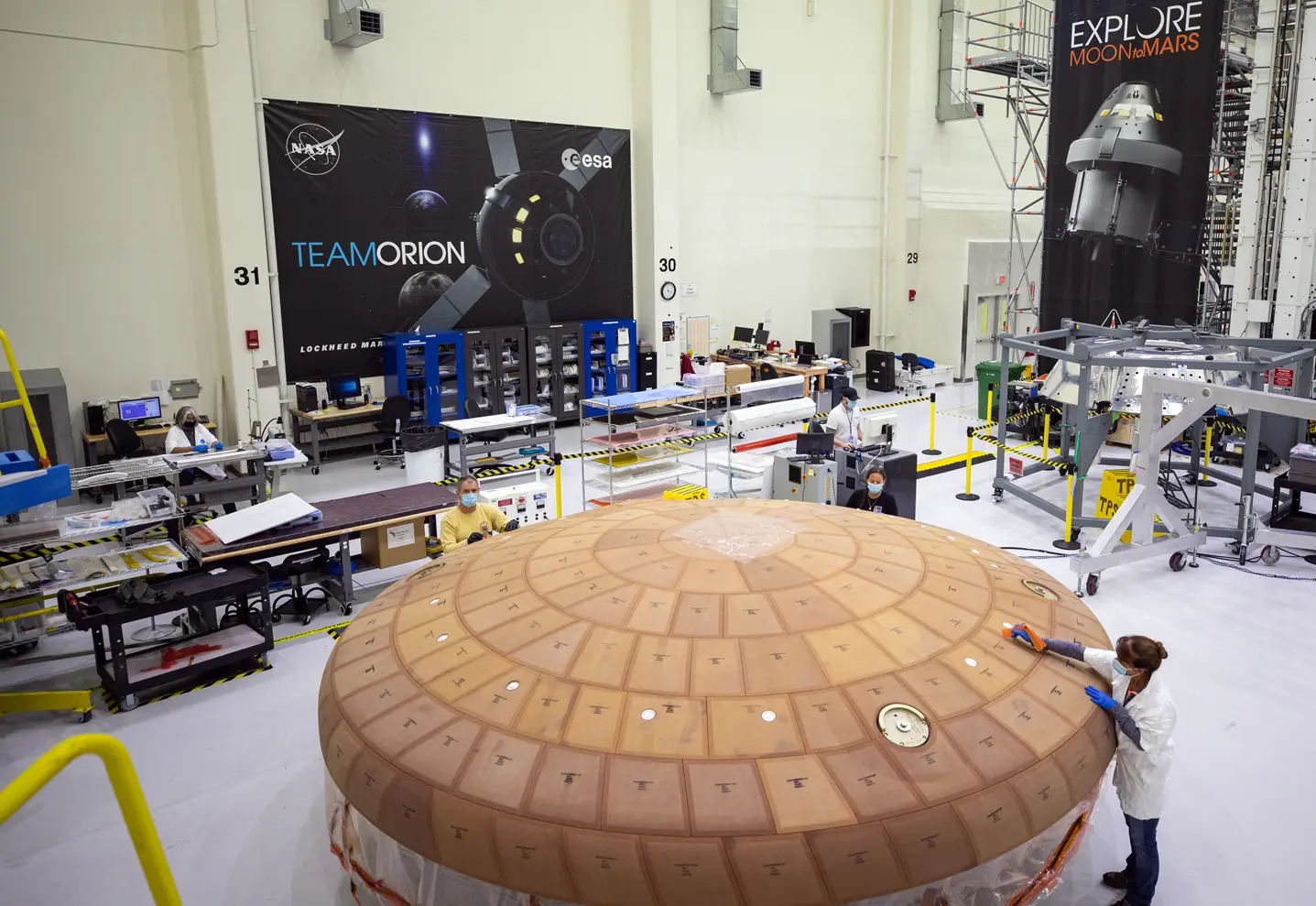
Artemis II’s thermal protection, NASA agrees, is flawed.
The heat shield is the critical layer on the bottom of a spacecraft that protects it — and the astronauts on board — from scorching temperatures upon re-entry into Earth’s atmosphere. If the shield fails, the metal structure beneath could melt, rupture and disintegrate.
And there is no plan B, no way for the astronauts to escape.
How to convince others to trust your instincts and follow your ideas
You can turn your intuition into influence in a way that builds trust, builds credibility, and moves people to action

Is it difficult to be a leader in a chaotic world? See 8 tips for taking initiative and taking action
Recovering the ability to act requires recognizing the end of old certainties and creating support points that sustain trust
Still, NASA officials are confident that, despite known heat shield failures, the four Artemis II astronauts will arrive alive and comfortable on Friday night at nearly 24,000 mph, completing a 10-day trip to the Moon and back.
An extensive analysis and battery of tests on the heat shield material “have made us comfortable that we can do this mission with a lot of safety margin,” NASA Administrator Jared Isaacman said in a January interview.
Charlie Camarda, a former NASA astronaut and heat shield expert, disagrees: he says the agency should never have launched Artemis II. According to him, NASA does not understand well enough the chances of the heat shield failing, and the mission — successful so far — could end with the death of the astronauts.
His guess is that there is a 95% chance that the astronauts will return safely. But that would mean a 1 in 20 chance of a disaster.
Compare that to the roughly 1 in 9 million chance of dying in a commercial plane crash, according to the International Air Transport Association (IATA).
The crux of the disagreement is how much certainty is needed when a definitive, perfect answer is impossible.
During Artemis I, a flight without astronauts that orbited the Moon in 2022, the capsule — known as Orion — survived reentry. If there were astronauts on board, they wouldn’t have noticed anything wrong.
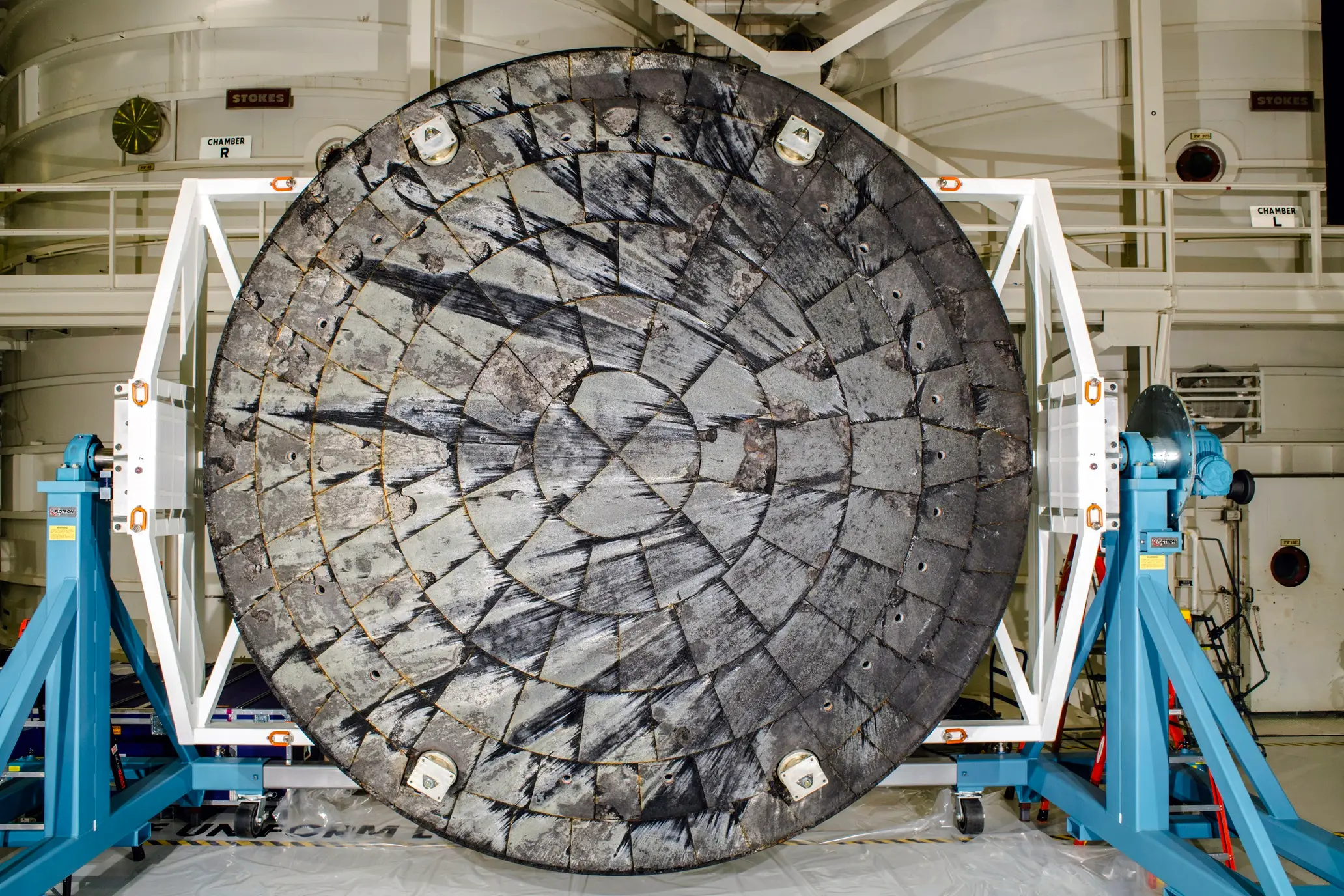
But when the capsule was rescued from the ocean, the heat shield — the same design as the one on the Artemis II ship — was unexpectedly scarred and with considerable chunks missing.
A few years of investigation followed. NASA officials said their analysis considered what could happen under the worst-case scenarios. These results, coupled with changes to the reentry trajectory for returning astronauts on Artemis II, provide a significant safety margin, they said.
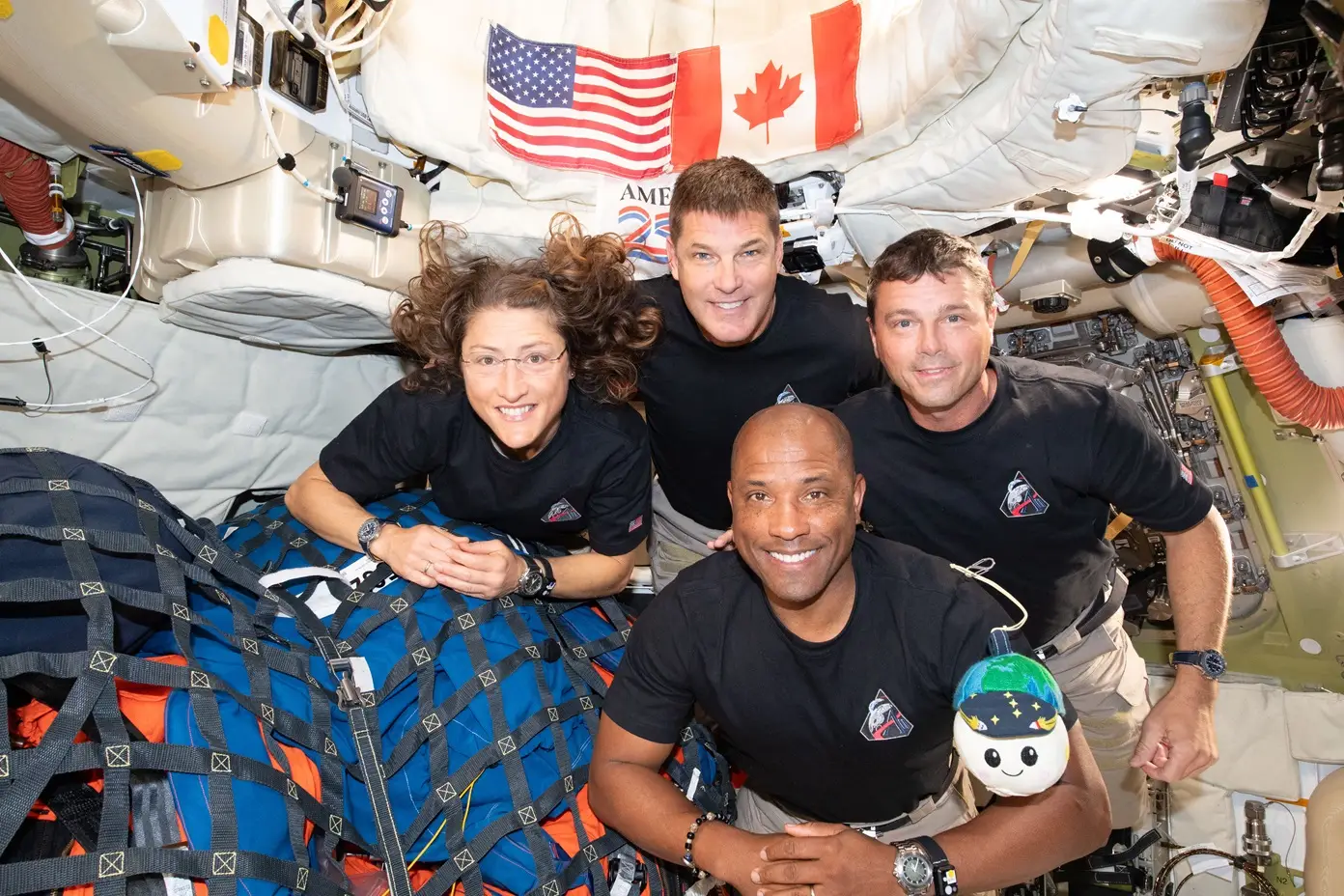
The Artemis II crew is aware of the risks of the flight and how NASA has been dealing with them. “We were actually there every step of the way in building the spacecraft,” Artemis II commander Reid Wiseman said in September.
Camarda argues that NASA still doesn’t understand the basic physics of what happened on the Artemis I mission and therefore can’t really say what the worst-case scenario would be.
NASA officials downplayed concerns about the heat shield.
At a press conference in January 2024, Amit Kshatriya, now an associate administrator at NASA, said that Artemis I’s heat shield had experienced “unexpected phenomena that we need to fully understand.” But, according to him, the shield offered “very good performance from a thermal protection point of view”.
Photographs of Artemis I’s heat shield remained out of public view until they appeared, in May 2024, in a report by the agency’s inspector general, an independent oversight body.
The heat shield is made from a material called Avcoat, similar to that used in the Apollo program more than 50 years ago. By design, as it absorbs heat from re-entry, it gradually chars and consumes itself, preventing the heat from reaching the rest of the capsule.
In the investigation into the Artemis I heat shield, engineers concluded that, in some parts of the shield, gases accumulated inside and the pressure generated produced cracks, causing pieces of Avcoat to detach abruptly, instead of burning slowly and continuously.
For future missions, Avcoat’s formula was modified to make it more porous, allowing gases trapped inside to escape.
This left a dilemma regarding Artemis II.
For this mission, the heat shield — with the original formula — was already finished and attached to the Orion capsule. Replacing the shield or the entire capsule would push the launch even further into the future.
Instead, NASA engineers concluded that a steeper, shorter reentry trajectory would reduce the time the vehicle would experience high temperatures and help keep astronauts safe.
Dan Rasky, a heat shield engineer who retired from NASA in December, agrees with Camarda’s objection to that decision.
“Let me give you an analogy,” he said. “If you’re driving on the highway and pieces of one of your tires start to come off, do you just keep driving and hope it’s okay? Or do you pull over and change the tire because you’re worried about a blowout?”
The decision to fly Artemis II as is, without changing the heat shield, was “reckless,” he said. “Indeed, it is foolhardy.”
If Artemis II’s heat shield performs as well as the one used on Artemis I, astronauts will land in the Pacific without a problem.
But the situation carries uncomfortable echoes of two of the worst days in NASA history: January 28, 1986, when the space shuttle Challenger disintegrated 73 seconds after launch, and February 1, 2003, when Columbia disintegrated upon return from orbit.
On both Challenger and Columbia, warning signs had already appeared on previous space shuttle flights. But managers felt falsely comfortable that previous missions had proceeded without incident, rather than acting urgently to correct problems that would later lead to crew deaths.
Now, the key question for Artemis II and its faulty heat shield is: Could cracks form and spread at a catastrophic rate?
Accurately calculating this possibility is extraordinarily difficult.
Simulating the hypersonic flow of air molecules around the bottom of a space capsule takes the most out of the fastest computers. For heat shields, other complex phenomena also need to be considered: the heat flow created by the compression of air molecules and the difficult-to-predict process of how cracks form and propagate in the Avcoat, sometimes abruptly.
“What I would do is take time to suspend operations,” Camarda said. “I would put together a team to develop a real analysis capability”, incorporating all the physics involved.
That’s not what NASA did, says Danny Olivas, another former NASA astronaut and scientist specializing in materials properties.
“Charlie is 100% correct,” Olivas said. “We don’t have a physics-based model for this. It’s impractical and almost impossible, because of the behavior of this material.”
But Olivas, who said he initially had doubts about launching Artemis II with a known flaw, was eventually reassured by the analysis NASA carried out.
Unlike Camarda, Olivas was recruited by NASA to conduct an independent technical review of the agency’s investigation and recommended the creation of a larger panel of outside experts — which the space agency did.
Olivas said NASA’s simulations assumed that if the temperature rose beyond a certain level within one of the Avcoat blocks, it would crack, and if it cracked, a layer of Avcoat would peel off from the entire block. This would create a cavity where heating would accelerate and another layer would come loose.
Even with these assumptions—which Olivas described as “conservative”—repeated simulations examining a multitude of reentry variations concluded that enough of the heat shield would survive—and with it, the capsule as well.
Additional analysis examined what would happen if an entire block of Avcoat peeled off. She concluded that a structure beneath the shield, made of carbon fiber and titanium, would keep the crew cabin intact during reentry.
He said NASA engineers were cooperative.
“What I can say is that every time I talked to someone, they had Columbia on their mind,” he said. “They were grateful that I pushed them. They were grateful that I doubted them. They were grateful that I forced them, basically, to prove what they were saying.”