
Barroso rebates criticism of the Supreme Court and defends mixed district vote for Brazil
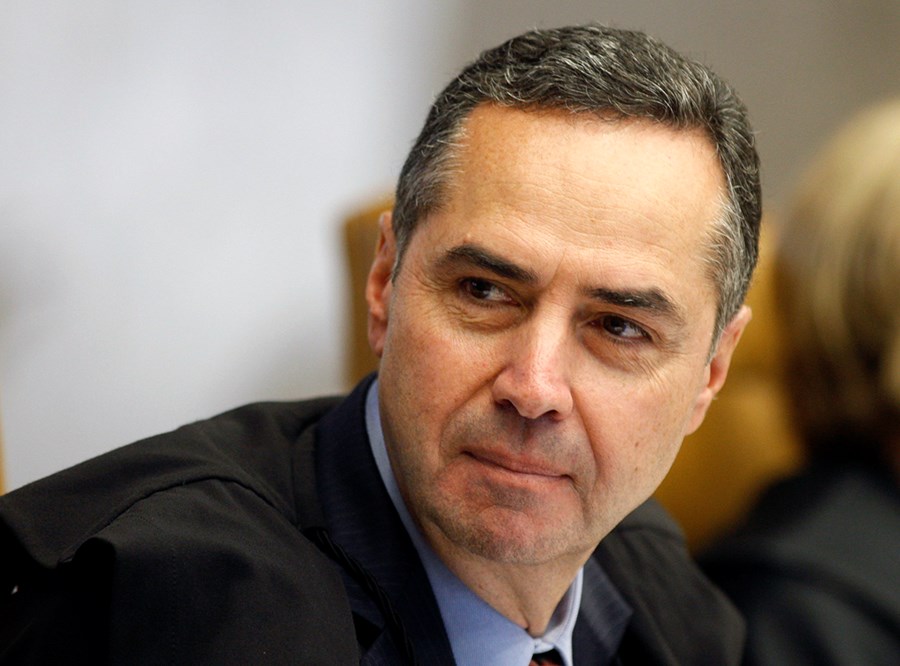
The president of the Supreme Federal Court (STF), Luís Roberto Barroso, countered on Saturday (7) the applicant criticism that the court “gets in everything” in the country. During participation in the Sphere Forum, in Guarujá (SP), the minister explained to entrepreneurs that the particularity of the Brazilian legal system is the extent of the Federal Constitution, which is much broader than other countries.
According to Barroso, this feature makes several themes, which in other nations would be restricted to the political debate, to be taken directly to the Supreme. “The Brazilian Constitution allows everything to reach the Supreme Court. In Brazil, you can arrive directly in the Supreme Court, questioning a law,” he said.
He assessed that this reality stimulates the judicialization of different issues and, consequently, expands the presence of the Court in the country’s daily life. To illustrate, he cited the data that the Supreme Court has only 49% popular approval. “It could be worse, from so much people we disacted,” he said.
I want to make a simulation
Despite the criticism, Barroso highlighted the maintenance of the current Magna Carta for four decades, a rare landmark in a country that has had several constitutions. According to him, institutional stability is a source of celebration.
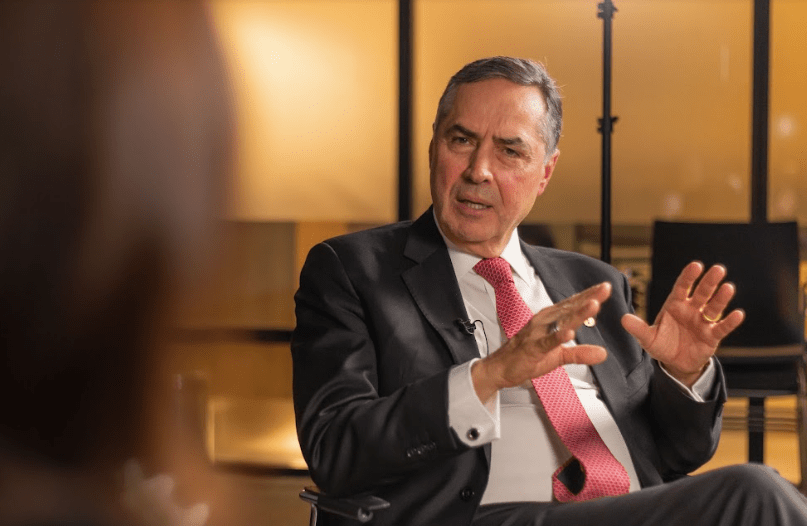
Barroso says that Brazil can be “sensation of the world” to adjust public accounts
STF President highlights fiscal imbalance as an obstacle, but sees positive scenario with high reserves, economic growth and heated labor market
The minister also defended the legitimacy of different ideologies in the democratic environment – whether left, right, center, conservative or progressive. However, he emphasized that public debate needs to maintain respect: “Civility has to come before any ideology.”
Mixed district vote
Barroso defended the adoption of mixed district vote as an electoral model in Brazil. The minister said the country is “more than mature” to make the change, even after the next election.
According to Barroso, the current model – proportional voting on open list – makes representativeness difficult, makes campaigns and impairs governance. Already the mixed district vote, he said, allows the voter to know who is the parliamentarian who represents his district and helps to reduce party fragmentation.
Barroso said he has defended this transition since 2006, when he wrote an article proposing the adoption of the model eight years later. If the change had occurred, it evaluated, could have even prevented the impeachment process of former President Dilma Rousseff.
The theme was also addressed at the event by PSD President Gilberto Kassab, who chose the proposal by stating that the new system would help to qualify the legislature. Barroso said that in 2020, when he took command of the Superior Electoral Court (TSE), he was visited by Kassab. At the time, the two discussed the viability of the change, but the party leader suggested awaiting the effects of the barrier clause and the ban on proportional elections.
Now, according to Barroso, the scenario is favorable to reform. “We have one of the worst electoral systems in the world in the election for the House of Representatives,” he said, adding that the current system generates distortions. “The voter votes for those who he wants, but does not know who is electing. Less than 5% of the deputies get there with their own votes.”
For the minister, the lack of direct bond between representatives and represented weakens the accountability. “We have a system in which the parliamentarian does not know who was elected, and the voter does not know who put there. One has no one to charge, the other has no one to account for,” he concluded.