
EMS gets an injunction to manufacture liraglutide slimming pen
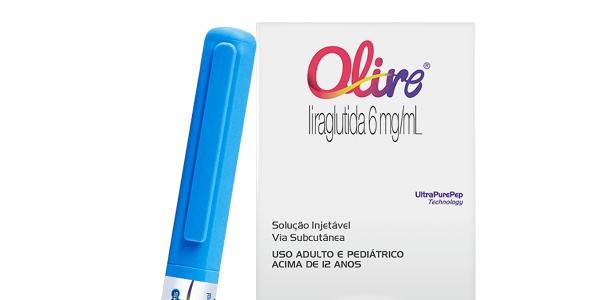
Patent of Novo Nordisk is valid until March 20, 2026. However, since 2021, the company has been asking for extension this period. The request had already been denied in the lower courts at TRF-1 in Brasilia until the company decided to appeal the decision in the STJ. The process was distributed to Minister Maria Isabel Gallotti.
Excessive delay in patent analysis cannot penalize innovation. What we seek is legal certainty to continue investing and bringing to Brazil the most modern treatments to the population as a whole. An environment of predictability is fundamental not only for the pharmaceutical industry, but for the entire innovation ecosystem in the country. Without the guarantee that the right to patent will be respected and the examination will take place within a reasonable time, Brazil runs the risk of being behind access to new health technologies. Ana Miriam Dias, legal director of Novo Nordisk in Brazil, in a press release
As in the case of the liraglutide, the company’s main argument to defend the extension of its patent was the delay in achieving it. Novo Nordisk filed the request in 2006, but only in 2019 received the patent. In 2021, the Supreme Court judged – by ADI (direct action of unconstitutionality) 5529 – that all patents could last at most 20 years. Thus, it put an end to the “breach” in article 40 of the LPI (Intellectual Property Law) that allowed extensions.
Before 2021, the LPI allowed the patent deadlines to adjust in case of major delays by INPI in the concession. However, the Supreme Court declared the unconstitutional automatic adjustment “because it too prolongs the monopoly” of giants such as Novo Nordisk, explained to the Facto News In July, lawyer Fernando Canutto, expert in intellectual property and partner of Godke Advogados. The decision was also based on the interest of the population, as the end of the monopoly of a drug that fights a chronic disease such as diabetes can facilitate its broad production and distribution.
Novo Nordisk, however, states that its resource does not violate the change promoted by the STF. The company says that “seeks a punctual, non -automatic and proportional adjustment of the term of its patent, precisely so that the company can exercise its constitutional right of protection” to industrial creations, as in article 5 of the Constitution. For Canutto, the company’s argument is valid, but in practice it leads to the already rejected monopoly.
Novo Nordisk tries to differentiate this request by saying that it is a punctual, proportional and non -automatic correction. However, the practical effect is exactly the same as what the STF has already rejected, which cannot have patent for over 20 years. There is a merit (in the company’s argument), it is theoretically possible (using it), but it will hardly work. Fernando Canutto, lawyer specializing in intellectual property
