
FCC Expands Ban on Chinese Technology: HiSilicon Dash Cams and Video Transmitters
IN 30 SECONDS
- What has happened? The FCC (the Federal Communications Commission, the independent regulator that authorizes any radio-emitting device in the US) has added two specific devices to its list of banned equipment: a dash camera and a wireless video transmitter with chips from the Chinese company HiSilicon.
- Who is behind? The US regulator, on the precedent of the 2012 Congressional report against Huawei and ZTE and the 2019 Executive Order. HiSilicon is a subsidiary of Huawei.
- What impact does it have? The veto covers two models, not the category. Importers who want to sell this equipment in the US must certify the origin of the processor.
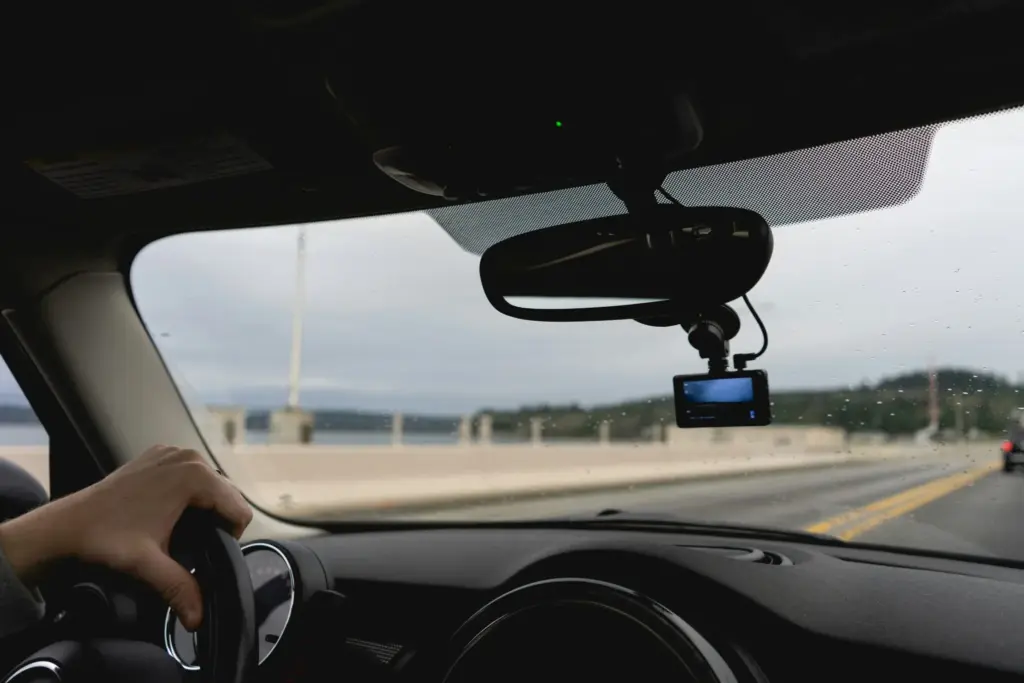
The FCC expands the ban on Chinese technology with two new names: a dash camera and a wireless video transmitter with chips HiSilicon.
Two specific devices, not an entire category
The Federal Communications Commission (FCCthe independent regulator that assigns the spectrum and authorizes the sale in the United States of any device that broadcasts via radio) has added both devices to its list of prohibited equipment, the catalog that prevents the marketing of devices capable of compromising national security. The veto does not cover all dash cameras or all video transmitters. Most of the models sold in American stores today meet federal standards and are still on the market.
What is blocked are two specific devices, whose brands and models the regulator has not made public, which incorporated circuits designed by HiSilicon. The company, founded in 1991, does not have its own factories — it is what the industry calls a fabless— and designs the Kirin processors in Huawei phones, as well as chips for artificial intelligence servers, connected appliances and cameras.
The FCC’s argument is not technical, but commercial brochure-based. According to the regulator, HiSilicon’s materials describe its chips as ‘designed for the surveillance market’, with ‘built-in human face detection algorithms’. That language, in an already banned supplier, is enough to close the door.
Two models. Not two markets.
What changes for Spanish distributors and for European 5G
The quick reading from Spain would be that the matter is not with us. It’s not exactly like that. Any importer – Spanish or not – who wants to place a dash cam or video transmitter on the US market now needs to certify the origin of the processor inside. The cost is not the tariff: it is the traceability of the component. A distributor of Madrid that you buy from an Asian manufacturer and resell in USA You will have to ask for papers that no one asked for before.
The veto does not persecute the camera: it persecutes the chip that makes it think. And that chip can appear in any catalog and at any customs office.
The substance of the matter weighs more. HiSilicon is the semiconductor division of Huaweiand Huawei continues to be a relevant supplier in European telecommunications networks. Since 2019, Spain has applied a security scheme for 5G that requires risk suppliers to be evaluated before authorizing equipment, in line with the toolbox approved by the European Commission. The FCC has no jurisdiction over Spanish 5G; His list, however, has become the manual that many regulators read before making a move.
There is the real connection with Brussels and with Madrid. Every time Washington adds a name to the catalogue, European operators —Telephone, Orange, Vodafone— they recalculate the exposure of their purchases and governments review files that they had stopped.
Washington Logic
It is important to understand what problem you are trying to solve Washington with a list that grows by drip. It is not a typical trade war or a response to a specific incident. It is the patient application of a criterion that Congress stated more than a decade ago: What determines the risk is the origin of the component, not the origin of the product.
The precedent is in 2012. A House committee chaired by Republican Mike Rogers concluded that Huawei and ZTE They were a threat to national security, after neither of them convinced the group that they would not spy on American citizens on behalf of the Chinese Government. From there came a warning to companies not to buy their telecommunications equipment. In May 2019, donald trump signed Executive Order 13873 (a presidential decree that does not require approval from Congress) and turned that notice into a national veto: out with Huawei phones, out with its 5G technology, and out with the Android system on its devices.
Huawei responded as companies that know they are big respond: they retreated into Beijing. It changed Android for its own operating system, HarmonyOS, and in the Chinese market it surpassed Apple already Samsung in smartphone quota. A domestic giant, however, still needs foreign currency, and that’s where its semiconductor subsidiary comes in. HiSilicon designs, others manufacture, and those circuits end up inside products that cross American customs with a brand that no one associates with Huawei.
The coalition supporting this policy is broader than it appears from Europe: national security Republicans and Obama-era Democrats have shared the same diagnosis on Huawei since 2012, and neither administration has reversed course. The underlying logic is that of Reagan with steel in 1984 and that of Bush with the restrictions of 2002: when national security is invoked, free trade awaits.
The unknown remains. A list that expands device by device is effective at closing specific doors and very slow at covering a market that reinvents itself every quarter. The next window is set by the regulator itself and the Department of Commercewhich has kept Huawei on its entity list since 2019 and reviews those inclusions every year.
The dripping doesn’t stop.
Case File
- The case: The FCC adds a dashboard camera and a wireless video transmitter to its catalog of prohibited equipment for using circuits from HiSilicon, a subsidiary of Huawei, without revealing brands or models.
- Key data: HiSilicon was founded in 1991 and designs Kirin processors; The ban affects two devices, not the entire category; background: 2012 Rogers report and May 2019 Executive Order 13873.
- For Spain: Importers selling such equipment in the US must certify the origin of the chip, and the US catalog has become a reference for European regulators evaluating 5G suppliers.