
How technology’s Magnificent Seven destroyed index funds on the US Stock Exchange
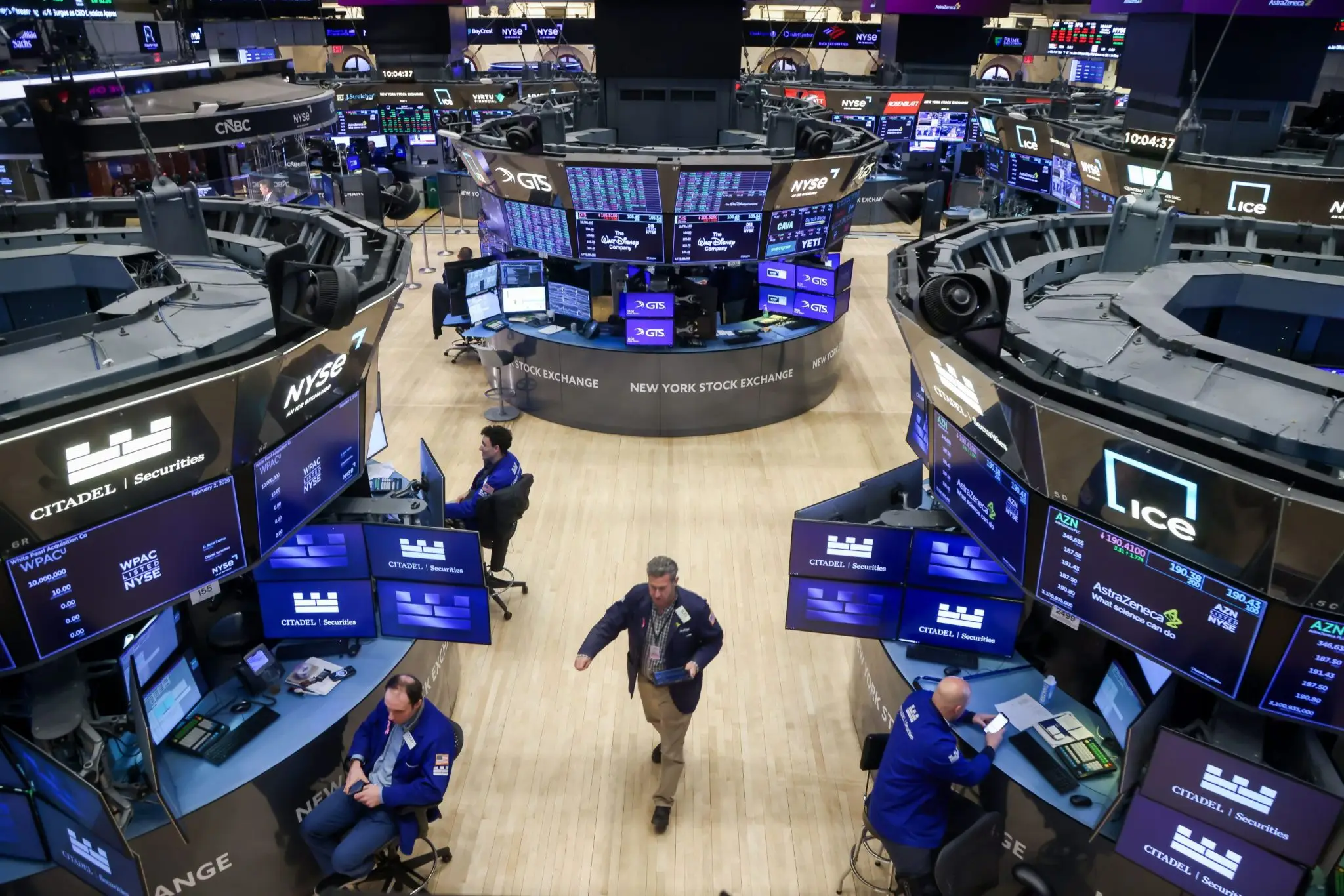
Tech giants known as the Magnificent Seven are making index funds — passive investors’ favorite safe investment tool — riskier.
While not as high as in previous exceptionally strong years, the S&P 500, which tracks the broader market, still posted a double-digit gain of 16.39% last year, several percentage points above the index’s 10% average annual return without accounting for inflation, according to Howard Silverblatt, a retired senior index analyst at S&P Dow Jones Indices.
Also read: What to expect from US tech stocks in 2026?
But beneath the surface, the market’s respectable growth has been driven by just a handful of companies, including several that make up the so-called Magnificent Seven, a group of seven high-performing technology companies that have driven a large portion of the stock market’s growth in recent years.
This heavy concentration in the broader market is bad news for index funds, which for decades attracted passive investors because they were considered among the market’s safest bets, but which now appear riskier than in years past.
In other words, when a few mega-cap stocks do all the heavy lifting, index funds lose their value as a diversification cushion and start to rise and fall with the performance of big techs.
Driven in part by the artificial intelligence craze, the Magnificent Seven now represents about a third of the S&P 500. And, thanks in part to these AI-linked gains, just seven stocks — including NVIDIA, Alphabet, Microsoft and Meta Platforms — accounted for just over half of the S&P 500’s annual gains last year, according to a note from RBC Bank.
To be fair, the Magnificent Seven has had a mixed start to 2026, with only Amazon, Alphabet and Meta posting gains through last week this year.
While index funds have traditionally been viewed as diversified investments, increasing market concentration is changing that assumption.
Some of the world’s largest investment managers, including Vanguard and Fidelity, have already made changes to their disclosure materials to warn investors about the risk of “non-diversification”.
According to the prospectus for Vanguard’s broad market fund, VFIAX, which replicates the S&P 500, the fund may at some point become technically “non-diversified” under the legislation governing mutual funds due to the degree of market concentration.
But it was the market that changed, not the funds themselves, said Zach Levenick, co-founder of THG Securities Advisors.
“Concentration (in the stock market) is high, higher than it has been for a long time,” he told Fortune. “And that means things in the markets can be distorted by the weights of larger companies.”
How to Assess the Risk of Index Funds
While index funds are still a relatively safe investment for passive investors, there have been very few periods in modern financial history when so few companies accounted for such a large portion of the market value.
With stocks soaring in recent years, this trend has resulted in consecutive double-digit stock market gains and overall growth. Yet just three years ago, in 2022, stocks plummeted, and the S&P 500 ended the year down 19.4%, its worst annual decline since 2008.
Any negative news pressuring the market can also drive prices down quickly, because “today’s biggest stocks are not just bigger, they are also more volatile and more correlated with each other,” Charles Rinehart, chief investment officer on the asset management team at registered consultancy Johnson Investment Counsel, told Fortune.
While in worst-case scenarios virtually all portfolios could inevitably be affected, investors can act now to avoid excessive exposure to risky investments.
To avoid additional risk or the possibility of a negative impact on the portfolio, Levenick said he recommends looking for value outside of the potentially overvalued tech giants and AI bets that are in the spotlight right now.
Although investors can still maintain investments in technology, it may be worth broadening their horizons by looking for smaller companies with more predictable businesses.
“This is the time to adjust the portfolio to favor assets that maybe aren’t as expensive or aren’t as, as large,” he said. “The time to adjust your portfolio is before bad things start to happen.”
