
The Chinese car brand that is on the rise globally and is not called BYD
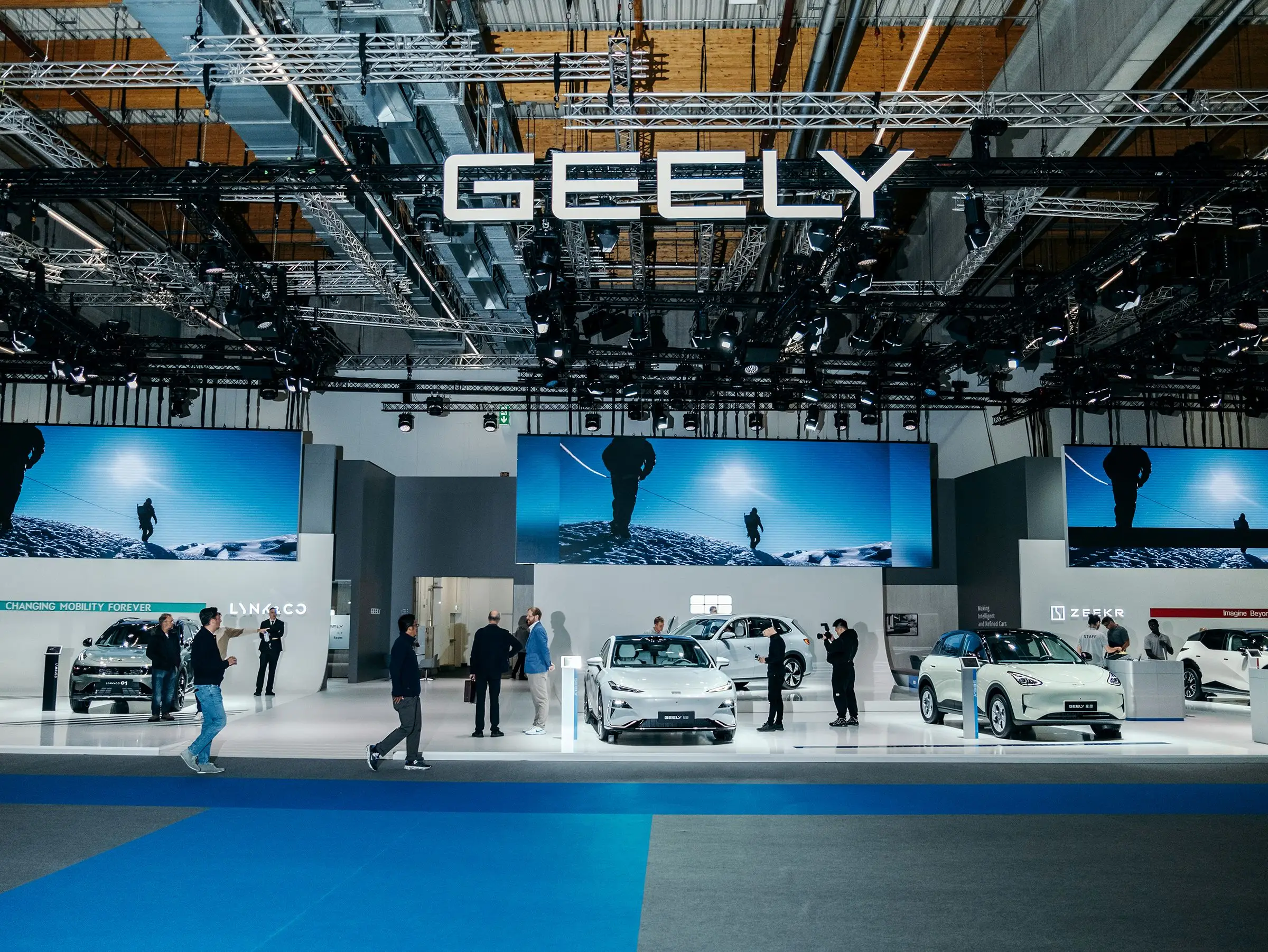
NINGBO, China — Every April, top executives and engineers from the global automotive industry travel to China for the industry’s premier show to weigh in on BYD, the electric car powerhouse that surpassed Tesla in global sales last year.
But, at the Auto China event now taking place in Beijing, another name is attracting attention: Zhejiang Geely Holding Group. In an unexpected move, Geely surpassed BYD in sales in the first two months of the year and is rapidly expanding its product line. The company is now moving abroad, more than doubling exports to Europe, the Middle East and other regions in the last year, facing global competitors in its own markets.
Also read: Ford CEO says Tesla doesn’t have an “updated car”, and the real competitor is BYD
Geely’s rise comes at a defining moment. The war in Iran has sent gasoline prices soaring, reviving demand for electric vehicles — a segment dominated by Chinese automakers.
After years of laying the groundwork to expand exports and escape an extremely competitive domestic market, Chinese brands appear ready to seize the opportunity and shift the balance of power in the global auto industry.
Geely has built a business model designed to deal with volatility. It is one of the few automakers capable of competing in the four main types of engines: gasoline, gasoline-electric hybrids, plug-in hybrids and fully electric. This diversity allows for quick adjustments as conditions change.
When the Chinese government let tax subsidies for electric cars expire this year and demand fell, Geely responded by leaning on its gasoline models. Then, when the war in Iran sent gasoline prices soaring last month, the company returned to promoting plug-in hybrids and electric cars.
With the Chinese economy also slowing, sales of battery electric cars and plug-in hybrids in China fell 14% in the first 19 days of April compared to the same period a year ago. Sales of gasoline vehicles plummeted by almost 40%.
Geely’s versatility “has become a clear competitive advantage,” said David Zhang, director of vehicle technology research at Jiangxi New Energy Technology Institute.
With fuel prices rising around the world, Geely said this month it is converting all of its remaining gasoline-only vehicles to gasoline-electric hybrids.
“Each of their vehicles will be highly fuel efficient — that will be another advantage,” said Yale Zhang, managing director of Automotive Foresight, a Shanghai-based consultancy.
Zhejiang Geely, privately held and controlled by its founder and president, Li Shufu, 62, commands a wide network of automakers. The company releases little financial information, but has set a goal of generating 30% of its sales outside China by 2030.
Shares of its largest unit, Geely Automobile Holdings, are traded in Hong Kong. The company sold 3 million cars last year, a 39% increase over the previous year. Revenue grew 25%, even with the price war in China putting downward pressure on vehicle values.
Geely began manufacturing cars in 1998, when it began supplying taxis to Chinese fleets. In less than three decades, Zhejiang Geely has transformed itself into a global automaker, with sales that now approach those of Ford Motor Co., founded 123 years ago.
Li’s trajectory was also unlikely. As a teenager, he used money set aside for college to buy a camera and open a small business photographing tourists. He then went on to manufacture components for refrigerators, motorcycles and cars before building complete vehicles in Taizhou, his hometown in the coastal province of Zhejiang.
In 2006, Geely was selling cheap subcompacts to first-time buyers, with simple, low-cost designs that seemed quite utilitarian by Western standards.
That didn’t dampen Li’s global ambitions. In a 2006 interview, he suggested that Ford sell Jaguar or Volvo — two of the American automaker’s many brands at the time — to Geely.
The idea seemed unlikely, but after Ford struggled during the global financial crisis, Li took out large loans to buy Volvo, a Swedish brand, in 2010. Zhejiang Geely has since revitalized Volvo.
From an early age, Li focused on mastering automotive technology. In 2006, he expressed admiration for German automakers DaimlerChrysler and BMW, then leaders in hybrid car technology, but was determined not to rely on others. Geely would have to develop its own technology “from scratch”.
In a turnaround, he paid US$9 billion in 2018 to acquire a 9.69% stake in Daimler, which changed its name several times and is now known as Mercedes-Benz Group.
Geely has built a broad portfolio of national and international brands. In 2013, it acquired London Taxi Co., manufacturer of iconic London taxis.
In 2017, it purchased a 51% stake in British sports car manufacturer Lotus, in addition to 49.9% in Proton, a Malaysian automaker.
In the electric vehicle segment, it created brands such as Polestar, an affiliate of Volvo, and Zeekr, a highly technological premium line, with cars costing up to US$132,000.
Although it has moved much of its production to China, Geely maintains design studios and factories in Europe and opened a Volvo plant in South Carolina. This has helped the company bypass trade barriers in Western markets.
Geely still faces two big challenges, said Michael Dunne, a veteran Chinese auto industry consultant. Its brand portfolio requires high sales volumes to remain profitable.
At the same time, state-owned automakers in China have been putting pressure on the sector, driving constant price wars and expanding capacity with support from local governments and state banks.
“Profits have disappeared” in car sales within China, Dunne said. Geely remains profitable as a private company largely thanks to exports. But across the Chinese auto sector, he added, “state-owned companies are the ones that must survive.”
Geely’s main competitor, both domestically and abroad, is BYD, which has grown by flooding the Chinese market with cheap electric cars and plug-in hybrids. Many of their models cost less than $15,000. The price war in China has been especially intense in BYD’s flagship plug-in hybrid subcompact segment. The company’s profits fell significantly last year.
Along with state-controlled automakers SAIC Motor and Chery, BYD and Geely are leading a wave of Chinese cars into the global market. China exported around 1 million cars per year between 2012 and 2020. That number jumped to 7.1 million last year and is expected to reach 10 million this year — almost the same volume that the United States produces annually.
Prevented from entering the US market by tariffs, Chinese automakers are focusing on Europe, Southeast Asia, Australia, Latin America and Africa.
To compete in these markets, Geely is betting on technology. One example is the recently launched Zeekr 8X SUV.
At the touch of a button, blinds rise on the windows and sunroof, transforming the rear seats into a private cinema with speakers built into the seats. When the owner stands in front and gestures, the car can exit a tight space on its own. The vehicle also includes a number of advanced autonomous driving features and starts at $47,000.
Geely reported that Zeekr intends to start selling the model abroad in the second half of the year. Like many export models from Chinese automakers, the Zeekr 8X is a plug-in hybrid, combining a large battery with a supporting gasoline engine.
These vehicles were originally developed to address the “range anxiety” of all-electric cars — the fear of running out of charge before finding a charging point.
That concern has eased domestically as China’s state-owned energy companies have expanded charging infrastructure across the country. Because plug-in hybrids carry the additional cost of a gasoline engine, demand in China is shifting toward all-electric cars.
Instead, automakers like Geely and BYD are repurposing plug-in hybrids for overseas markets, where charging infrastructure is still less developed.
Europe emerged as a priority destination. The European Union imposed high tariffs against subsidies on Chinese electric vehicles at the end of 2024, but exempted plug-in hybrids, which were still a small segment when the policy was formulated. Imports have soared since then.
Speaking last month in Sweden, Li said geopolitical tensions were reshaping the sector and that the Geely group would become more dependent on Volvo’s European factories. “Globalization has come to an end, while we see the trend of economic regionalization,” he said.
