
The initial US plan in Iran was to put former president Ahmadinejad back in power
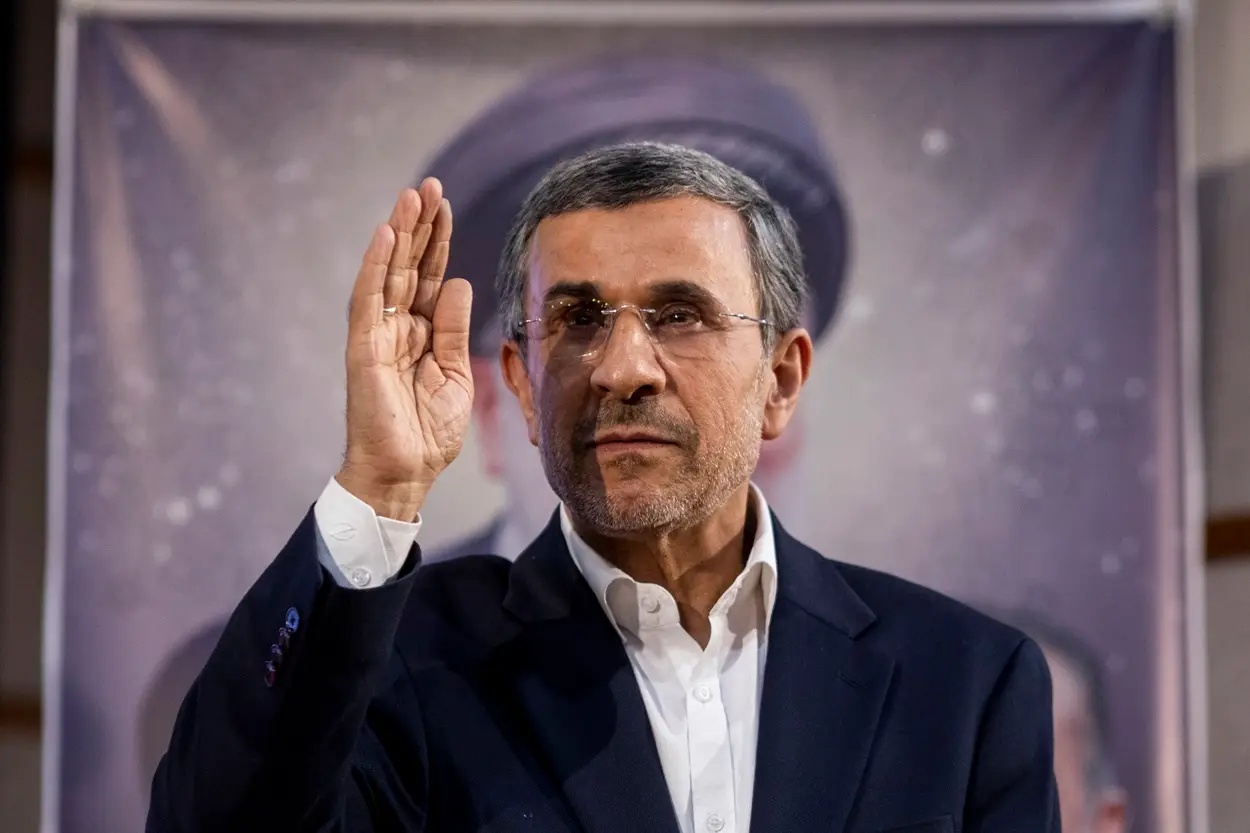
Days after Israeli strikes killed Iran’s supreme leader and other top officials in the war’s opening blows, President Donald Trump publicly commented that it would be better if “someone from within” the country took command.
Now, U.S. officials say Washington and Israel entered the conflict with a specific — and surprising — name in mind: Mahmoud Ahmadinejad, the former Iranian president known for tough, anti-Israel and anti-American positions. According to these reports, the ambitious plan, drawn up by the Israelis and on which Ahmadinejad had been consulted, quickly fell apart.
Ahmadinejad was wounded on the first day of the war by an Israeli attack on his home in Tehran, which was intended to free him from house arrest, according to US officials who received reports and an associate of the former president. He survived, these sources say, but after the episode he reportedly lost enthusiasm for the regime change plan. Since then, he has not appeared in public and his whereabouts and current condition are unknown.
To call Ahmadinejad an unusual choice is an understatement. Although he began to increasingly confront the regime’s leadership and was under strong surveillance by the Iranian authorities, he was marked, in his terms between 2005 and 2013, by speeches in which he spoke of “wiping Israel off the map”. He was a staunch defender of the Iranian nuclear program, a fierce critic of the United States and responsible for harsh repression of internal dissent. How he was convinced to participate in the plan remains unexplained.
The existence of this attempt, which had not been revealed until now, was part of a multi-step strategy designed by Israel to overthrow the theocratic Iranian government. The plan helps to show how Trump and Israeli Prime Minister Benjamin Netanyahu underestimated the time needed to achieve their objectives and, to a certain extent, bet on a risky leadership change operation in Tehran — seen with skepticism even among some of Trump’s own aides, who doubted the feasibility of putting Ahmadinejad back in power.
Trump says war with Iran will end “very quickly”
Speech was given to parliamentarians at the White House
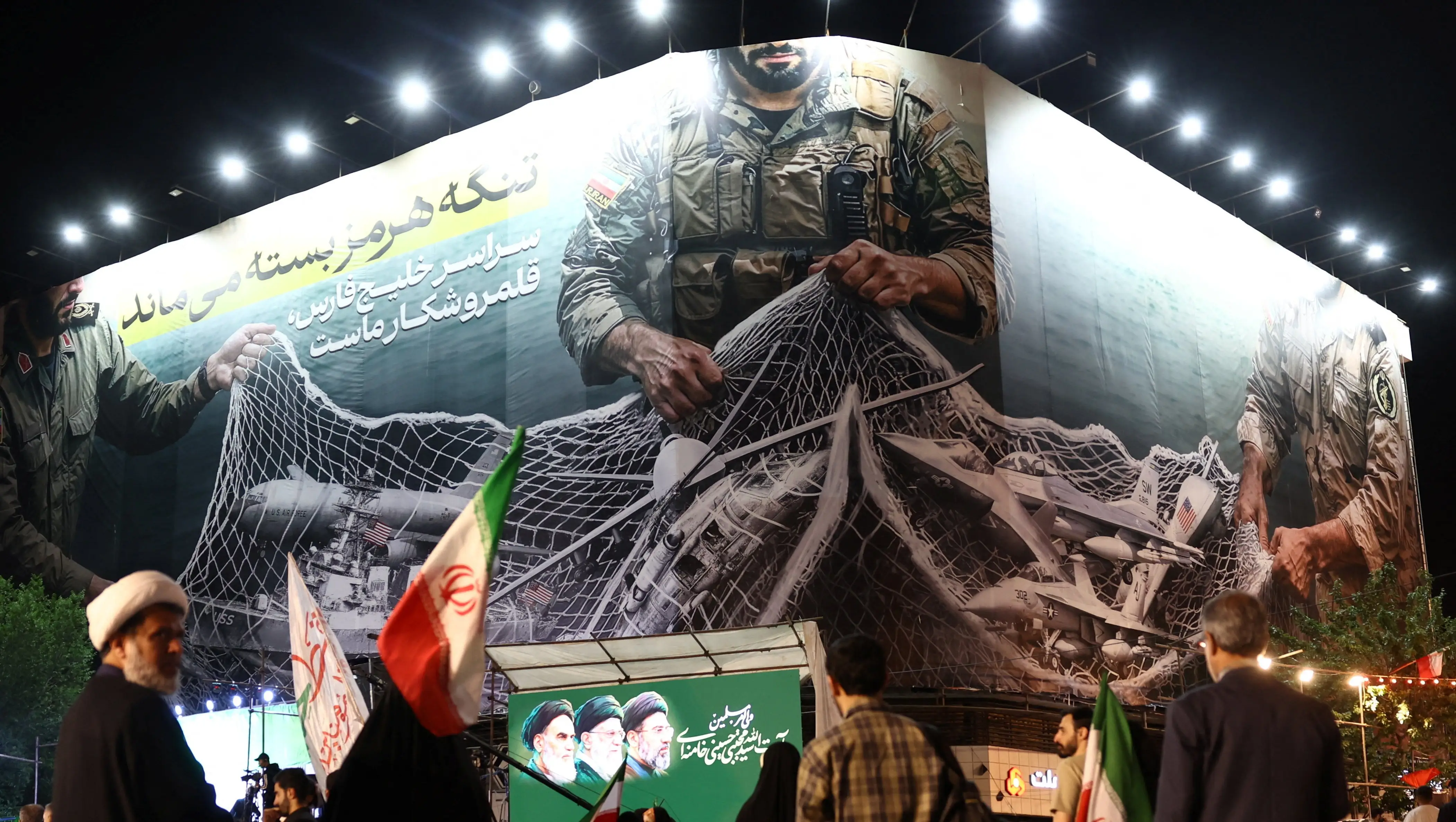
Iran threatens to extend the war beyond the region if the US and Israel resume attacks
IRGC added that Israel and the US “did not learn from repeated defeats” and accused the two countries of once again resorting to threats
“From the beginning, President Trump has made clear his objectives for Operation Epic Fury: destroy Iran’s ballistic missiles, dismantle its production facilities, sink its Navy and weaken its proxies,” White House spokeswoman Anna Kelly said in response to questions about the regime change plan and Ahmadinejad’s role. “The United States military has met or exceeded all objectives, and now our negotiators are working to reach a deal that ends Iran’s nuclear capabilities for good.” A spokesman for Mossad, Israel’s foreign intelligence service, declined to comment.
In the early days of the war, American officials talked about plans, drawn up with Israel, to identify a “pragmatist” who could take over the country. They argued that there was intelligence suggesting that some members of the Iranian regime would be willing to cooperate with the US, even if they could not be called “moderate”. Trump was buoyed by the success of the operation to capture Venezuelan leader Nicolás Maduro and his interim replacement’s willingness to work with the White House — a model he seemed to believe he could replicate elsewhere.
In recent years, Ahmadinejad has clashed with regime leaders, accusing them of corruption, and has become surrounded by rumors about his loyalty. He was blocked from several presidential elections, advisors were arrested and his circulation ended up being limited to his house in the Narmak neighborhood, in the east of Tehran. The fact that American and Israeli officials see him as the possible leader of a new government reinforces the idea that the February war was launched with the hope of installing a more malleable leadership in Tehran, despite Trump and members of his cabinet insisting that the goals were “narrow”: destroying Iran’s nuclear, missile and military capabilities.
There are many doubts about how Washington and Tel Aviv intended, in practice, to put Ahmadinejad in power and about the exact circumstances of the airstrike that injured him. US officials say the attack, carried out by the Israeli Air Force, targeted guards guarding Ahmadinejad as part of a plan to free him from house arrest. On the first day of the war, Israeli attacks killed Ayatollah Ali Khamenei, Iran’s supreme leader. The bombing of Khamenei’s compound in central Tehran also blew up a meeting of officials, killing figures the White House identified as more open to negotiating a change of government than their superiors.
At that time, reports circulated in the Iranian media that Ahmadinejad had been killed in the attack on his residence. The bombing, however, did not significantly destroy the house, at the end of a dead-end street. The target hit was the security post at the entrance to the road, which appears completely destroyed in satellite images. In the following days, official Iranian agencies corrected the information, saying that he had survived, but that his “security guards” — in practice, members of the Revolutionary Guard responsible for watching him and keeping him under house arrest — had died.
A report in the magazine in March, citing anonymous sources linked to Ahmadinejad, stated that he had been released from confinement after the attack on the house, described in the text as “in practice, a rescue operation”. After this article, an associate of the former president confirmed that he saw the attack as an attempt to free him. According to this interlocutor, the Americans saw Ahmadinejad as someone capable of leading Iran and “managing the political, social and military situation in the country”.
This associate went on to say that Ahmadinejad could “play a very important role” in Iran’s near future, suggesting that the US viewed him similarly to Delcy Rodríguez, who took command in Venezuela following Maduro’s capture by US forces and has since worked in close coordination with the Trump administration.
During his presidency, Ahmadinejad was known for both hard-line policies and fundamentalist statements considered extreme, such as the claim that there was “not a single gay” in Iran and denial of the Holocaust. He spoke at a conference in Tehran titled “A World Without Zionism.”
After leaving office, he gradually became an open critic — or at least disaffected — of the theocratic government, especially Khamenei. In 2017, 2021 and 2024, he tried to return to the presidency, but on each occasion the Guardian Council, a body of civil and religious jurists that filters candidates, blocked his candidacies. Ahmadinejad accused senior leaders of corruption and mismanagement, gaining a reputation as a potentially destabilizing figure for the regime — even though he never became an open dissident.
Its ties to the West, however, are much less clear. In an interview with in 2019, Ahmadinejad praised Trump and defended a rapprochement between Tehran and Washington. “Mr. Trump is a man of action,” he said at the time. “He is a businessman and therefore able to calculate cost-benefit and make decisions. We tell him: let’s calculate the long-term cost-benefit for our two nations and not be short-sighted.”
In recent years, trips abroad have further fueled speculation. In 2023, Ahmadinejad went to Guatemala; in 2024 and 2025, he was in Hungary, according to reports in the magazine. Both countries maintain close ties with Israel. The then Hungarian Prime Minister, Viktor Orbán, is close to Netanyahu, and during his visits to the country, the former Iranian president spoke at a university linked to Orbán.
He returned from Budapest just days before Israel began attacking Iran last June. When the war broke out, he kept a low profile, with few statements on social media. The silence of someone who saw Israel as Iran’s main enemy drew attention on Iranian social media. According to the public sentiment analysis company FilterLabs, mentions of Ahmadinejad increased after reports of his death, but then fell, giving way mainly to speculation and doubts about where he was.