
The US moves to dissolve the Decolonization Committee that is fighting for Gibraltar
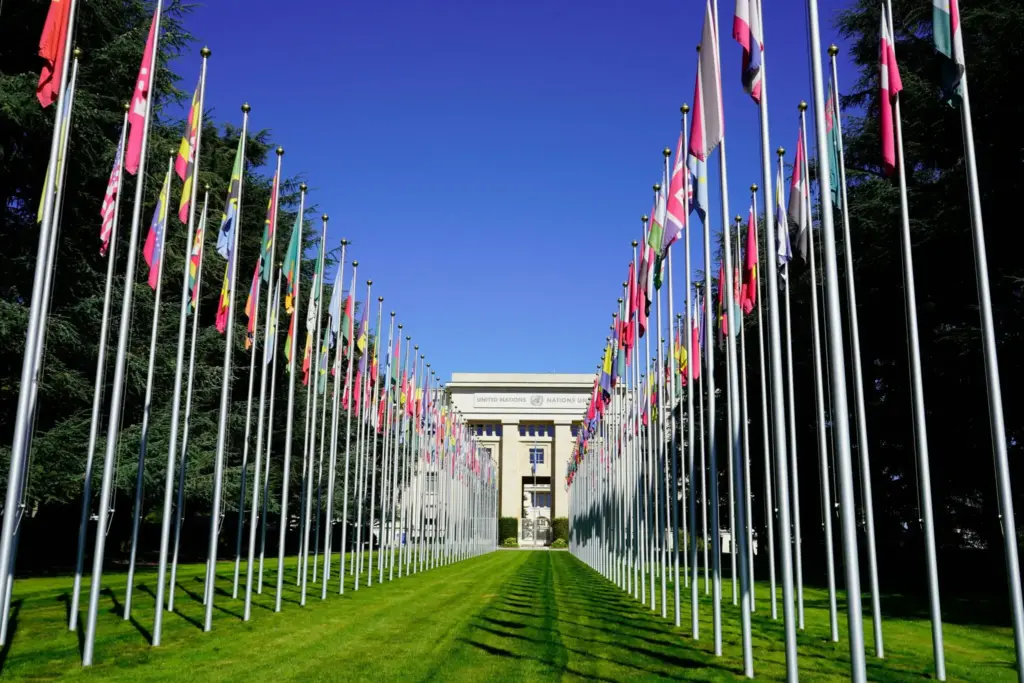
He Decolonization Committee The UN monitors 17 territories. one is Gibraltarand it is there where Spain fights its diplomatic battle every year. Now Washington wants to close it.
What has the United States proposed and why does it shake the foundations of the UN?
The initiative is American: to end the mandate of the Special Committee on Decolonization, known as C-24, the body created in 1961 to push for the application of resolution 1514 (XV), which a year earlier proclaimed the end of colonialism. On the table there is a piece of information that explains the discomfort: 17 territories are still recognized as pending decolonization.
The distribution of that list makes half diplomacy uncomfortable. He United Kingdom manages ten of the 17, including the Falkland IslandsSouth Georgia and the South Sandwich. AND USA It is listed with three archipelagos: Guam, Virgin Islands and American Samoa.
Added to this is Puerto Ricowhose status is examined by the committee every year despite the fact that the General Assembly established in 1953, with resolution 748, that it was not responsible for applying the regime of chapter XI of the Charter. Translated: C-24 activity is not an abstract nuisance for Washington.
What would happen if the committee disappeared? The end of the mandate would have no legal effect on resolution 1514 or on decisions adopted since 1961, but institutional memory and annual review would be weakened that keeps pending colonial situations under international focus. The diplomatic pressure on the colonial powers would decrease in volume.
Without the C-24 the files are not closed: they stop having an annual showcase and the political pressure cools down.
There is a detail that almost no one remembers. When the General Assembly created the committee in 1961, through resolution 1654, Spain abstainedas well as the United Kingdom, France and the Union of South Africa. Six decades later, that organ that Madrid viewed from a distance has become one of its main tribunes.
Why the closure of C-24 hits the pulse for Gibraltar
Gibraltar It has been on that list for decades. It is the framework in which Spain defends that we are not facing a case of self-determination, but rather a sovereignty dispute between two States. The committee has been adopting decisions by consensus that urge Madrid and London to negotiate a definitive solution taking into account the interests of the Gibraltarians.
The Spanish argument is based on the principle of territorial integrity included in resolution 1514 and in Treaty of Utrecht of 1713, by which the Rock passed to the British Crown. London maintains the opposite: that the principle of self-determination should be applied to the inhabitants of the Rock. They are two readings of the same text.
The problem is one of diplomatic arithmetic. If C-24 dissolves, the file does not die: the Fourth Committee of the General Assembly already examines decolonization issues every year and receives the committee’s reports. But that transfer would not be automatic nor would it guarantee the continuity of all its activities. The focus, which today has its own name each year, would be diluted into a much broader agenda.
For Spain there are two readings. The bad news: a free and annual multilateral speaker is turned off while the dispute over the fence remains open. The good news: the United Kingdom also loses coverage, because ten of the territories under review are British.
The precedent that should be looked at: when the UN retired an entire body
It would not be the first time that the United Nations closes its own structure. The Trusteeship Council, which oversaw the trust territories, suspended operations on November 1, 1994, weeks after Palauthe last of them, acceded to independence. It was closed because the work was finished.
The difference is substantial. In 1960, according to the figures managed by the organization itself, some 750 million people lived under colonial rule; Today there are less than two million in the 17 remaining territories. The mission is incompleteand that is why the debate is not technical but political: it is discussed whether an uncomfortable body should be reformed or simply cease to exist.
That is the key for Spain. The C-24 does not issue sentences or execute resolutions; Its strength is insistence, annual review, documentary evidence. What Madrid is at stake is not a dispute won or lost, but a place on the diplomatic calendar where Gibraltar is renamed every year.
The next chapter will be written in the General Assembly, which must decide whether to accept the American proposal and whether the Fourth Committee absorbs the committee’s tasks. It is also advisable to continue whether Spain takes the Rock issue to that forum before the old man disappears. Because The files do not close themselves: they are archived.
📌 Case File
- Case file: The United States promotes the end of the UN Decolonization Committee, the body that examines 17 pending territories every year, including Gibraltar.
- Important information: Born in 1961 with resolution 1654 and the abstention of Spain. The United Kingdom administers ten of the 17 territories; United States, three.
- Summary: Spain would lose its most constant multilateral forum on Gibraltar, although the Fourth Committee could take on some of the work.