
Trump team explores reopening Russian gas to Europe through Ukrainian gas pipelines
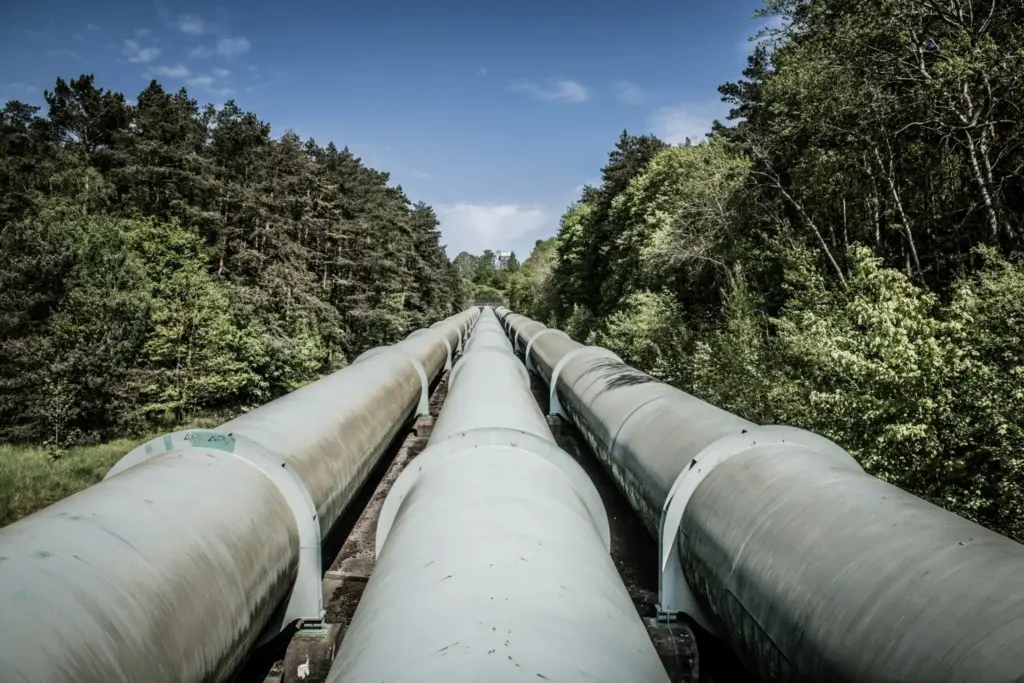
The team of donald trump In September, it explored reopening Russian gas to Europe through Ukrainian gas pipelines. The operation was piloted Steve WitkoffWhite House special envoy, and Jared Kushnerthe president’s son-in-law, on separate trips to Russia and Ukraine.
He published it on Wall Street Journal on Sunday, with American, European and Ukrainian officials as sources. The mechanism is as simple as it is delicate: an American intermediary would buy the gas and resell it to the continentavoiding the European sanctions package and leaving room for American investors. An Administration official told Daily Caller News Foundation that there is European interest and that the price would fall suddenly.
The gas wouldn’t come back on its own. Any economic agreement would be tied to a broader pact to end the war. Russia’s return to the European market is the carrot, not the goal: Moscow would stop bombing the Ukrainian power grid, kyiv would charge transit tolls, and Russian profits would be held in escrow (escrow) so that the Kremlin Don’t turn them into ammunition. That’s the trick.
A plan with three holes: sanctions, legality and calendar
The first hole is chronological. Ukraine had paused its attacks on Russian refineries due to pressure from trump and Washington shelved the idea. kyiv then resumed strikes against energy targets. With the refineries burning, the package loses meaning. The calendar rules.
The second is Russian. Kremlin spokesman Dmitry Peskovwas explicit on Monday: ‘the situation on the ground says very clearly that these types of plans are impossible to implement right now.’ The European Commissionthe Ukrainian embassy, the exporter Global Venture and, the Center for LNG industry group did not respond to requests for comment.
The third is internal coherence. Richard Goldbergsenior advisor at the Foundation for Defense of Democracies, sees it as ‘a step backwards’: the Administration has been ‘focused like a laser’ for months on placing liquefied natural gas throughout Europe and in the Greek vertical corridor. Ellen Waldof the Atlantic Council, suspects that the plan ‘won’t go very far’: American gas already covers 30% of European consumption.
Washington wants to sell its own gas and, at the same time, needs Russian gas as a bargaining chip to end the war. That’s the knot.
Max Pyziurfrom the Energy Policy Research Foundation, was harsher: ‘ill-conceived, of dubious legality, and desperate in execution.’ Jason Isaacof the American Energy Institute, argued the opposite: if reopening Russian gas ends the war, ‘it deserves serious consideration,’ as long as the pact protects American interests.
Brussels has already set the veto calendar and Spain is looking at Mibgas
Europe is not in the debate phase. The Council of the EU closed the staggered calendar in January: Russian LNG is banned on January 1, 2027 and gas via gas pipeline in the autumn of that same year.. Russian gas was still 13% of the bloc’s imports in 2025, more than 15 billion euros per year.
For Spain the issue is about prices, not about pipes. It does not receive Russian gas by gas pipeline and covers almost all its consumption by sea, with the largest regasification capacity in Europe in the hands of Enagas. The reference that the Spanish industry pays is the Mibgasattached to the Dutch TTF: if Russian gas makes the TTF cheaper, the bill goes down without Spain signing anything.
The reverse has proper names. A sustained drop in price leaves infrastructure idle and punishes large retailers, with Naturgy and Repsol At the top, they have built their gas strategy on American LNG contracts. The Spanish Government has not commented.
Washington Logic
The question that matters in Washington is not whether Russian gas is desirable, but what can be offered to Moscow that is not free money. With sanctions on banking and oil tightening, the only big incentive left on the table is the European energy market. The coalition that supports the maneuver is the pragmatic wing of the Republican Partywhich prefers a verifiable commercial carrot to a promise of reconstruction. Washington does not ask permission.
The precedent is forty-four years old. In 1982, Ronald Reagan tried to block the Siberian gas pipeline that supplied Western Europe with sanctions, clashed with Germany, France and Italy and withdrew the measures that same year. The lesson repeats itself: whoever controls the gas pipeline that enters Europe controls more than just the price of gas. The electricity bill weighs more than any doctrine.
The contradiction cannot be resolved with rhetoric. The White House It boasts of ‘energy dominance’ and the July 2025 trade deal, in which the EU committed to buying $750 billion of US energy by 2028. Reopening the Ukrainian gas pipeline competes with that goal. The legal question remains: how Russian gas is routed through an American intermediary without violating European or American sanctions.
The next window is not on Capitol Hill but on the calendar. The veto on Russian LNG comes into force on January 1, 2027 and no European trading company will sign new volume before knowing if Brussels moves that date. If Moscow agrees to a ceasefire sooner, the debate opens suddenly. If not, the poll will remain what it was: a balloon test. It all depends on Moscow.
Case File
- The case: Trump’s envoys proposed in September reopening Russian gas to Europe through Ukraine with an American intermediary, as part of a global agreement to end the war.
- Key data: Russia contributed 13% of EU gas imports in 2025 (more than 15 billion euros); Brussels vetoes Russian LNG on January 1, 2027 and gas by pipeline in autumn 2027; US gas already covers 30% of European consumption.
- For Spain: Without a Russian gas pipeline, the key is the price: a lower TTF would make Mibgas cheaper, but it would leave regasification capacity idle and would strain the American LNG contracts of Naturgy or Repsol.