
Trump warns that it will be ‘very difficult’ to govern with Schumer if he regains leadership of the Senate
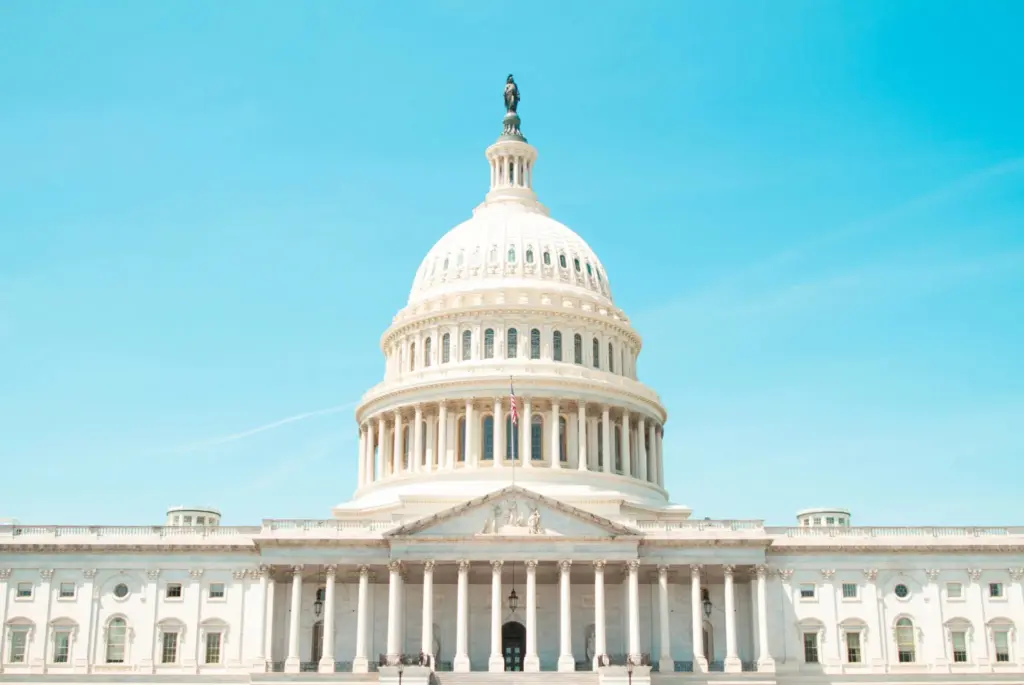
The Democratic Senate leadership race now has an answer: donald trump warns that with Chuck Schumer It will be ‘very difficult’.
Schumer against Van Hollen: the internal vote that will decide the Senate
Democratic Minority Leader Chuck Schumer faces a real rival for the leadership of his caucus for the first time in years. The senator from Maryland Chris Van Hollen has formalized a candidacy that until months ago was unthinkable. The outcome is decided in a closed-door vote by the Democratic caucus, scheduled before the new Congress takes office in early January. No one on Capitol Hill takes the New York veteran’s re-election for granted.
Schumer maintains he has the votes. His rival’s version is different: ‘The reality is that this is an open race,’ he said. Van Hollen days ago. The questioning does not come from ideology but from wear and tear. The left wing of Democratic Party He reproaches him for his age, his profile as an establishment centrist and his position on Israel, three open flanks at once after the Republican setback in November.
Trump entered the debate with a message on social media: ‘It will be very difficult for me to work with Chuck Schumer if he becomes Senate Majority Leader.’ He added that he ‘failed miserably as a leader once before, one of the worst in history’, and that his legacy is summed up as ‘perpetuating the Russia, Russia, Russia deception.’ He closed with ‘here we go again’.
The contrast with what was said on Saturday is notable. In an interview, the president said he doesn’t want to ‘veto all the time’ and described Schumer as ‘a smart guy.’ The same weekend he had spoken in similar terms about Hakeem Jeffriesthe man who will occupy the Presidency of the House in January. Two tones, a single interlocutor waiting to be chosen.
Trump doesn’t need an enemy in the Senate: he needs an interlocutor from whom he can collect every concession. And that interlocutor still does not exist.
A Congress in Democratic hands: what the presidential veto can and cannot stop
Starting in January, the institutional map changes completely. Jeffries will be the new speaker (speaker of the House of Representatives, the third position in the presidential line of succession) and Democrats will control both chambers for the first time this cycle. Trump retains the veto. And the Senate maintains the filibuster (the mechanism that requires 60 votes to close the debate and blocks any law with a simple majority of 51), so the Democratic agenda is not unlimited either, according to the Capitol’s legislative calendar.
That balance explains the tone of Saturday. Trump said that he does not want to ‘veto all the time’ and that he senses room for negotiation in health care and populist economic policy. He gave as an example his harmony with Zohran Mamdanimayor of New Yorka left-wing leader with whom the president claims to have found common ground. The signal matters more than the specific case.
In it Republican Party two readings coexist. That of the senator who needs agreements to approve budgets and that of the activist who wants an enemy with a first and last name. Attacking Schumer is free for the base and expensive for budget negotiations.
Washington Logic
What we observe is a calculation very typical of the second term of a president with Congress against him. Trump has three open fronts: finance the federal government without falling into a shutdown, sustain his tariff architecture and prevent the opposition from blaming him for the paralysis. On that board, the Democratic leadership of the Senate is not a symbolic adversary: it is the counterpart that signs or blocks each agreement. And that is why the president is pressing now, when the caucus vote has not yet been held. An internally weakened Schumer negotiates worse. A re-elected Schumer with the seal of ‘inevitable’ negotiates better.
The American precedent is at hand. Between 1981 and 1987, Reagan and Democrat Tip O’Neill were involved in a permanent struggle that, however, produced the rescue of the pension system in 1983. Trump knows the manual from his own experience: in September 2017 he had dinner with Schumer and Nancy Pelosi and agreed in twenty minutes on a debt ceiling that his own party did not expect. The logic is identical eleven years later. Washington does not reward consistency; rewards the agreement that can be counted at home.
For Spain, the outcome of this internal vote has measurable consequences. A Democratic Senate recovers power over trade: there are legislative initiatives to require Congressional approval of tariffs imposed through Section 232 (the section of the 1962 trade law that allows the president to tax imports for national security without going through the Capitol). If that competition returns to the Legislature, Andalusian olive oil, steel, wine and Spanish manufacturing plants Stellantis, ford and renault They stop depending on a decree and become dependent on a parliamentary majority. It is a change of interlocutor, not necessarily a relief: Schumer is a leader with a protectionist instinct and his name is behind the GONNA (the 2022 climate law whose aid for the electric car required manufacturing in North America and which seriously inconvenienced the European industry. Also behind the CHIPS Actthe package of 52.7 billion dollars to manufacture semiconductors on American soil, which enters into Brussels’ calculation every time it negotiates state aid.
The projection is concrete. The Democratic caucus vote must be resolved before January, and the new Congress arrives with budget deadlines on the table. In parallel, NATO continues to measure compliance with the defense spending commitment agreed in The Hague in 2025, and the fund for Ukraine depends on what these two chambers do. The real question is not what Trump will do with Schumer. It’s whether Schumer survives his own game to find out.
Case File
- The case: Trump warns that it will be ‘very difficult’ to govern with Chuck Schumer if he wins the internal Democratic caucus vote and becomes Senate majority leader in January.
- Key data: Schumer faces Maryland Sen. Chris Van Hollen; the caucus vote is held before the new Congress takes office; Democrats will control both chambers after the November 2026 legislative elections; the Senate maintains the threshold of 60 votes.
- For Spain: A Democratic Congress reopens the debate on who decides the tariffs, which affects olive oil, steel, wine and automobiles, and conditions funds for Ukraine and NATO’s defense spending schedule.