Trust in journalism falls to historic low in US
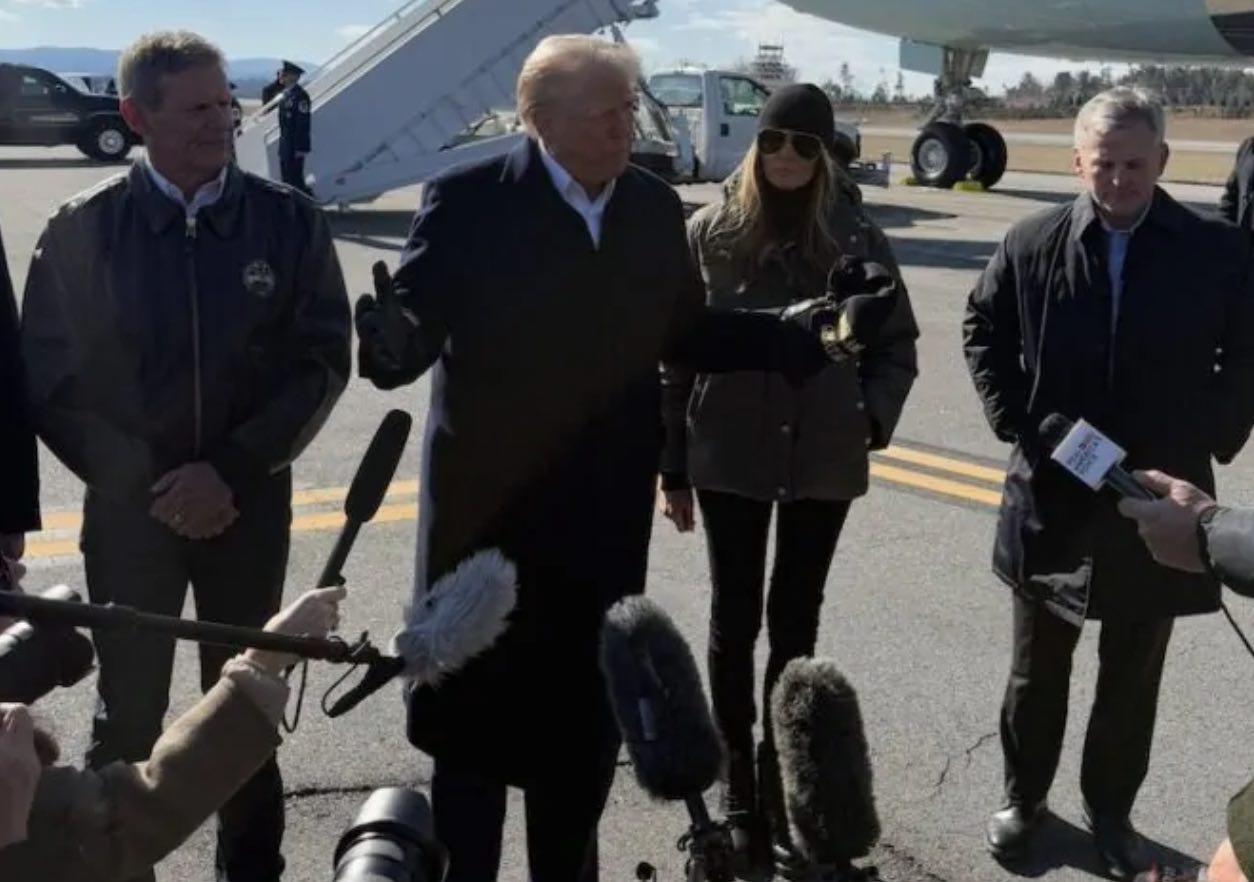
Institute research shows that only 28% of Americans trust the news they receive through newspapers, TV and radio
The influence of the movement led by Donald Trump since his first term to discredit journalism in the US is taking its toll: less than three in 10 Americans said they trust newspapers, television and radio to inform themselves ‘completely, fairly and accurately’.
The finding was made by the Gallup Institute, which has just released a survey revealing that only 28% of respondents trust traditional media “reasonably” or “a lot”. The drop is 31% and 40% respectively compared to 2024.
According to Gallup, this is the first time that confidence has fallen below 30% since monitoring began, almost five decades ago.
The graph shows the decline since 1975, with few moments when confidence rose.
Loss of trust in journalism is global, but not uniform
Lack of trust in news is a global problem, but it does not happen to the same extent in all markets.
In the Digital News Report, an annual survey by the Reuters Institute for Journalism Studies, the Brazil presents a general level of trust in the news 12 percentage points higher than the USA.
In the general ranking among 48 markets, we are in 20th place and the United States in 39th – and this still does not reflect the public’s opinion after consecutive acts to discredit journalism.
Even though in Brazil, like other countries, governments have used their platforms to rail against journalists, the US is going through a dark moment, with a campaign that goes beyond words to also frighten professionals and press organizations with lawsuits and regulatory reprisals.
On this battlefield, the public stops believing, as Gallup shows. When the institute began measuring trust in journalism in the 1970s, around 70% of Americans said they trusted the news they received.
Discredit in all party groups
The decline is evident across all major party groups, although Republican confidence is now in the single digits (8%).
People who declare themselves independent, not affiliated with one or another dominant party in the US (Democrat or Republican), remain largely skeptical.

Only 27% of them remain confident in the information they receive from the traditional press.
Democrats, who have traditionally been more positive toward the media, now represent only a slim majority.
Media trust remains highest among older people
There is a clear generational divide in trust in the media.
In the period from 2023 to 2025, 43% of adults aged 65 and over trust newspapers, TV and radio to get information.
In the youngest age groups, confidence does not exceed 28%.
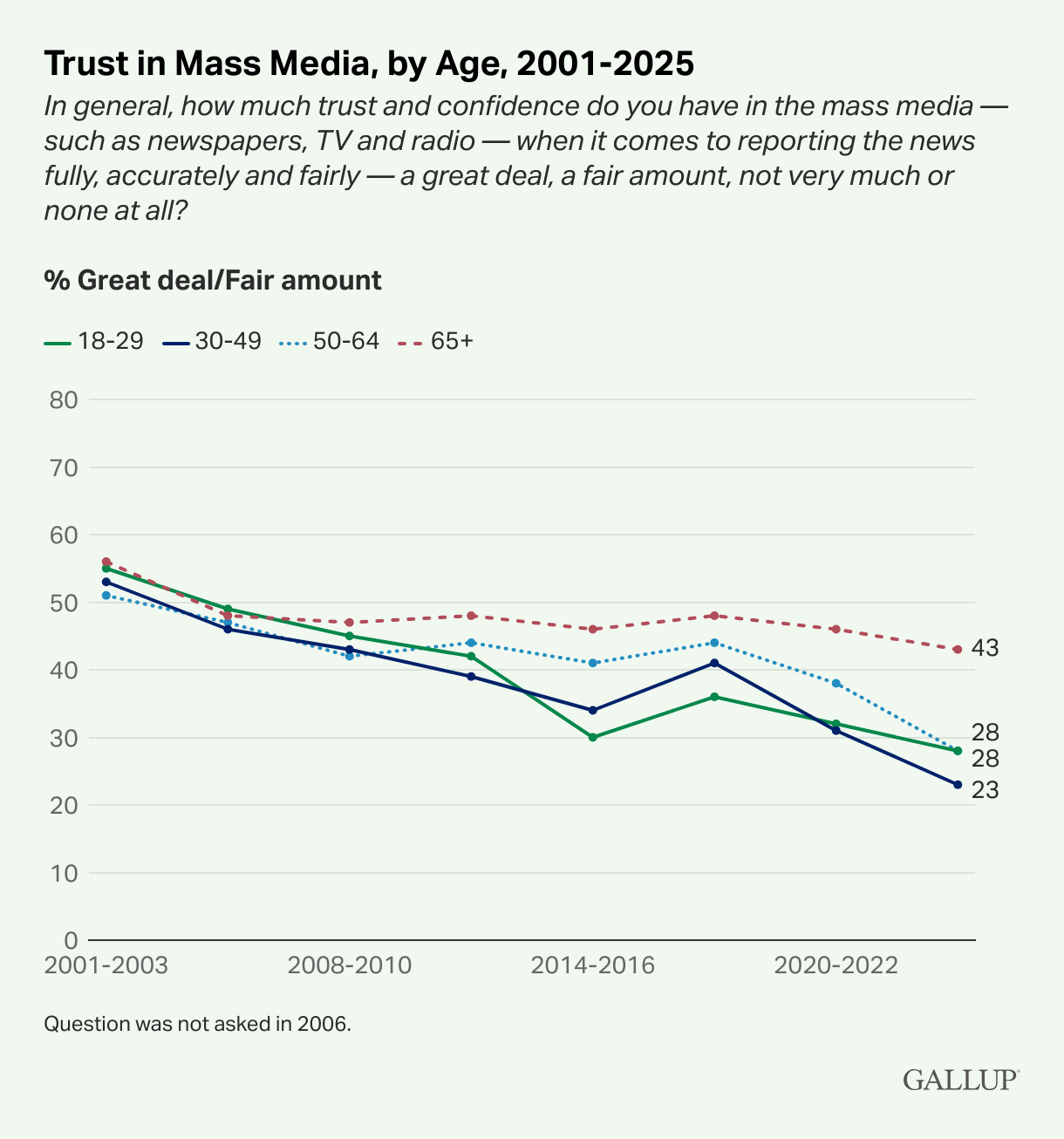
This difference did not happen before, according to Gallup. In the early 2000s, Americans across all four age groups expressed relatively similar levels of trust in the media, just above 50%.
Since then, trust among all four groups has gradually declined — but less so among Americans 65 and older.
The challenge for journalistic organizations is not only to convey correct and accurate stories, but also to regain credibility among an increasingly polarized and skeptical public, warns Gallup.
AI chatbots are also unreliable for news
If Americans don’t trust the press, who do they believe now? It’s not in AI.
Another survey released last week by the Pew Research Center showed that less than 10% of respondents search for news on chatbots like ChatGPT.
And half of them say they have encountered news that they believe is inaccurate. As always happens in research involving digital platforms, opinion changes (for the worse in relation to them) according to the age group.
But in general, the survey indicates careful behavior in all groups surveyed, in line with warnings about inaccurate content generated by chatbots.
Also read | Who trusts ChatGPT news? Research shows that in the USA, the majority do not