
Who is Santiago Peña, the economist whom the powerful Horacio Cartes elevated to the presidency of Paraguay (and whom he now dropped)
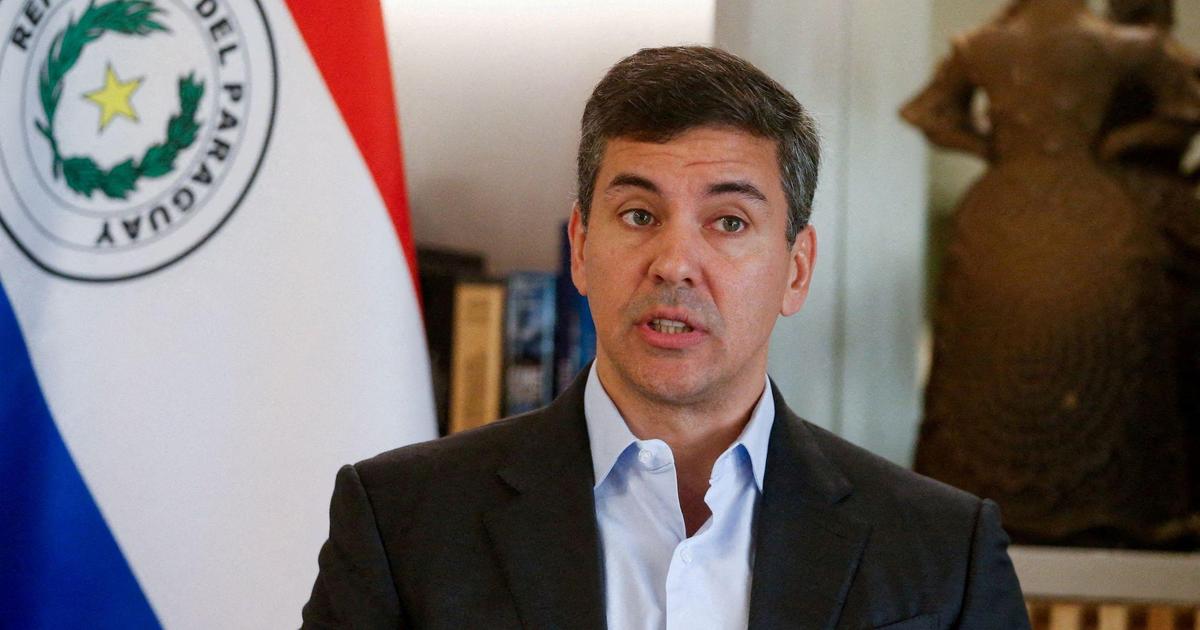
At the main headquarters of Paraguay’s governing party, surrounded by allied leaders, former President Horacio Cartes made public this Thursday his political break with Santiago Peña.
Three years after promoting his candidacy, the main architect of Peña’s arrival to the presidency supported the impeachment against him in the midst of the crisis caused by the intervention of Ueno Bank.
Together with the current vice president, Pedro Alliana, Cartes argued that he would not be on the side “of the theft of public, private and retiree funds.”
The scandal broke out on Tuesday when the Central Bank of Paraguay ordered the intervention of Ueno Bank due to serious solvency problems, a decision that ended up putting the president himself in check, who is now facing impeachment.
What began as a financial crisis soon escalated into a political storm.
The links of Santiago Peña and the former head of the Central Bank Carlos Carvallo with the private entity came under scrutiny and fueled the opposition’s questions.
At the time of its intervention, Ueno Bank managed some US$850 million in public funds. Among them were resources destined to pay retirements, pensions and other social benefits.
But how did Santiago Peña become president and what caused his abrupt departure from power?
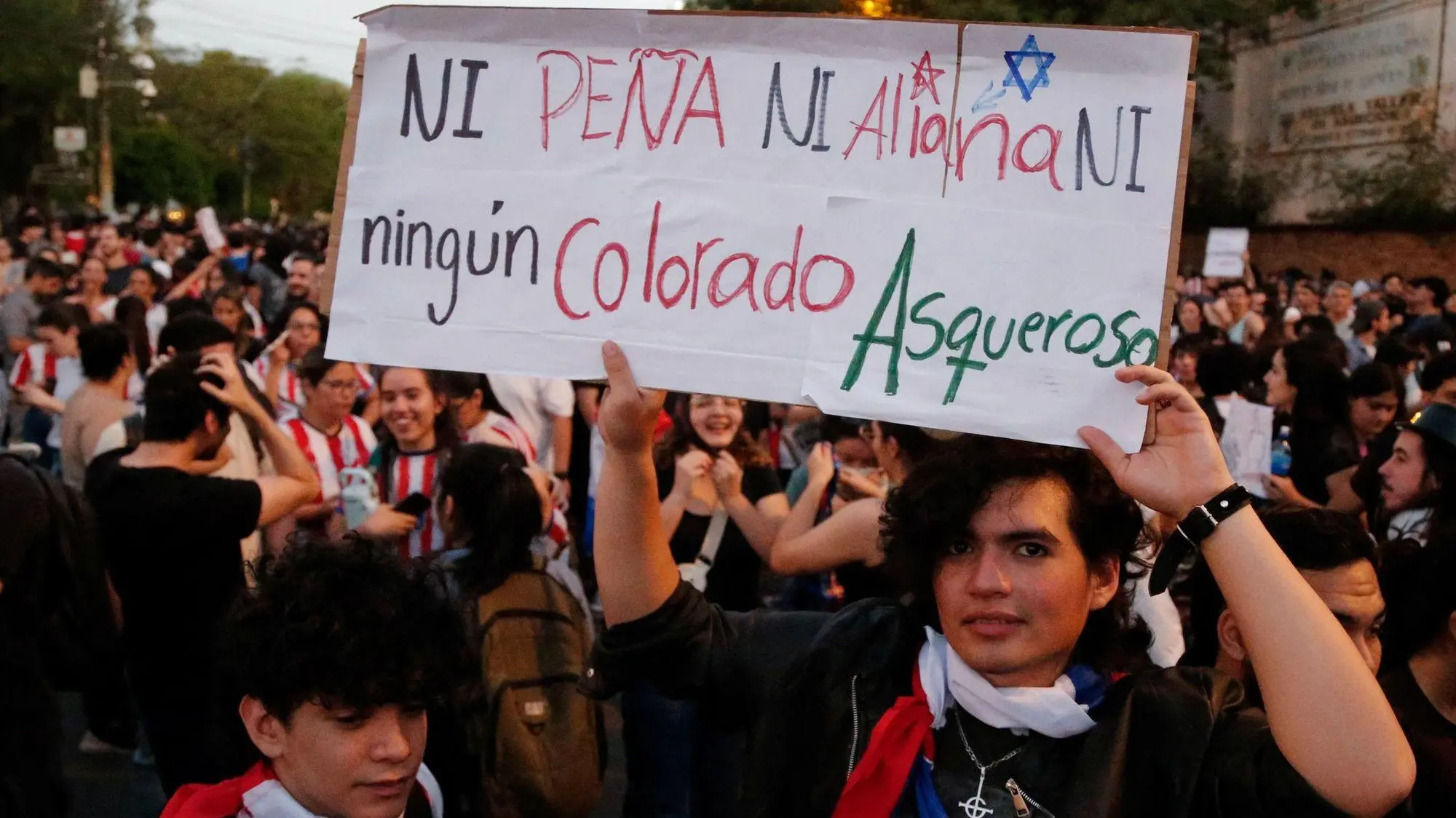
From the Central Bank to the presidency
Long before becoming president, Peña was a financial man.
Until 2015, his professional life had developed between universities, banks and international financial organizations.
Trained at the Catholic University of Asunción, where he was also a professor of Financial Theory and Economic Theory, he expanded his studies with a master’s degree in Public Administration at Columbia University, in New York.
In 2009, Peña’s career took a leap when he joined the International Monetary Fund (IMF) in Washington, where he directed the organization’s relationship with African countries.
“In those years, the potential that I saw for my country from the outside had a great impact on me,” Peña told the Paraguayan press.
After that and for more than a decade, Peña had a career at the Central Bank of Paraguay, the same one that today does not escape controversy, where he moved from the Economic Research area to the institution’s Board of Directors.
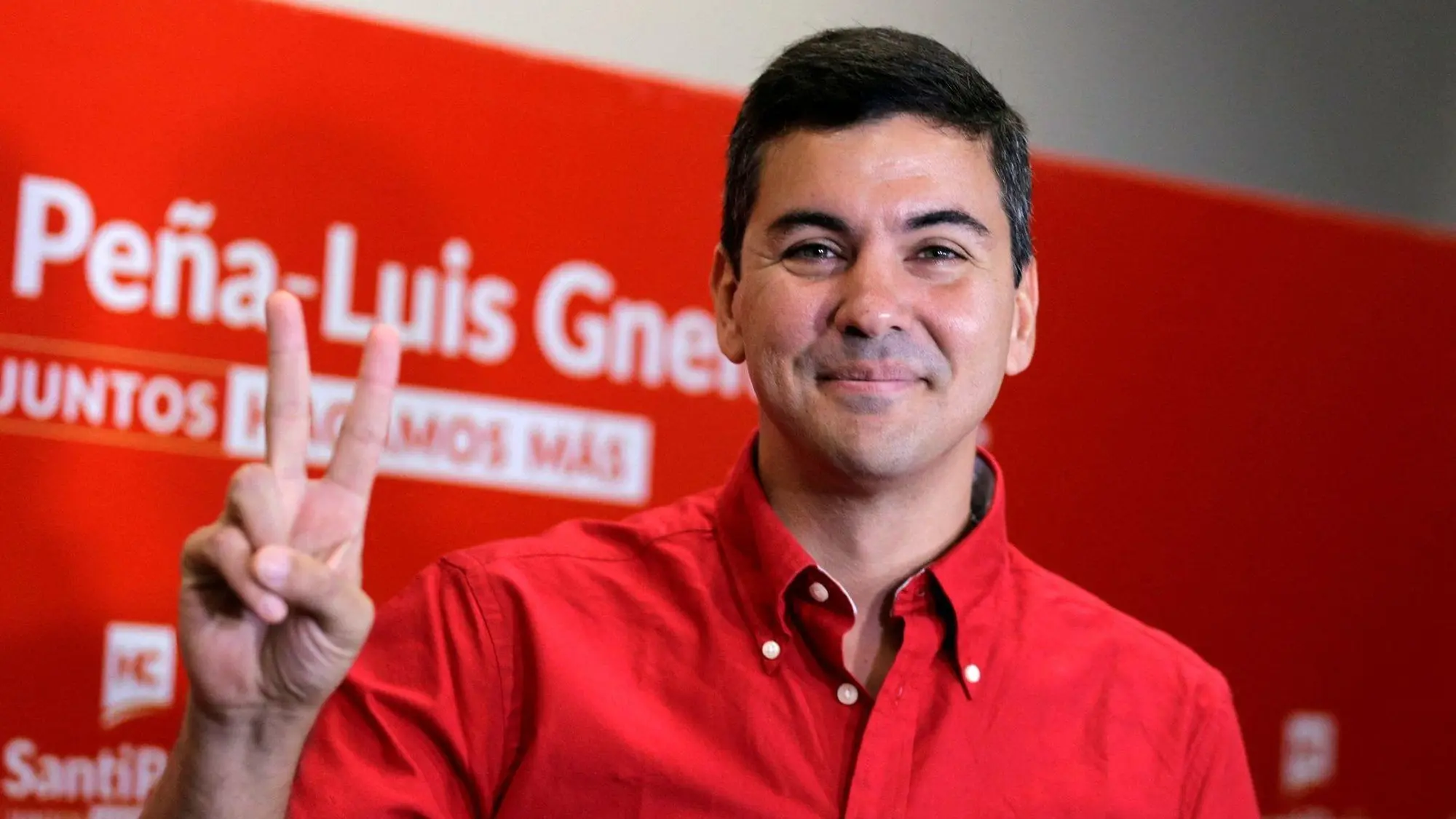
This trajectory allowed him to consolidate a technical profile that would end up opening the doors of the Horacio Cartes government as Minister of Finance and, later, would allow him to reach the presidency of Paraguay.
The same institution in which Peña developed a good part of his career was the one that ordered the intervention of Ueno Bank last Tuesday after detecting that its solvency index had fallen below 50% of the minimum required.
The decision unleashed a financial crisis by freezing the savings and investments of thousands of clients, many of whom reported difficulties withdrawing money and carrying out banking transactions.
The opposition accuses Peña of conflicts of interest, allowing the misuse of pension funds and covering up irregularities.
In this context, the president of the Central Bank, Carlos Carvallo, who had presided over Financiera Ueno before taking office in 2023, resigned amid the controversy.
Two days later, Peña followed the same path and announced his resignation from the presidency.
From allies to rivals
In 2017, Horacio Cartes began to pave the way for his minister Santiago Peña, whom he promoted as a political heir within the historic Colorado Party.
It was no small bet. This is the party that has dominated Paraguayan politics since 1947 and that only lost power during the presidencies of Fernando Lugo (2008-2012) and Federico Franco (2012-2013).
In a country without presidential re-election, Peña came to power as Cartes’ political heir and remained loyal to the former president, even when accusations of corruption began to surround him.
At the same time, he tried to build his own profile, presenting himself as a renovating figure capable of exercising certain margins of autonomy with respect to his political mentor.
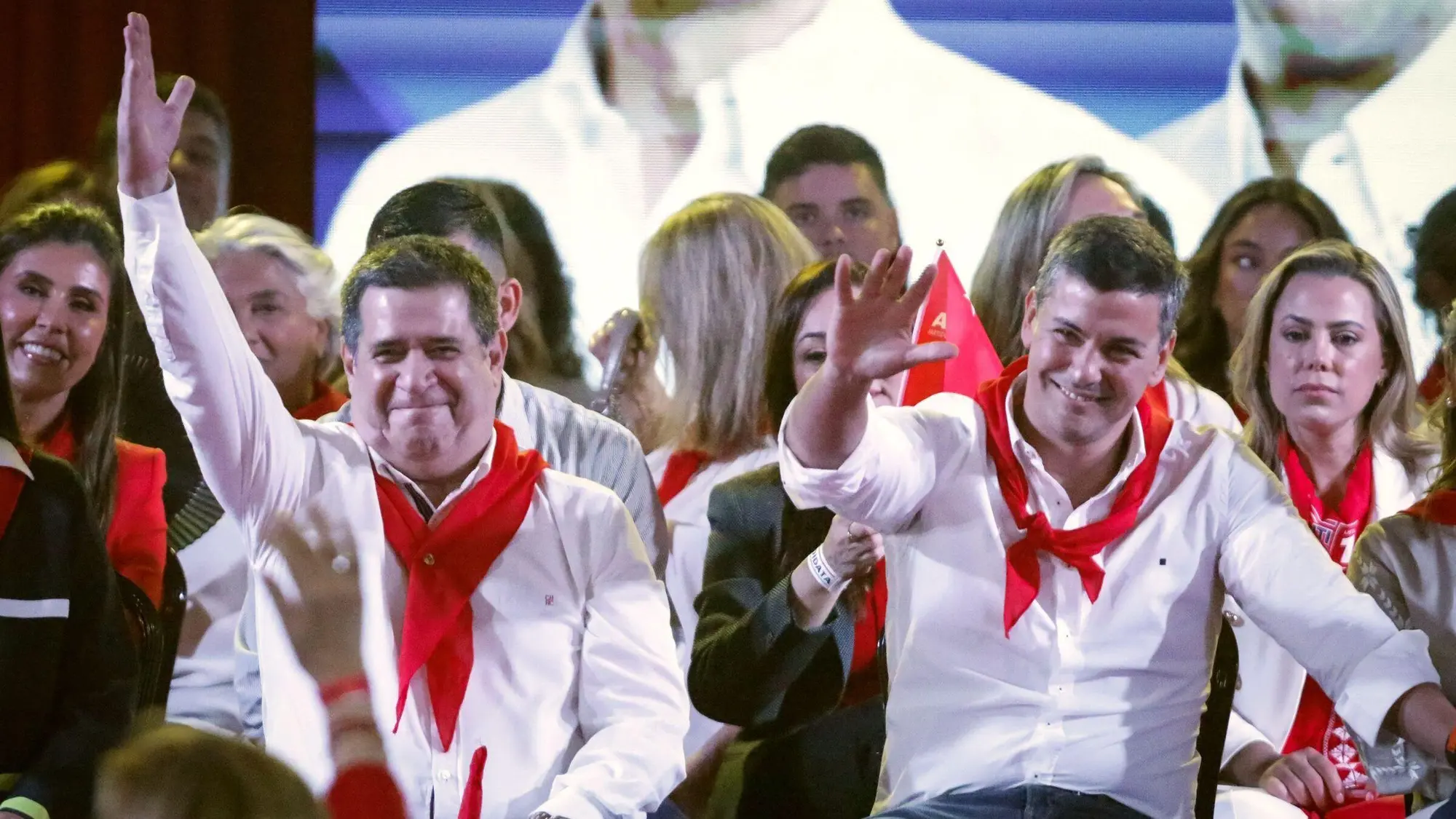
But the ties between Peña and Cartes went beyond the political sphere.
After the end of the Cartes government in 2018, and before becoming president, Peña joined the board of directors of Banco Basa, an entity linked to the Cartes Group.
According to the bank’s official website, Sarah Cartes, sister of the former president, currently holds the vice presidency of the entity.
Years later, Peña’s name appeared among the shareholders of Ueno Holding, the company that owns Ueno Bank.
Faced with questions, the then president assured at the beginning of 2025 that he was no longer part of the holding company and denied any link with the financial entity.
“I was an investor, I am an economist, I specialized in Finance, I made an investment six years ago in the house of Credi Centro, which eventually became Ueno Holding, it was never the Ueno bank, I have no connection with the Ueno bank,” he declared to the press in April 2025.
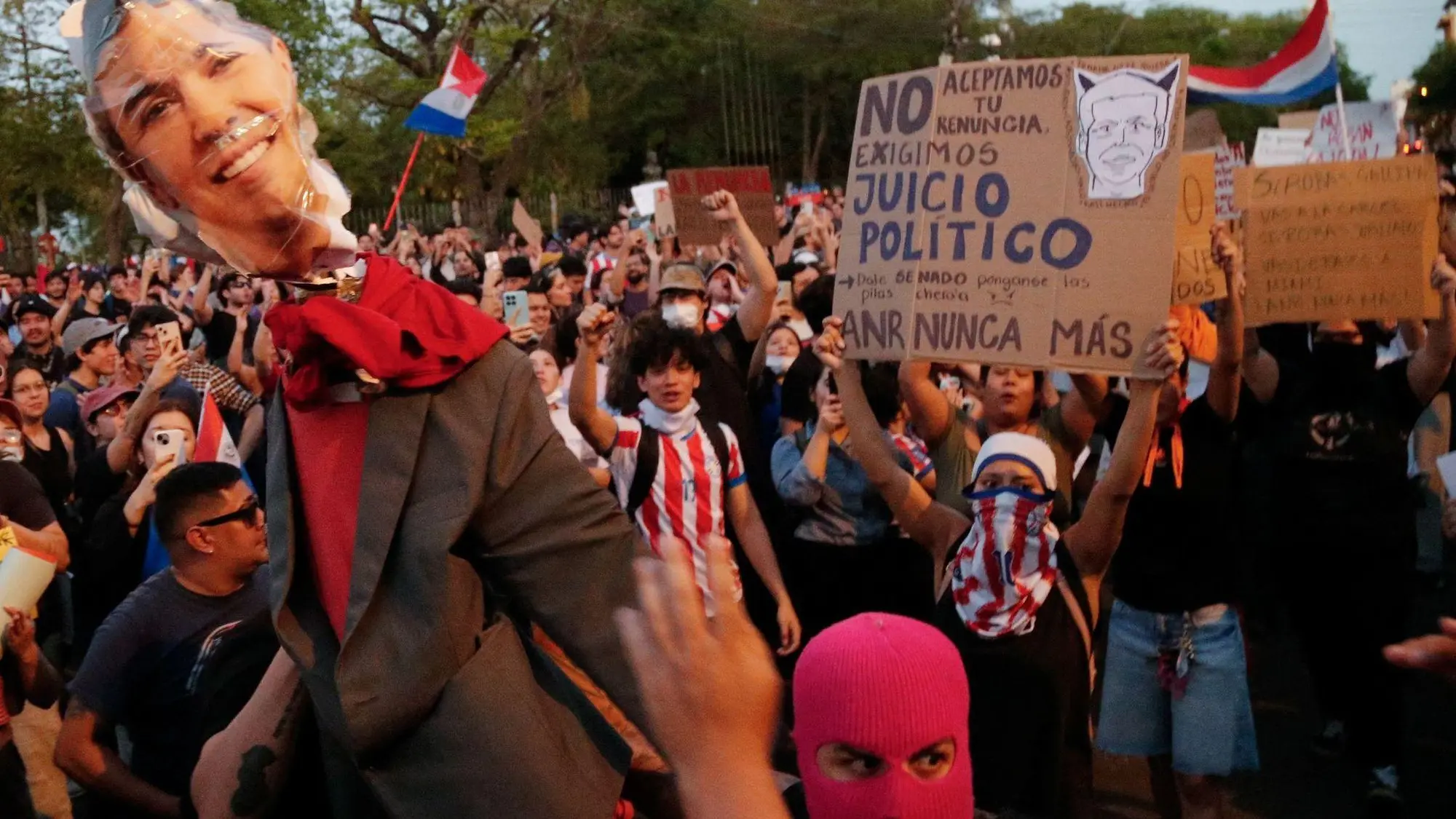
In the midst of this controversy, Cartes decided to mark differences with Peña.
“We must think about the people and the values that we defend from the Colorado Party,” argued the former president in a statement broadcast on X this Thursday, just a few hours before Peña announced his resignation.
However, the opposition sees something more behind the break with Peña than a response to the financial crisis.
Some sectors of the opposition maintain that behind the crisis there is a “war between banks”, as stated by liberal senator Celeste Amarilla even before the conflict broke out.
According to this reading, the dispute would have as its background the control of resources allocated to the pension system and other public funds.
Furthermore, for sectors of the opposition, what happened this week is a movement promoted by Cartes to reorganize power within the Colorado Party and remain, once again, in government.
In this way, what began as the story of a finance technician called to renew the Colorado Party ended up becoming one of the biggest political and financial crises in recent years in Paraguay.
-
Download the new BBC World Service app. Choose BBC News Mundo and receive news alerts, documentaries and analysis, all in one place. Important: The new app is not available in the United Kingdom or the United States.
-
You can also follow us on YouTube, instagram, TikTok, x, Facebook and in our whatsapp channel.
-
And don’t forget subscribe here to our newsletter to receive a special selection of our best content every Friday.