
Zelensky confirms the attack with Ukrainian naval drones on a Russian ship at the Libyan base in Benghazi
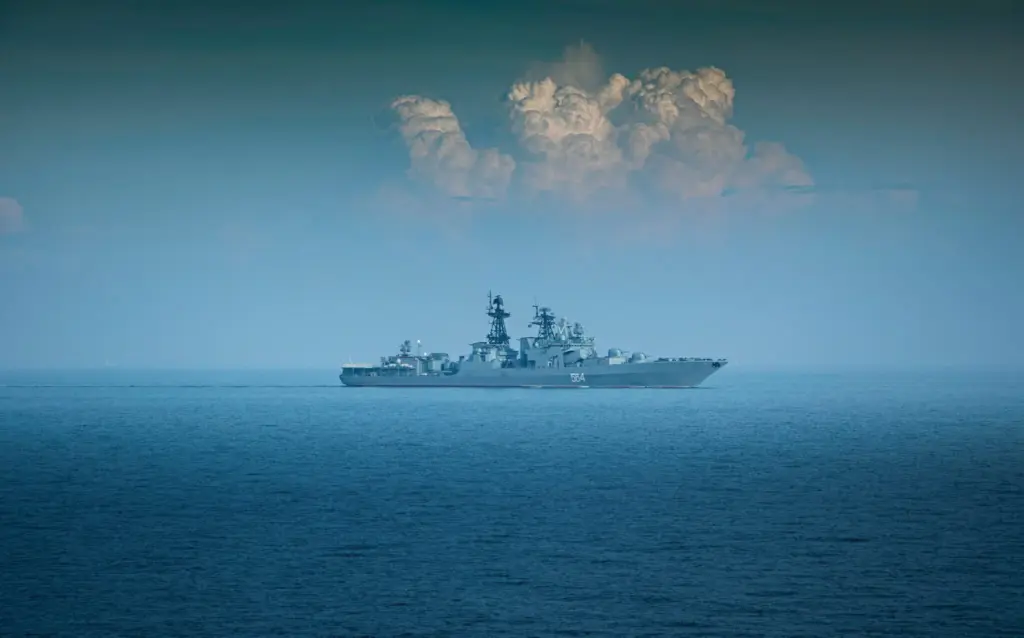
Zelensky has confirmed that Ukraine launched the naval drones that damaged the Russian corvette this Sunday Merkury at the Benghazi naval base.
The impact opened a hole in the hull and caused a fire at the base, which was extinguished hours later. Libyan commanders described severe damage to the corvette. Moscow had not officially reacted at the time of going to press.
Two hits, four shootdowns and a joint investigation with Moscow
Two controls of Libyan National Army (LNA, Marshal Khalifa Haftar’s force that controls the east and south of the country) detailed that the maritime drones departed from a base operated by Ukrainian forces in the west of the country. At least four were intercepted and destroyed; two reached the ship. They spoke on condition of anonymity because they are not authorized to speak to the press.
The eastern-based government confirmed in a statement the explosion and subsequent fire and specified that the ship had docked to refuel and obtain supplies under a cooperation agreement with Russia. He did not detail the load. He did announce a joint investigation with Moscow to clarify “the circumstances of the attack, its origin and the party supporting it.”
Libya has been divided since a NATO-backed revolt toppled Muammar Gaddafi in 2011, who died months later. Since then, a Government recognized by the UN has coexisted in Tripoli and a rival administration in the east. The country, with the largest crude oil reserves in Africa, continues to be a coveted piece in the rivalry between Russia and the West.
The Tripoli Executive rejected “turning Libya into a scene of international conflicts” and warned of the risk of drag ports and civil facilities to a foreign war.
Libya is not a secondary front: it is where the Ukrainian war intersects with oil, gas and Mediterranean migration routes.
There was already a notice in March. Ukrainian forces operating in western Libya under a discreet agreement hit a Russian oil tanker in waters near Maltaaccording to what the same commanders reported then. Its core is at the air base of Misratawith a presence also in Tripoli and Zawiya.
From the Sahel to the central Mediterranean: why Moscow cannot afford to lose Benghazi
Moscow has backed Haftar since 2016 and has used the Al Jufra and Al Jadem air bases as a stopover to project force into the Sahel. The dissolution of Wagner gave way to the Africa Corps, under the direct command of the Russian Ministry of Defense. For him KremlinLibya is both a logistics port, an energy asset and a lever on NATO’s southern flank.
For Kyiv the logic is the opposite. If Moscow uses Libya as a rearguard, Ukraine turns it into a distant objective. It is the same doctrine that has brought its special forces to Sudan. War no longer fits in Ukraine.
The effect is twofold. It extends the conflict to North Africa, where not even the European Union neither USA They have quick response instruments. And it complicates the mediation that the White House is trying to close between Moscow and kyiv.
Washington Logic
In the West Wing the problem is not the ship. It is the precedent. donald trump has built its Ukrainian policy on a simple idea: the war ends with negotiations and each week that passes makes the agreement more expensive. Any action that opens new fronts reduces the margin of this scheme. Nobody signs peace with an open front.
The coalition that supports this policy is fragile. He Republican Party It coexists with a non-interventionist wing that wants to turn off the aid tap to Ukraine and with another that defends the sending of weapons as a cheap deterrent against Moscow. Hence a policy of selective pressure: sanctions on Russian oil, shared intelligence with kyiv and an open channel with the Kremlin. Benghazi tests all three legs.
It is worth remembering how we got here. In 2011, Barack Obama He piloted from the rear the allied intervention that ended Gaddafi. Washington did not deploy troops on the ground, but the operation dismantled the Libyan state and opened a vacuum that Russia began to fill five years later. That decision, then criticized by trump Due to its cost and its ambiguity, it is the origin of the problem that the White House faces today. Washington does not ask permission. Manage consequences.
The impact in Spain is concrete. Repsol It has operated in Libya since the seventies and is a partner in the Akakus consortium along with the state oil company NOC. Libyan crude oil is light and fits into Spanish refineries: Any interruption in the Gulf of Sidra results in emergency purchases and a higher energy bill. There is no room for rhetoric there.
Added to this is the migratory vector. The central Mediterranean route continues to be the main irregular gateway to Europe and Libya is its hinge. A more militarized Libya is a Libya with more armed factions and fewer operational coast guards. Italy knows it: ENI and the Government of Giorgia Meloni they have signed energy and migration agreements with Tripoli; France plays at the same table with TotalEnergies. Spain comes to this distribution with relevant industrial interests and with the charter of the UN mission.
The next moves will be read on three boards. In New Yorkthe renewal of the mandate of the UN mission for Libya will return to the Security Council in the coming weeks. In Moscow, the investigation announced with the Eastern Government will say whether the Kremlin responds in Libya or Ukraine. And in Brussels, the Commission will have to decide whether maritime security in the central Mediterranean is included in the next strategic review.
Case File
- The case: Ukraine attacked the Russian corvette Merkury with naval drones at the Benghazi base in eastern Libya, and Zelensky claimed responsibility. It is the first major Ukrainian coup in North Africa.
- Key data: at least four drones intercepted and two hits; The ship was seriously damaged and a fire broke out at the base; The Eastern Government opened a joint investigation with Russia; In March, a Russian oil tanker was hit near Maltese waters.
- For Spain: Repsol has operated in Libya since the seventies and Libyan crude oil feeds Spanish refineries; A more fragmented Libya makes energy more expensive and complicates migration control in the central Mediterranean.