
STF Most form to condemn Mauro Cid for attempted state abolition

The Federal Supreme Court (STF) formed on Wednesday (10) majority to condemn Mauro Cid, former Jair Bolsonaro (PL) orders, for the crime of attempted violent abolition of the Democratic Rule of Law. Minister Luiz Fux’s vote consolidated the scoring of 3 to 0, following Alexandre de Moraes and Flávio Dino.
In his justification to vote for the conviction of Lieutenant Colonel, Fux says the military “was directly involved in financing acts to maintain people in camps and to practice criminal violent acts designed to make the regular functioning of powers and the rule of law unfeasible”.
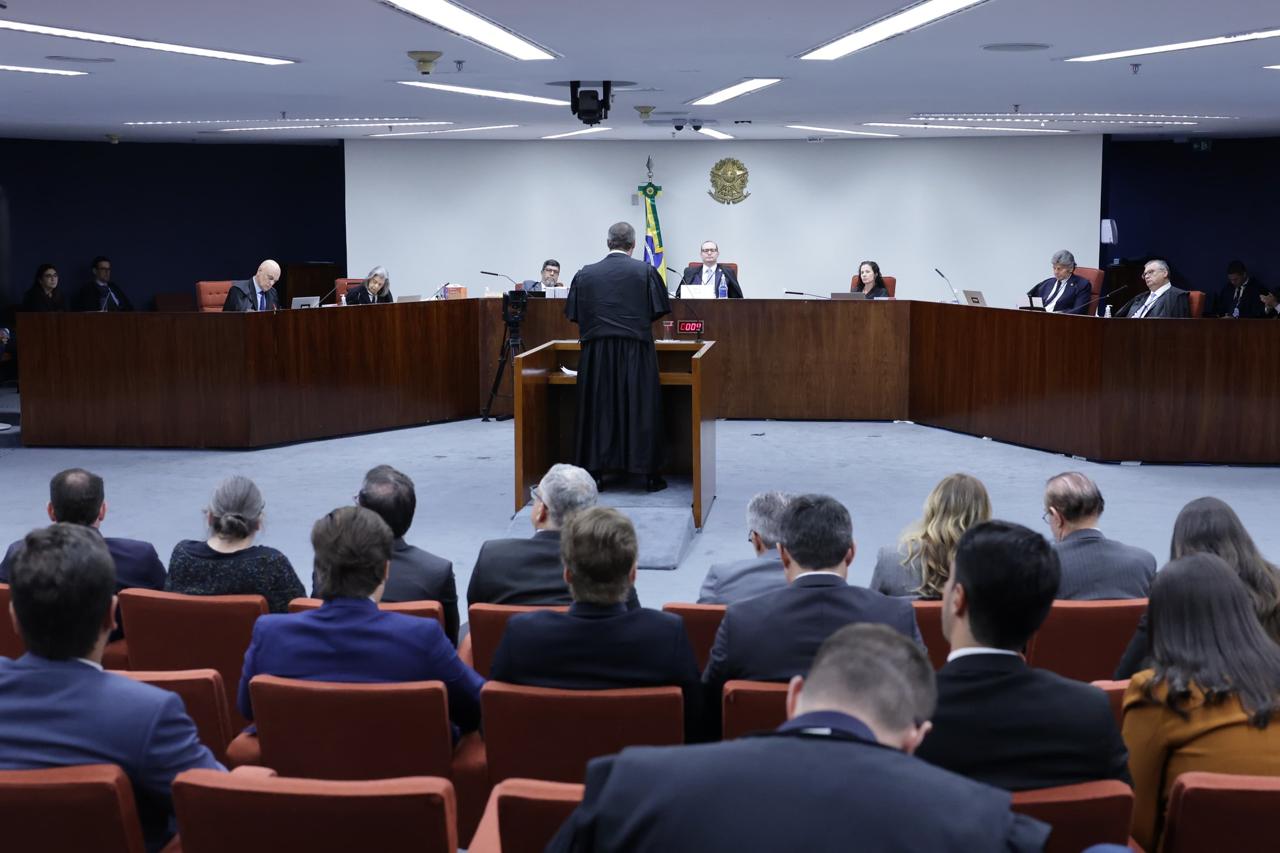
LIVE: Fux heads for a vote and starts to individualize conduct
1st class of the Supreme Court resumes on Wednesday (10) the presentation of the votes in the trial of the former president and seven other accused for involvement in an attempted coup d’état

After Fux vote, Bolsonaro’s children call for judgment annulment in the Supreme Court
Minister pointed out “absolute incompetence” of the Supreme Court to judge the coup plot, and opposition celebrated divergence
Fux highlighted messages exchanged by Cid at the end of 2022 as evidence of his active participation in the conspiracy. In one of them, the military recognizes that he was “heading to the prize”, but would continue to act “for Brazil”.

“The grounds that lead me to this conclusion are as follows: By exchanging message on his cell phone with Rafael Oliveira, the defendant collaborating talks about financing demonstrations to start or encourage acts to violently abolish the Democratic Rule of Law,” said Fux.
The minister also stated that Cid had knowledge and direct participation in the so -called Operation Cup 2022, which provided for the murder of Alexandre de Moraes.
“It is true that the collaborator was at the meeting with Colonel de Oliveira and General Braga Netto in which the $ 100,000 were physically available to the employee. In the palace of Alvorada, which was the last version, but it matters. This is an unmistakable fact,” he said.
For Fux, the execution of a Supreme Minister, preceded by the monitoring of his routine, constituted a concrete act with the potential to generate the intended institutional rupture.
“The execution of a Supreme Minister, a violent operation that began material with the monitoring carried out, would certainly generate this intended criminal result to abolish the Democratic Rule of Law,” he said.
Divergence on criminal organization
Despite the conviction for attempted abolition, Fux diverged from the Attorney General’s Office by rejecting ICD’s framing in the crime of armed criminal organization.
For him, there is no evidence that the defendant has integrated a structured and permanent group, with at least four people, to commit an indefinite number of crimes.
“I dismiss the request for conviction of Mauro Cezar Barbosa Cid for the crime of criminal organization,” said the minister.
The magistrate also acquitted ICD of accusations of qualified damage and deterioration of overturned assets, related to depredation during acts of 8 January.
For Fux, it was not proven that the former orders of orders has determined, participated or omitted from preventing the destruction that occurred in the Three Powers Square.
Absorbed Crimes
Fux also pointed out that the conduct of coup d’état must be absorbed by the accusation of violent abolition of the rule of law. Thus, it did not analyze this imputation separately in the case of ICD.
With the vote, the Supreme Court advances in the consolidation of the conviction of the eight defendants of the central core of the coup plot. The positions of the ministers of Cármen Lúcia and Cristiano Zanin, president of the first class, are still missing.
The Judgment in Progress
The first class of the Supreme Court, chaired by Minister Cristiano Zanin, resumed on Wednesday (10) the analysis of the complaint against the so-called “crucial core” of the alleged coup plot, appointed by the Attorney General’s Office (PGR) as responsible for articulating measures to prevent the possession of Luiz Inácio Lula da Silva (PT) after the election of 2022.
Ministers Alexandre de Moraes and Flávio Dino voted for the rejection of all preliminary defendants argued and asked the defendants to be convicted of all crimes imputed by PGR. The trial will have extraordinary sessions until September 12.
Vote of Minister Alexandre de Moraes
For the rapporteur of the case, it was proven that there was an attempt to coup d’état from 2021, when the first preparatory acts began to be executed with the misuse of public agencies, such as ABIN and GSI, to discredit the electronic ballot boxes and the judiciary.
Moraes dealt with Bolsonaro as leader of a hierarchical criminal organization, structured with division of tasks and composed of military and federal government members. According to him, the objective of the group was to ensure the permanence in power “regardless of the electoral result”, using illegal instruments and paying attention against democracy.
The minister rejected all preliminaries presented by the defenses, maintaining the validity of Mauro Cid’s award -winning denunciation and the evidence gathered by the Federal Police. He stressed that it is not necessary to consummate the coup so that the crime is configured – executory acts are already enough to hold those involved.
For the minister, the gathered evidence demonstrates that the central target of conspiracy was the democratic rule of law, systematically attacked to undermine the institutions and paving the way to the perpetuation of Bolsonaro’s political group in power.
Flávio Dino vote
Minister Flávio Dino accompanied the rapporteur Alexandre de Moraes and voted for the conviction of Jair Bolsonaro and seven other defendants of the so -called coup plot.
In his speech, Dino rejected the thesis of the defenses that the conduct would only be “preparatory acts.” For him, there were concrete enforcement acts that configure violence and serious threat, such as highway blocks, attempts to close airports and attacks on institutions. The minister pointed out that crimes of enterprise – such as coup and abolition of the democratic rule of law – do not require consummation to be punished.
The magistrate was also categorical in stating that the crimes imputed to the defendants are unsusceptible of amnesty, as they involve actions of armed groups against the constitutional order. Dino also rejected the idea of a “self -annist” in favor of high levels of power, remembering that there was never precedent of this kind in the history of the country.
In analyzing the participation of each defendant, Dino said that the penalties should not be equal, as the levels of culpability vary. Bolsonaro and Walter Braga Netto were pointed out as leaders of the criminal organization, with greater responsibility. Garnier, Anderson Torres and Mauro Cid were also classified with high culpability, while Augusto Heleno, Alexandre Ramagem and Paulo Sérgio Nogueira had a minor participation.
Next Steps
The process now goes to the votes of ministers Cármen Lúcia and Cristiano Zanin. Each vote will be divided into two stages: first, the analysis of preliminaries – such as the validity of Mauro Cid’s allegation and the competence of the Supreme Court; Then the merit, with the evaluation of the evidence presented by PGR.
The final decision will be made by a simple majority. If the conviction is confirmed, the penalties will be discussed in a later stage.
Who are the defendants
In addition to Bolsonaro, they respond in the action:
• Alexandre Ramagemfederal deputy and former director general of ABIN;
• ALMIR GARNIERformer commander of the Navy;
• Anderson Torresformer Minister of Justice and former Secretary of Public Security of the DF;
• Augusto Helenoformer GSI minister;
• Mauro CidLieutenant Colonel and former Assistant of Bolsonaro Orders;
• Paulo Sérgio Nogueiraformer defense minister;
• Walter Braga Nettoformer Minister of Defense and Civil House, candidate for vice president in 2022.
The eight defendants are accused of armed criminal organization, attempted violent abolition of the Democratic Rule of Law, attempted coup, damage qualified by violence and serious threat and deterioration of listed heritage. In the case of branch, part of the accusations was suspended by decision of the House of Representatives.
