
Is China about to win the artificial intelligence race?
The artificial intelligence industry has been pondering a fundamental question recently: Is China overtaking the US in the AI race?
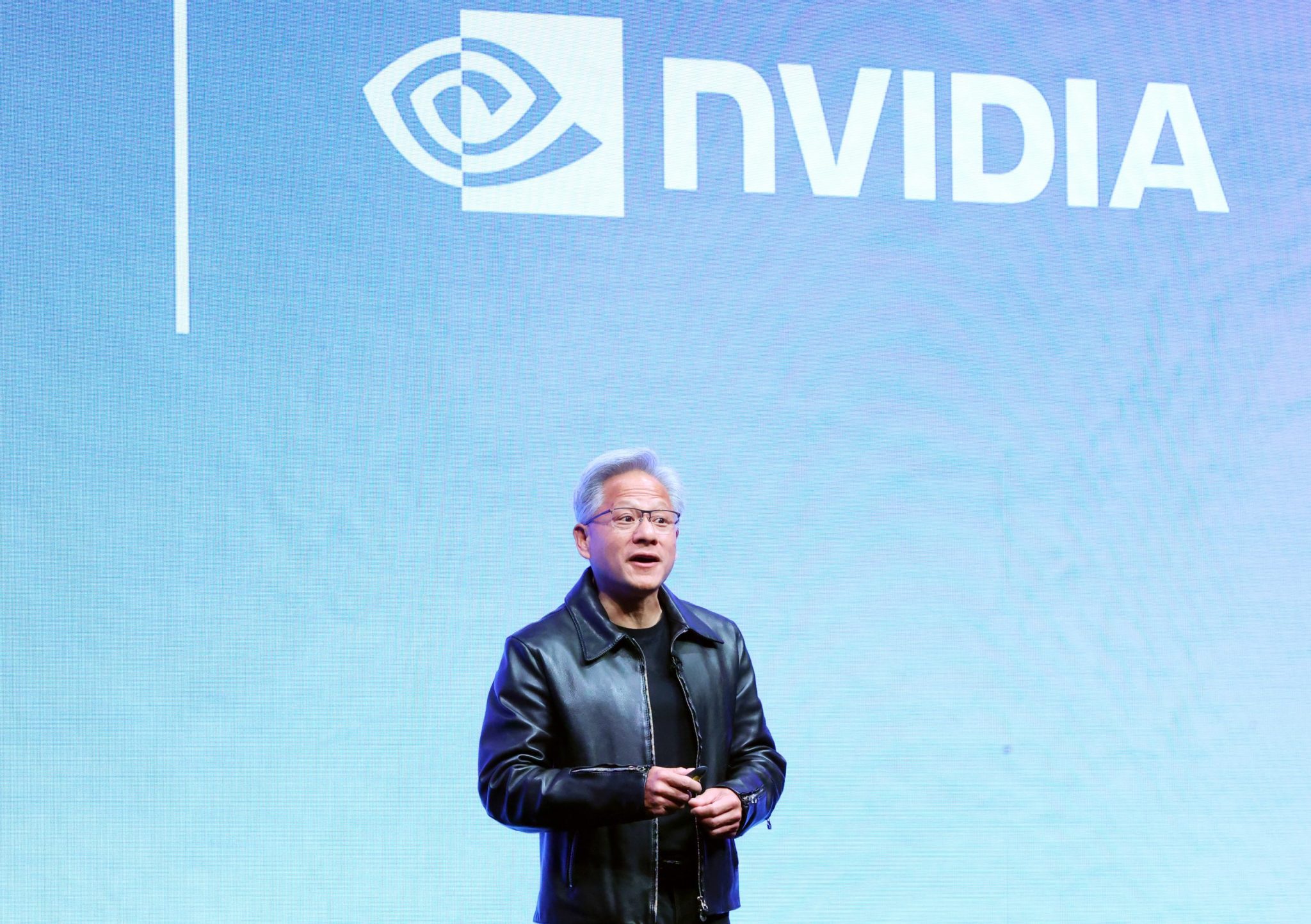
The debate was sparked by Nvidia CEO Jensen Huang, who made headlines last week when he claimed that “China will win the AI race.”
Also read: Deezer: a third of new music is made by AI – and almost no one notices the difference
Take your business to the next level with the country’s top entrepreneurs!
Huang cited Western cynicism, export restrictions and China’s advantageous energy situation, noting that it is much easier for companies to secure energy supplies there.
Huang later backtracked in a statement posted on Nvidia’s X account, clarifying that China was actually just “nanoseconds behind the United States in the AI race.”
Huang, of course, may have his own interests in making such statements, but he is not alone in claiming that China may be catching up to US AI efforts. In fact, there is some reason to believe that Huang’s original claim may have merit.
The energy issue
First, if the AI race fundamentally comes down to an infrastructure competition — driven by the ability of nations to build and power huge, data-intensive centers — and not just who can make incremental improvements to algorithms, then China currently has a significant advantage.
The country has demonstrated an ability to execute large-scale projects with speed and coordination, thanks in part to the government’s very active role in the economy.
And as Huang highlighted in his comments last week, subsidized electricity and streamlined regulatory processes make it substantially easier for companies to operate energy-intensive AI facilities in China.
In contrast, North American companies face a fragmented regulatory landscape and comparatively higher energy costs, which could hamper the rapid expansion of AI infrastructure.
Experts have long warned that electricity supply is likely to be the next big bottleneck for the AI industry — and that Beijing appears to be at the forefront of solving some of these critical energy challenges.
By comparison, the electrical grids in many U.S. cities are so overloaded that some companies choose to build their own power plants rather than rely on existing electrical infrastructure.
U.S. technology companies are still exploring alternative energy solutions, but these projects could take years to come to fruition — if ever.
Energy restrictions are already affecting even some of the biggest names in technology; for example, Microsoft recently revealed that it has GPUs “sitting in stock” because it can’t find enough power to use them.
Open source leadership
There is also the issue of open source. According to a recent report from venture capital firm a16z, China has officially surpassed the US in the number of downloads of open source AI models.
a16z called this turnaround a “graphic skull moment” — the point at which a rival not only closes a gap that seemed impossible to overcome, but also begins to overtake the leader.
Anjney Midha, partner at a16z, also warned about Chinese dominance in open source models, especially with startups like DeepSeek and its R1 model. He encouraged US companies to invest in top teams and work to close the open source gap.
Chinese companies like DeepSeek have also proven to be masters at optimizing processes. For example, with the R1, the company proved that while it may not invent the first version of something, it is capable of producing faster, cheaper versions without sacrificing performance.
Recent research from Tencent and DeepSeek also shows how China is becoming a growing source of AI innovation.
For example, Tencent’s Calm model showed that replacing “token by token” generation with continuous vector prediction dramatically improves efficiency. DeepSeek’s new open source model compresses text into visual representations, allowing AI systems to process much more information at a lower cost.
There are those who argue that these methods may already be silently being used by Western laboratories such as OpenAI or Anthropic, but without the same public disclosure.
Has China already won the AI race? Probably not yet.
But Chinese AI companies are undoubtedly very well positioned to make a strong move.