
AtlasIntel shows Lula’s regional strength and limits of the right outside Bolsonarism
The demographic and regional sections of the most recent AtlasIntel Bloomberg survey, released this Wednesday (21), help explain why President Luiz Inácio Lula da Silva (PT) maintains consistent leadership in the 2026 scenarios, even in the face of the reorganization of the right.
The data indicates that the PT member’s advantage is not only based on the national aggregate, but on a more homogeneous distribution of votes, while his main opponents face difficulties in expanding outside specific niches.
At the regional level, Lula maintains a high performance in the Northeast and maintains a relevant advantage in the Southeast, including in scenarios where the right appears fragmented. Senator Flávio Bolsonaro only approaches the president in specific segments.
Made for you!
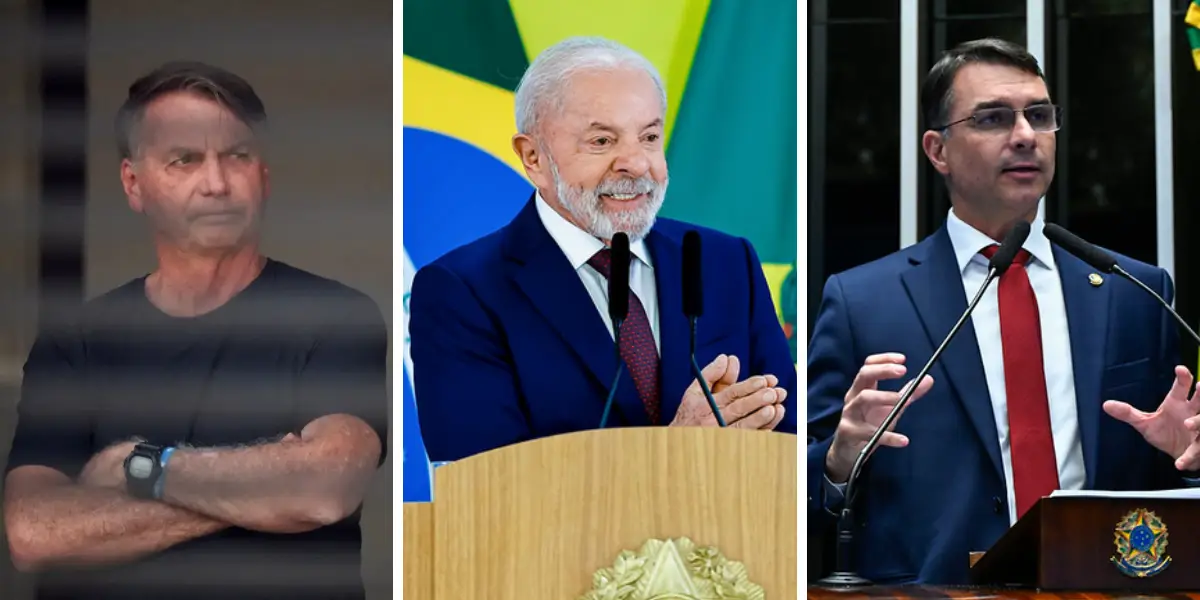
AtlasIntel: Lula and Bolsonaro are the most rejected for 2026, followed by Flávio
Former president leads rejection, but difference for the current head of the Executive is within the margin of error

AtlasIntel: Flávio inherits Bolsonaro’s base and leaves Tarcísio with just 21% of the electorate
Research simulates dispute between Flávio Bolsonaro and Tarcísio de Freitas and indicates difficulties for the right in unifying conservative electorate
His best result appears in the North, among voters aged 35 to 44, where there is a technical tie: Lula registers 34% of voting intentions, against 32.7% for Flávio. Outside of this focus, the senator loses steam, while governor Tarcísio de Freitas does not lead in any region when he appears simultaneously with Flávio.
The religious aspect is one of the few in which Flávio has a significant advantage. Among evangelicals, the senator has 43.3% of voting intentions, against 24.8% for Lula. Still, this performance does not translate into national leadership or the ability to unify the conservative camp, as institutional support from major evangelical leaders remains diffuse and without clear public endorsements.
In terms of education, the dispute appears to be more balanced in the lower strata. Flávio surpasses Lula among voters with up to high school education, with 37.2% of voting intentions, compared to 35.8% for the president. Among voters with higher education, however, Lula maintains a consistent advantage, expanding his lead in the national aggregate and reducing the senator’s growth potential.
The lace cutout reinforces this pattern. Flávio performs better among voters who earn between R$2,000 and R$3,000, but follows behind Lula even in this group. The president registers 43.5% of voting intentions, against 35.8% for the senator. In the lower income brackets, Lula’s advantage is even greater, while in the higher income brackets no name on the right is able to consolidate itself in a dominant way.
Among voters who claim to have voted for Jair Bolsonaro in 2022, the survey highlights the internal imbalance on the right. In this group, 59.2% say they would vote for Flávio Bolsonaro in 2026, while only 21.1% would migrate to Tarcísio in a divisive scenario. The data helps to understand why the governor loses traction in the polls whenever Flávio enters the dispute, despite maintaining relevant support among business sectors and the political center.
The clippings indicate that the difficulty for the right goes beyond choosing a name. Flávio concentrates the Bolsonarist heritage, but finds limits in expanding his base outside this core. Tarcísio is seen as a more palatable alternative by economic and institutional segments, but he is unable to capture voters loyal to Bolsonaro. Lula, in turn, directly benefits from this fragmentation by maintaining a transversal advantage in income, education and key regions of the country.
The AtlasIntel survey surveyed 5,418 voters between January 15th and 20th, with a margin of error of one percentage point and a confidence level of 95%. The survey is registered with the TSE under number BR-02804/2026.
