
STF forms majority to release amendments from Ramagem and Eduardo to substitutes

The Federal Supreme Court (STF) formed a majority this Friday, 27th, to endorse the decision of minister Flávio Dino who released the individual amendments to the 2026 Budget presented by former deputies Alexandre Ramagem (PL-RJ) and Eduardo Bolsonaro (PL-SP) to be taken over by their substitutes. At the same time, the Court maintained the refusal to reopen the deadline for presenting amendments to the substitute for former deputy Carla Zambelli (PL-SP).
Ministers Alexandre de Moraes, Cristiano Zanin, Dias Toffoli, Edson Fachin, Cármen Lúcia and Nunes Marques followed Dino’s vote, forming a majority in the virtual plenary.
STF authorizes PF to transport Vorcaro for testimony at CAE
Banco Master businessman, under house arrest, will be able to go to Brasília under escort; private jet remains banned
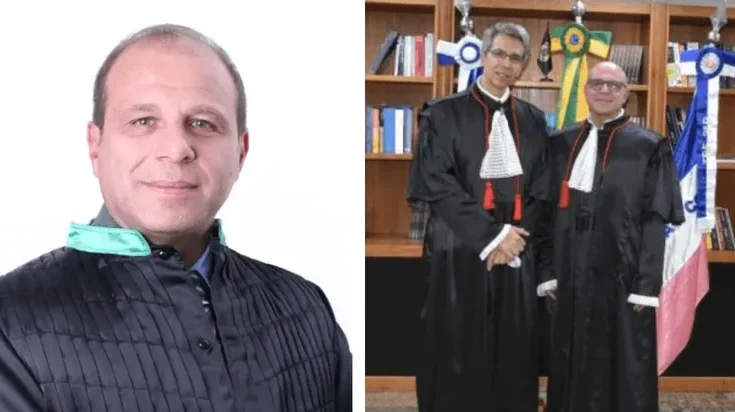
Arrested judge sought out Temer to try to reach Moraes, says PF
Magistrate would have tried to meet with the former head of the Executive in the hope that he would intercede on his behalf
According to the decision, the amendments by Ramagem and Eduardo Bolsonaro, which were blocked, can be managed by substitutes Dr. Flávio (PL-RJ) and Missionário José Olímpio (PL-SP), respectively. They will be able to nominate beneficiaries and promote relocations, without any connection to the nominations originally made by former parliamentarians.

The action had been filed by the Socialism and Freedom Party (PSOL), which had requested the full blocking of R$80 million in amendments from the former director of the Brazilian Intelligence Agency (Abin) and the son of former president Jair Bolsonaro on the grounds that both were not effectively exercising their mandate as they resided outside the country at the time the amendments were presented. Dino had ordered the blockade in December.
When voting, Dino stated that the “undue delay” in formalizing the loss of mandates allowed the then deputies to present amendments to the 2026 Budget before the official declaration of impeachment. According to the minister, preventing the use of resources now would cause disproportionate harm to the populations represented.
“Far from meaning illegitimate ‘judicial activism’, accepting the Chamber’s claim implies – with the correct interpretative technique – cutting off losses that violate the principle of proportionality”, wrote the rapporteur.
Eduardo Bolsonaro and Alexandre Ramagem had their mandates declared by the Board of Directors of the Chamber on December 18th. Eduardo is in self-exile in the United States, while Ramagem, sentenced to 16 years, 1 month and 15 days in prison for participating in the coup plot, is on the run from the country.
Zambelli case
In the case of Carla Zambelli, the STF maintained the understanding that it is not appropriate to reopen the deadline for presenting amendments. During the period intended for the inclusion of proposals in the 2026 Budget, between October 24th and November 14th, 2025, the then-deputy did not present any indication. She was already on the run in Italy.
For Dino, allowing the deadline to be reopened would violate the principle of budget planning and compromise the logic of the fiscal cycle.
Zambelli was sentenced by the STF to ten years in prison and the loss of her mandate for her involvement in the invasion of the National Justice Council (CNJ) system, in an action carried out by hacker Walter Delgatti Neto. The conviction became final, and she fled to Italy. Later, she was also convicted of illegal possession of a weapon and illegal restraint using a firearm.
Zambelli resigned from office on December 14th. The Chamber had rejected the loss of her mandate, but the First Panel of the Supreme Court ordered her revocation. As Estadão showed, Zambelli’s strategy, according to allies, was to accept defeat to avoid the spread of damage and create a narrative of persecution by the courts.
She is awaiting a decision from the Italian Court, which concluded on the 12th of this month the trial on her extradition to Brazil to begin serving her sentence. The analysis took place at the Court of Appeal in Rome.
