
Public Security PEC is approved by the Chamber; proposal goes to the Senate
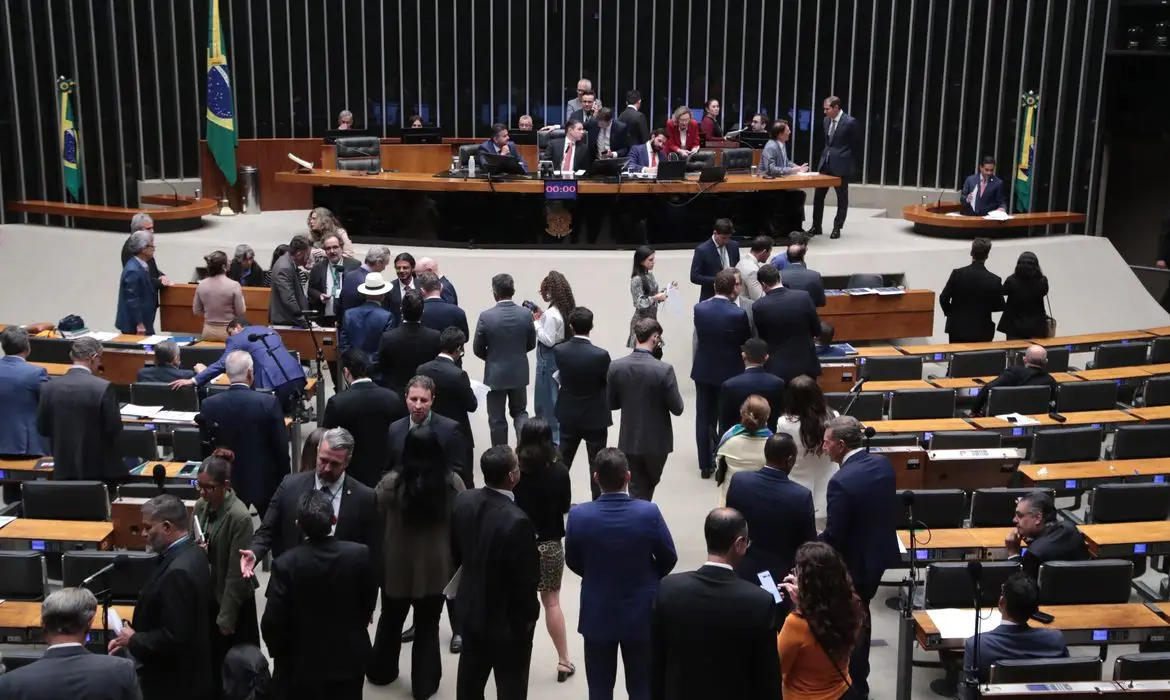
The Chamber of Deputies approved, by 487 to 15, the Public Security PEC this Wednesday (4). The text was voted directly in the plenary, without the need for consideration in a special committee, after the referendum amendment on reducing the age of criminal responsibility was removed from the proposal.
The rapporteur of the proposal, Mendonça Filho (União-PE), accepted the removal of the section after an agreement was reached with the government so that the vote could take place today. The deputy admitted that he agreed to the change after the president of the Chamber, Hugo Motta (Republicanos-PB), convinced him that the text could be rejected in full by the Senate because of the controversial provision.
With approval, the text now goes to the Federal Senate for consideration. For the proposal to be voted on, it will first need to be assessed by the Constitution and Justice Committee and a special committee of the Upper House. House follows the entire rite, the proposal will amend the Federal Constitution and the proposed changes will come into force. Unlike a Bill, a PEC does not need to be sanctioned by President Luiz Inácio Lula da Silva (PT).

Senate ratifies Mercosur-EU trade agreement, which follows promulgation
Treaty reduces tariffs on more than 90% of trade between the blocs and creates a free trade zone with a potential market of 700 million people

Reporter criticizes Dino and says that decision could nullify Lulinha’s breach of confidentiality
Minister rejected the breach of confidentiality by a businesswoman linked to President Lula’s son
What changes with the PEC
The Proposed Amendment to the Constitution, originally written by former minister Ricardo Lewandowski and remodeled by rapporteur Mendonça Filho, proposes the creation of a law that will define greater and aggravating penalties in cases involving highly dangerous criminal organizations.
According to the text, the new law should set greater penalties for members and leaders of factions proportional to their hierarchical positions. The change also applies to perpetrators of crimes committed with violence or serious threat.
It also changes the obligation to be imprisoned in state or federal maximum security or similar penal units. Restricting the progress of the sentence regime, provisional release and any conversion of the prison sentence into other measures is prohibited. Prisoners will also not be able to enjoy temporary releases.
Another provision in the text determines the expropriation of all assets or monetary value arising from criminal activities.
Changes in the Police
The text amends the Constitution to attribute the fight against organized and militia crime to the Federal Police. It also expands the powers of the Federal Highway Police to operate on waterways and railways.
However, different from what is proposed by the government, the text authorizes municipalities to create municipal police with the function of protecting the city’s goods, services and facilities. The guards will also gain the right to carry out overt local and community policing, in addition to being able to work in collaboration with other public security bodies.
Currently, the Constitution only lists the Federal, Federal Highway, Federal Railway, Civil and Military police, in addition to the military fire departments and criminal police in the three spheres.
Single Security System
The proposal adds the Unified Security System to the Constitution, whose main objective is to integrate the fight against organized crime between different police forces at municipal, state and federal levels, in an action that remains decentralized and separated by State.
The change removes from Lewandowski’s original text the section that placed the exclusive responsibility of the Union to coordinate the Unified System, as well as the penitentiary system and social defense with the aim of establishing, at a national level, a public security and social defense plan.
Financing changes
Unlike what the government proposes, that at least 50% of the resources from the National Security Fund be directed to the Union, the PEC establishes the creation of the National Public Security and National Penitentiary funds, which will be distributed among the 27 federative units.
To increase revenue, the text allocates 6% of income from betting lottery, the betsfor both funds, with the exact percentage for each to be defined by the federal government.
