
Potential of the Equatorial Margin is very similar to that of the pre-salt, says Mercadante
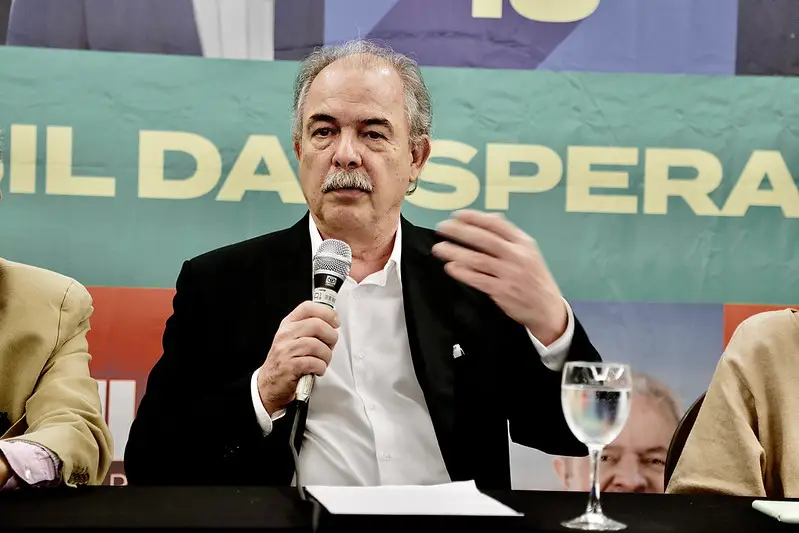
The president of the National Bank for Economic and Social Development (BNDES), Aloizio Mercadante, stated that geological studies and mapping of the continental shelf indicate that the potential of the Equatorial Margin is very similar to that of the pre-salt. However, he highlighted that confirmation of reserves will only occur after exploratory drilling.
“It is only possible to prove a reserve when the drill hits the oil”, stated Mercadante, in an interview with Free Channelfrom the band. “It makes perfect sense to prospect, find out if we have it, how much we have and then see what the best production mechanism is,” he added.
Petrobras refineries operate at more than 100% capacity; how is this possible?
Total Utilization Factor reached 103% at the beginning of the week

Lula confirms presence in announcement of investment of R$ 37 billion by Petrobras in SP
The announcement will take place during Lula’s visit to the Paulínia Refinery (Replan), scheduled for 2pm
When asked about deadlines, Mercadante highlighted that there is still no forecast for the start of operations, as drilling is still ongoing and involves high costs. “Each hole like this costs a few million dollars, so it’s a complex process,” he said.

In the assessment of the president of BNDES, resistance to the exploration of the Equatorial Margin lost strength after the authorization of research by the federal government, while work progresses without any incidents being recorded. “Political resistance may exist, but I think this debate has been overcome,” he stated.
Mercadante compared the current debate to the discussions surrounding the pre-salt, when, according to him, there was an international lobby against the advancement of exploration on the grounds of possible environmental impacts on tourism in Rio de Janeiro. According to the executive, the fears were not confirmed.
The president of BNDES also highlighted that the bank finances, in partnership with the Navy, a marine spatial planning program aimed at mapping the Brazilian continental shelf. According to him, technical studies and surveys carried out in the region did not identify the risks previously highlighted by critics of the project, including possible impacts on coral areas.
“We have to combat denialism in all areas, and it is with scientific arguments that you can fight back,” he said, adding that current exploration technology has prevention and containment mechanisms. “There has never been a Petrobras accident with oil prospecting,” he stated.
Mercadante also cited discoveries of natural gas in areas close to the Equatorial Margin, such as Sergipe and Rio Grande do Norte, in addition to production in neighboring countries, including Guyana and Colombia. “So, the chance of having it on the Equatorial Margin is very great”, he concluded.