
Request for collective view postpones vote on the report on PEC due to the end of the 6×1 scale
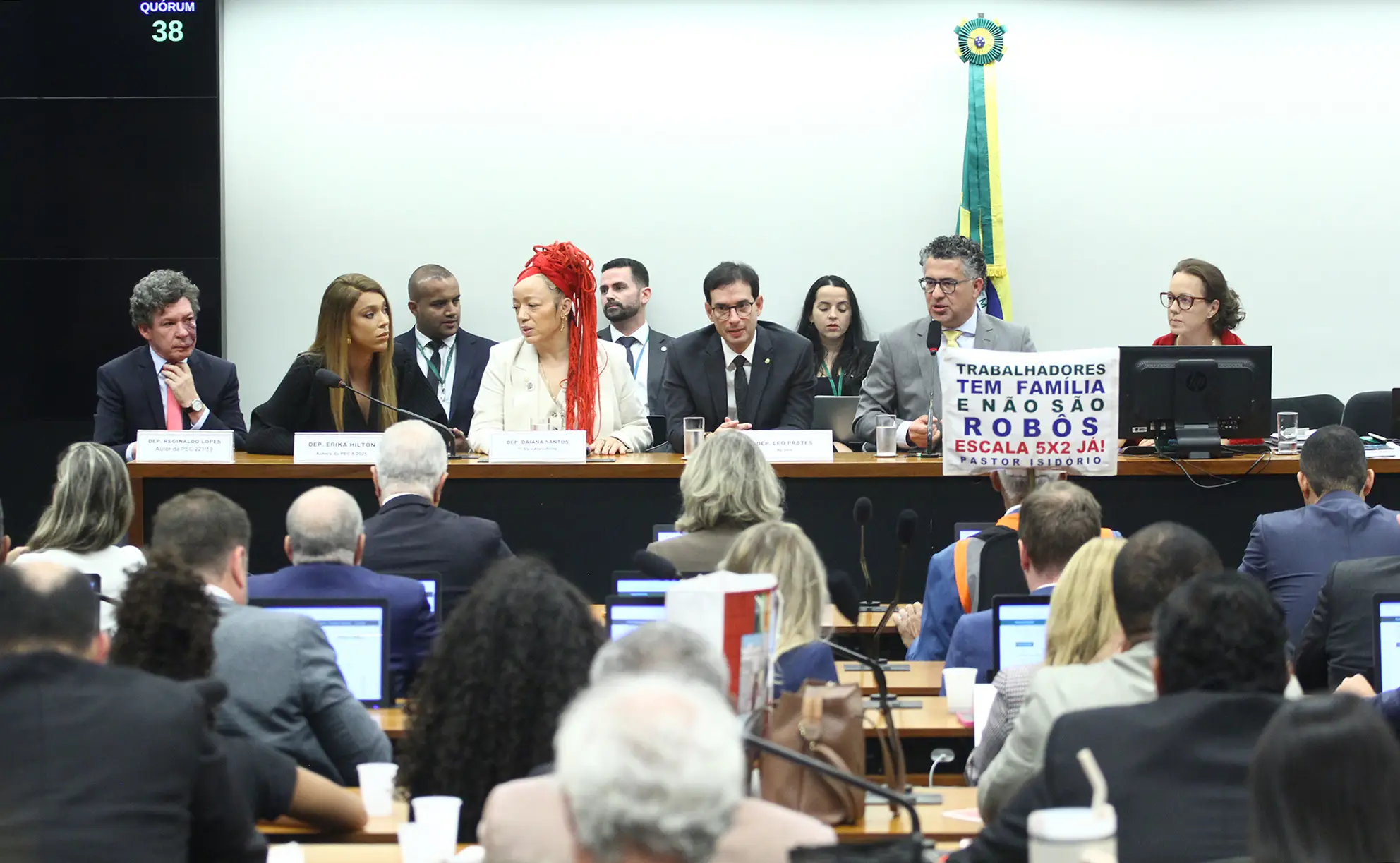
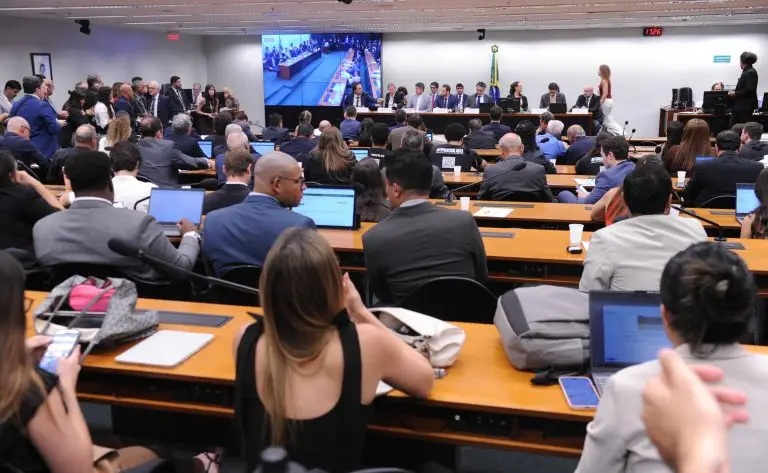
The special committee of the Chamber of Deputies postponed the vote on the PEC report that reduces the working day to 40 hours per week and provides for two days off, which imposes the end of the 6×1 scale. The consideration of the text produced by rapporteur Leo Prates (Republicanos-BA) was postponed after a request for review presented by deputy Maurício Maicon (PL-RS).
With the request, the text will be voted on again in session after two sessions, expected to resume on Wednesday (27). The regimental movement used by the opposition was already foreseen, with the justification of the need for more time for analysis, which will allow leaders to smooth out rough edges in discussions between benches to align speeches on the proposal.
Before the start of the session, the president of the special committee, deputy Alencar Santana, stated that parliamentarians who request a view will have to publicly explain the reason for the postponement.
“Whoever asks will have to explain why they are postponing a vote that so many people are waiting for, so many people are expecting and so many people want this scale to end soon”, asked the parliamentarian.
The regulatory maneuver will mean that, if the opinion is approved by the special committee on Wednesday, the time between approval of the report and voting in the plenary in the first round in the Chamber will be shortened to less than 24 hours between votes.
To be approved in the Chamber, the PEC at the end of the 6×1 scale will still need to go through two rounds of voting, with a minimum support of 308 favorable votes in each stage. Officially, both votes will need to be five sessions apart, but the period can be shortened by the president of the House, deputy Hugo Motta (Republicanos-PB).
If approved, the proposal will go to the Federal Senate for analysis. In the Upper House, the PEC will first need to be approved by the Constitution and Justice Commission before being voted on in plenary.
6×1 report predicts 40 hours per week, 14-month transition and no salary reduction
Text by Léo Prates, supported by the government, provides for two weekly days off, specific rules for high salaries and adjustments to public contracts and small businesses
The report proposed by Leo Prates
The text proposed by Prates reduces the working day to 40 hours per week, with two days off per week, one of which should preferably occur on Sundays and without a salary reduction.
The report differs from the original PEC, authored by congressman Reginaldo Lopes (PT-MG), which initially envisaged a reduction in weekly working hours to 36 hours, with three days off on a 4×3 scale.
Prates’ proposal contains nine articles and also creates a transition period of up to twelve months for the adoption of the new scale, with a two-hour reduction in working hours 60 days after the text’s promulgation. Contractors will have up to ten months to reach the new proposed value of 40 hours per week, totaling a period of one year.
The transition had already been anticipated by Hugo Motta (Republicanos-PB), who met with Lula this Monday morning (25) to discuss the transition.
The text presented by Prates also provides that employees of companies with contracts with municipal, state and federal governments will not immediately be included in the planned reduction in working hours. In this case, the new rules will only be applied when there is a contractual amendment, within a maximum of 12 months after the promulgation of the amendment.
In the case of different schedules, the report also provides specific rules for uninterrupted activities, which are performed in shifts, essential services and activities whose seasonality affects execution.
The text determines that the rules regarding duration and control of working hours will also not apply to private sector workers with higher education who receive above two and a half benefit ceilings from the National Social Security Institute (INSS), currently equivalent to R$ 21,188.87. In this case, working hours control will only occur at the “employer’s discretion or if provided for in an agreement or collective bargaining agreement”.
Before the interrupted vote, Prates had anticipated that the report would be leaner in nature and would focus on the central points of labor changes. The rapporteur’s idea is that specific themes and points of disagreement are subsequently regulated by ordinary laws and collective negotiations to avoid frivolity given the complexity of the current labor laws provided for in the CLT.
The report also predicts that a separate law will address the flexibility of hiring by MEIs and the updating of the revenue ceiling for microentrepreneurs, currently set at R$81 thousand.
Although not a target of the PEC, the readjustment of the MEI ceiling was agreed between Motta and Lula this Monday (25), to take into account both an old request from the sector and a possible increase in the number of new self-employed professionals.