
End of the 6×1 scale: understand new rules provided for in the project approved by the Chamber

The PEC report that ends the 6×1 scale, approved in two rounds in the Chamber of Deputies on Wednesday night (27), redesigns working hours rules in Brazil and creates a gradual transition towards reducing weekly working hours.
Voting in the 1st round had 472 votes in favor compared to 22 against. In the 2nd round, the text obtained a score of 461 against 19.
With approval, the proposal will go to the Federal Senate for analysis. In the Upper House, the PEC will first have to be approved by the Constitution and Justice Commission (CCJ) before being voted on in plenary. If the text advances without changes, part of the new rules will come into effect 60 days after the promulgation of the constitutional amendment.
The text presented by rapporteur Leo Prates (Republicanos-BA) foresees changes in weekly rest, overtime, collective agreements and the operation of special shifts.
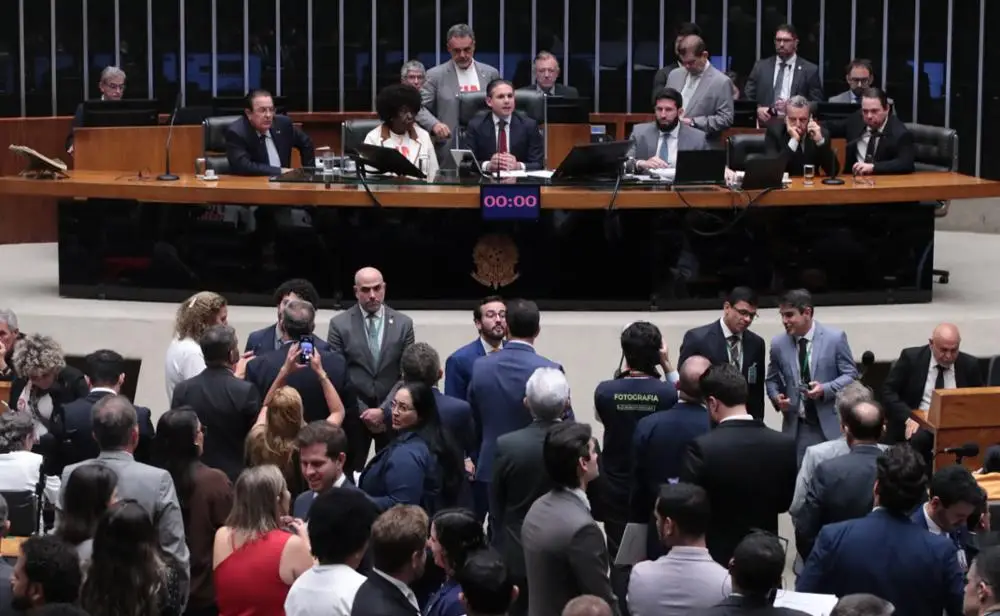
Chamber approves PEC in 2 shifts at the end of 6×1, with a reduction to 40 hours and a 5-day working day
Text was approved in the 2nd round with 461 votes in favor compared to 19 against. PEC now goes to the Senate for consideration
What will the working day be like?
Today, the Constitution limits working hours to 44 hours a week and eight hours a day. The PEC reduces this ceiling in two stages.
The first phase provides for a maximum working day of 42 hours per week, valid 60 days after enactment. After one year, the limit will drop to 40 hours per week.
The proposal also maintains the constitutional limit of eight hours a day, but allows compensation negotiated in collective agreements. In practice, companies will be able to reorganize schedules to concentrate hours on fewer days of the week, as long as they respect the weekly ceiling.
What changes on the 6×1 scale?
The PEC directly changes article 7 of the Constitution to establish two days of paid rest per week. One of these breaks should preferably occur on Sundays.
With this, the traditional 6×1 scale model is no longer the general rule of the Brazilian journey. With this, the text makes room for 5×2 scales and other formats negotiated by category.
How will special scales work?
The report preserves differentiated regimes already used in specific sectors.
Categories subject to shifts, continuous shifts or special working hours may continue to operate through collective agreements or conventions. This includes models such as the 12×36 scale, common in hospitals, private security and essential services.
Oil workers and workers on rotating shifts may also have specific compensation rules.
Can the salary be reduced?
No. The PEC prohibits salary reductions due to reduced working hours.
The text determines that the reduction in hours worked cannot lead to a proportional cut in salaries or changes to the salary floors already defined in collective agreements.
The rule also applies to part-time workers, special categories and contracts linked to public administration.
How are overtime?
The proposal does not directly change the rules for paying overtime.
The Constitution will continue to guarantee a minimum bonus of 50% for hours worked in addition to the regular working day.
What changes is the weekly limit. When the working day drops to 40 hours, any time worked above this ceiling may be considered extra, unless compensation is provided for in a time bank or collective bargaining.
During the transition phase to 42 hours, companies will be able to redistribute working hours over five working days.
This will allow working hours of close to ten hours a day without automatic generation of overtime, as long as the weekly limit is respected.
What happens to current collective agreements?
Conventions and collective agreements will need to be adapted to the new rules. According to the text, unions and companies will have a period of up to 60 days after the promulgation of the PEC to update clauses related to working hours and weekly rest.
Without adaptation, incompatible devices may lose their validity.
Does working on holidays change?
So far, no. The PEC does not change current rules about operating on holidays. The legislation will continue to allow activity in sectors considered essential, such as health, transport, urban cleaning, security and part of commerce.
In other cases, the rules provided for in collective agreements and specific legislation continue to apply.
Will there be different rules for small businesses?
Yes. The text provides that a complementary law could create compensation and transition mechanisms for MEIs, micro-enterprises and small companies.
The objective is to reduce the operational and financial impact of the change on smaller businesses. The details of these measures will still depend on future regulation.
Which labor rights remain intact?
The PEC does not alter constitutional rights already guaranteed to workers.
The following remain preserved:
- 13th salary;
- paid vacation with an additional one-third;
- FGTS;
- maternity leave;
- paternity leave;
- paid weekly rest;
- additional overtime;
- additional health and hazardous conditions;
- work accident insurance;
- national minimum wage.
When would the end of the 6×1 scale come into effect?
The change will only come into force after the definitive approval of the PEC in the Senate and the promulgation of the constitutional text.
